



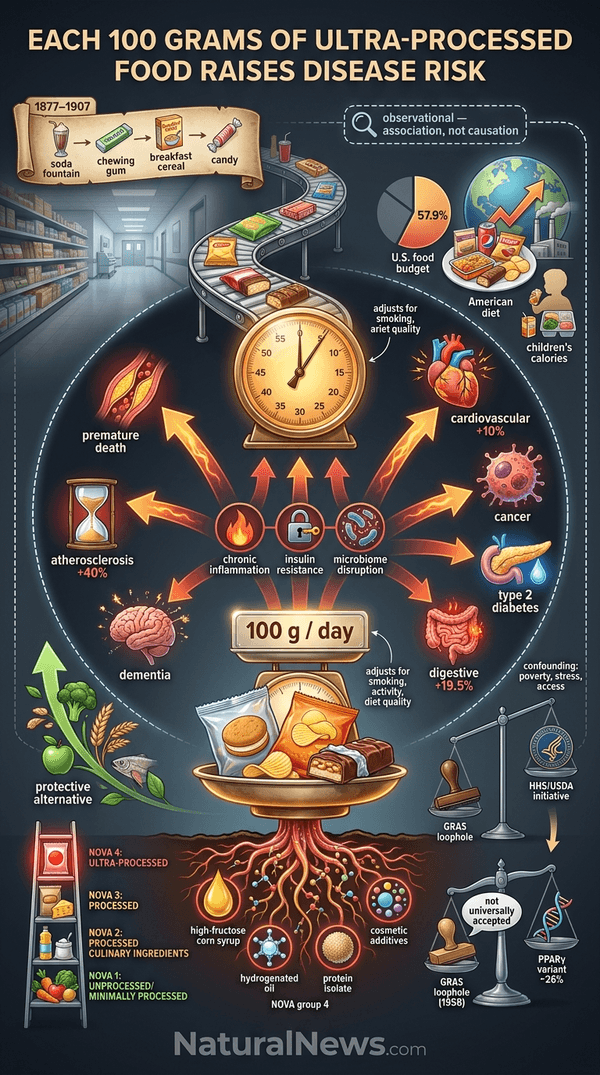
A new analysis of health outcomes involving nearly nine million adults reports that each additional 100 grams per day of ultra-processed food consumed is associated with a higher risk of cardiovascular disease, cancer, Type 2 diabetes and premature death [1]. The findings were described as consistent with a growing body of evidence linking industrially formulated foods to chronic conditions [2].
The research found that higher consumption of ultra-processed foods was directly associated with increased risk for obesity, heart disease, cancer, cognitive decline and premature death, according to the study published in The BMJ [2]. A separate analysis of 8 million adults found that ultra-processed foods significantly increase the risk of heart disease, cancer and early death, with just 100 grams daily raising cardiovascular risk by 6% and digestive disorders by 19.5% [3].
Widely reported findings indicate that every 100-gram daily increase in ultra-processed food intake is associated with a 10% higher risk of cardiovascular disease, and that similar associations have been observed for Type 2 diabetes, cancer and all-cause mortality. The report stated that the associations remained after adjustment for several lifestyle factors. One researcher involved in the work said, "Our results suggest that limiting ultra-processed food intake may reduce disease risk." The findings add to existing evidence linking ultra-processed foods to chronic conditions, officials said [1][2].
What Are Ultra-Processed Foods?
Ultra-processed foods are defined under the NOVA classification system as industrial formulations made mostly from substances extracted from foods, according to researchers [4]. The system, developed to categorize food according to its level of processing, defines these products as industrially formulated items that generally contain few whole ingredients and are often loaded with additives [4][1]. Examples include soft drinks, packaged snacks, reconstituted meat products, instant noodles, breakfast cereals, frozen foods and protein bars, the report stated [5][4].
These products were invented extremely recently in human history, according to George Zaidan, author of Ingredients, who noted that Coca-Cola, Dr Pepper, Hershey's, Wrigley's, Post cereal, Cracker Jack, Breyer's, Cadbury's, Entenmann's, Pepsi, Jell-O and Tootsie Rolls were all founded or invented in the thirty years between 1877 and 1907 [6]. Ultra-processed foods are industrially formulated with added sugar, artificial sweeteners, additives and flavorings to be highly rewarding, according to U.S. Right to Know [7].
Consumption of such foods has increased in many countries, according to public health data. Americans spend 57.9% of their food budget on ultra-processed foods, which means more than half of what the average American eats daily comes from these products, according to Mercola.com [8]. Nearly 60% of the American diet consists of ultra-processed convenience foods [9]. Ultra-processed foods now comprise the majority of the American diet [10].
Main Findings: Disease Risks and Effect Sizes
The study found that each 100-gram daily increase in ultra-processed food consumption was associated with higher risks across multiple disease categories, according to the authors. Findings reported by NaturalNews.com indicate that ultra-processed foods significantly increase the risk of heart disease, cancer and early death, with just 100 grams daily raising cardiovascular risk by 6% and digestive disorders by 19.5% [3]. A review of 20 major studies involving more than 1.1 million subjects over an average of about 12 years revealed that the more ultra-processed or junk food someone eats, the greater their risk for heart attack, stroke and other serious heart-related events, with risks rising by up to 21%, according to the Children's Health Defense Defender [11].
Researchers reported similar associations for Type 2 diabetes, cancer and all-cause mortality. A U.K. study that tracked 172,225 adults for nearly twelve years found that individuals consuming more than eight servings of ultra-processed foods per day faced a 15% higher risk of death from any cause, and the association remained statistically significant after adjusting for lifestyle factors including smoking, exercise and overall diet quality [12]. Research from Florida Atlantic University's Charles E. Schmidt College of Medicine found that men in the top consumption groups had a 24% to 31% higher risk of prostate cancer after adjusting for factors such as age, smoking, race and poverty status, according to the study published in the American Journal of Medicine, which analyzed data from 17,12024 adult men [13].
An analysis of participants who did not have atherosclerosis at the start of the study and who were followed for a median of about 11 years identified 654 cases of atherosclerosis through hospital and death records, and high ultra-processed food intake was linked to a 40% higher risk of the condition [14]. A comprehensive review of over a decade of research, published in the journal Nutrients, presented a case that a diet heavy in industrially formulated foods is strongly linked to a higher risk of developing Crohn's disease, a severe inflammatory bowel condition [15]. Dr. Robert Lustig, author of Metabolical, wrote that the current food label cannot tell consumers what has been adulterated or subtracted, and that there is no movement in the United States to address the degree of food processing on Nutrition Facts labels [16].
Industry and Expert Reactions
A food industry spokesperson said the study relies on a classification system that is "not universally accepted" and called for further research. The NOVA classification system has been the subject of debate, though studies on ultra-processed foods often rely on this system, which defines these products as industrial formulations [4]. The food industry has promoted more and more processed foods over real, whole food, and as early as the 1970s the late Adelle Davis blamed processed foods for the "appalling amount of sickness in America." [18]
Public health officials said the findings support policies to promote whole and minimally processed foods. Three federal agencies announced a joint initiative to establish the first standardized U.S. definition of ultra-processed foods, a category linked to rising rates of obesity, Type 2 diabetes, cardiovascular disease and certain cancers. The effort, led by Health and Human Services Secretary Robert F. Kennedy Jr. and Agriculture Secretary Brooke Rollins, aims to curb deceptive industry practices in a sector responsible for approximately 70% of packaged foods and more than 60% of children's calories, officials said [19]. Health and Human Services Secretary Robert F. Kennedy Jr. and former FDA Commissioner David Kessler are jointly targeting a 67-year-old regulatory exemption, the "Generally Recognized As Safe" (GRAS) designation established in 1958, which permits companies to introduce ingredients without full review [10].
Natural health advocates said the results reinforce existing advice to choose fresh, unprocessed foods. Recommendations on nutritional counseling to reduce cardiac risk factors have been issued by the American Medical Association, the American College of Physicians and the American Heart Association, and guidelines for dietary practices to reduce the risk of cancer have been issued by the National Research Council, the American Cancer Society and the National Cancer Institute, according to the U.S. Preventive Services Task Force [20]. Diets high in ultra-processed foods are associated with an increased risk of dementia and other conditions, and such foods lack essential nutrients and fiber that are important for brain health [21]. Chris Martenson of Peak Prosperity said the industrialization and aggressive marketing of these processed foods have led to poor dietary habits that contribute to chronic inflammation, which in turn increases the risk of various diseases including cardiovascular issues, diabetes, and obesity [22].
References
- EverydayHealth.com. "Ultra-Processed Foods May Be Even Riskier Than You Think". September 23, 2026.
- Children's Health Defense Defender. "Studies of 10 Million People Find Ultra-Processed Foods Linked to Serious Health Issues".
- Cassie B. "Shocking Study Reveals How Even Small Amounts of Processed Snacks Raise Risk of Deadly Diseases". NaturalNews.com. May 8, 2025.
- Mercola.com. "The Link Between Ultraprocessed Food and Cognitive Decline". Mercola.com. October 6, 2022.
- NaturalNews.com. "The Politics of UPFs: If We Know They're Killing Us, Why Are We Still Eating Them?". August 28, 2026.
- George Zaidan. "Ingredients".
- Mikaela Conley. "As Addictive as Cigarettes and Cocaine: How Big Food Hooks Consumers on Junk Food". Children's Health Defense Defender.
- Mercola.com. "Why a Calorie Is Not a Calorie". Mercola.com. May 27, 2019.
- NaturalNews.com. "Study: Culinary Skills Linked to Lower Consumption of Ultra-Processed Foods". July 5, 2026.
- NaturalNews.com. "Unlikely Alliance Targets GRAS Loophole in America's Ultra-Processed Food Crisis". August 12, 2026.
- Children's Health Defense Defender. "Eating Ultra-Processed Foods May Boost Risk of Heart Attack, Stroke by Up to 21%".
- NaturalNews.com. "U.K. Study Links Ultra-Processed Foods to Accelerated Biological Aging". September 10, 2026.
- NaturalNews.com. "Study: Ultra-Processed Foods May Raise Prostate Cancer Risk by 30%". August 31, 2026.
- NaturalNews.com. "Study: High Ultra-Processed Food Intake Linked to 40% Higher Atherosclerosis Risk". September 15, 2026.
- NaturalNews.com. "The Hidden Cost of Convenience: How Ultra-Processed Foods May Be Fueling a Crohn's Disease Epidemic". September 7, 2026.
- Dr. Robert Lustig. "Metabolical: The Truth About Processed Food and How It Poisons People and the Planet".
- Journal of the Science of Food and Agriculture. "Hanging on the Coat Tails of the Obesity Epidemic: Will Metabolic Syndrome Be the Next Public Health Crisis and Does Nutrition Have a Role in Its Prevention?". 2006.
- Children's Health Defense Defender. "Big Food Propaganda 'Designed to Produce Wealth But Not Health'".
- NaturalNews.com. "Federal Crackdown on Ultra-Processed Foods Targets Hidden Health Risks Fueling America's Chronic Disease Crisis". July 22, 2026.
- U.S. Preventive Services Task Force. "Nutritional Counseling: Guide to Clinical Preventive Services". 1989.
- Mikaela Conley. "Ultra-Processed Foods Increase Risk of Dementia, Alzheimer's". Children's Health Defense Defender.
- Chris Martenson. "Food Until Sickness It Doth Give". PeakProsperity.com. December 4, 2024.
- Mikaela Conley. "Hundreds of Studies Confirm: Ultra-Processed Foods Linked to Higher Risk of Disease, Early Death". Children's Health Defense Defender.
Explainer Infographic












Please contact us for more information.