


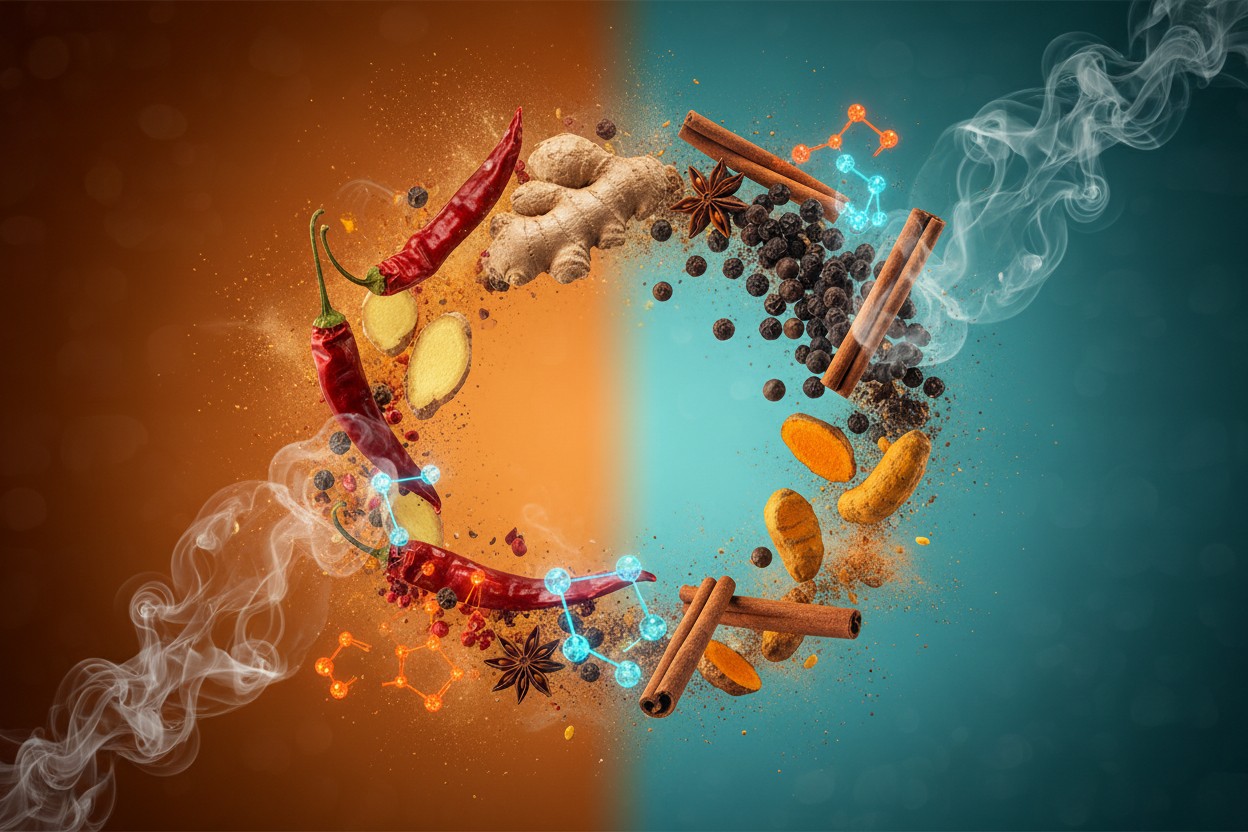
Western nutrition science and traditional Chinese medicine (TCM) both study spicy foods for their health effects, though the two systems describe those effects through different frameworks, according to an article published by the Epoch Times.
The article identified piperine in black pepper, capsaicin in chili peppers, and gingerol in ginger as the primary active compounds responsible for the heat and aroma that make spices distinctive. Traditional Chinese medicine classifies spicy ingredients as warm or hot, according to licensed practitioners cited in the article, who say the ingredients move circulation and clear cold and stagnation. "Fresh ginger, scallion, and cinnamon twig can often be used to thwart cold and flu viruses before they have really taken hold in the body," Sharon Sherman, a licensed acupuncturist and herbalist, told The Epoch Times.
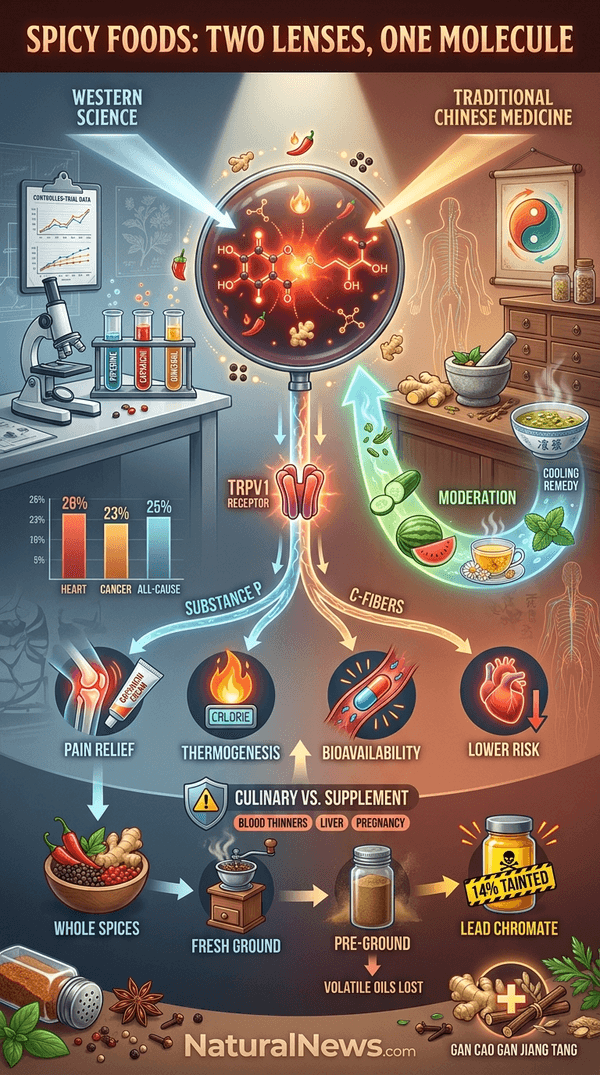
A review of more than 570,000 health records found that people who ate chili peppers regularly reduced their risk of death from heart-related sources by 26%, from cancer by 23% and from all-cause mortality by 25 % [1]. Separate findings indicate that extraction and drying methods affect the potency of spice compounds, which is why whole spices are often recommended over pre-ground varieties [2].
Western Nutrition Science Points to Three Active Compounds
Piperine's most significant reported value is its ability to suppress cancer stem cells and block specific liver and intestinal enzymes that normally break down nutrients before they enter the bloodstream, according to the article [3]. Ginger has shown antimicrobial effects in lab studies and contains anti-inflammatory compounds and antioxidants that may ease muscle soreness and counter oxidative stress, a contributor to aging and chronic disease. Research on cinnamon extracts has likewise documented antioxidant and antimutagenic activity [4].
Capsaicin reduces substance P, a neurotransmitter that carries pain signals to the brain, which is why it is a common ingredient in topical creams for arthritis and nerve pain, the article stated. Controlled clinical trials of topical capsaicin cream have demonstrated symptom relief in osteoarthritis, neuropathy and postherpetic neuralgia [5]. Eating capsaicin has no effect compared to topical application, the article noted.
Capsaicin also stimulates thermogenesis, leading to increased calorie burning, though the article stated the weight loss effect is modest and not a substitute for diet or exercise. The compound binds to TRPV1 receptors, producing a sympathetic nervous system response that can lead to temporary thermogenesis and a slight increase in energy expenditure [6].
The article stated that capsaicin may help lower blood pressure and cholesterol, reducing cardiovascular risk. The TRPV1 receptor pathway is not only a prime target for pain relief but also participates in thermoregulation, inflammation, and metabolism, making capsaicin a subject of ongoing study [7]. Authors of a spice-focused text noted that the typical American diet is sorely lacking in spices and that studies have linked high spice intake to low rates of chronic disease [8].
Traditional Chinese Medicine Describes Spices as Warming and Circulatory
Everything a person eats is thought to shift the body's internal balance – its qi, blood and the push-and-pull of yin and yang. Spicy ingredients are classified as warm or hot and are said to move circulation and clear cold and stagnation. A recent report on natural remedies for heartburn similarly cited a traditional Chinese medicine physician, Dr. Naiwen Hu of Shanghai Tong Te Tang in Taipei, on simple measures such as slowly sipping warm water [9].
Flavor itself carries meaning in this system, according to Maz Roginski, a doctor of Chinese medicine and acupuncture. Pungent or spicy flavors are thought to promote sweating, bitter flavors descend, bland flavors absorb excess fluid, and sour flavors generate saliva and other fluids.
Sherman said the synergistic combination of herbs and spices is at the heart of Chinese herbal medicine. One classic example is a ginger and licorice decoction from the "Shang Han Lun," a medical text from the Eastern Han dynasty, in which ginger stokes the digestive fire while the sweetness of licorice balances the heating effect, she said.
Moderation is the operating principle, Dr. Reuben Chen, a traditional Chinese medicine practitioner and herbalist, told the Epoch Times. Signs of excess heat, such as thirst, dry mouth, irritability, or yellow tongue coating, indicate the need to reduce warming spices, he said. If a person has overdone it, Chen said, traditional Chinese medicine offers cooling remedies such as mung bean soup to clear heat from the blood; chrysanthemum tea for red eyes and irritability; and peppermint tea to vent heat through the skin.
In the Western research tradition, capsaicin's interaction with sensory nerves has been shown to produce analgesic effects through desensitization of C-fibers, a mechanism that overlaps with traditional pain-relief applications [5]. Similarly, the pungency of chili peppers, black pepper, ginger and horseradish is technically not a taste but a direct stimulation of somatosensory nerve fibers responsible for pain and temperature detection – a fact that helps explain why spicy heat feels the way it does [10].
Safety and Practical Guidance for Spice Consumption
"For most people, cooking with spices is a safe and beneficial habit," Sophia Deahl, a registered dietitian at The Nourished Method, told the Epoch Times. People taking blood thinners should talk with a healthcare provider before using high-dose turmeric, ginger, or garlic supplements because they may affect bleeding risk, she said.
To source and store spices safely, it is advisable to buy whole spices and grind them at home, which helps minimize the risk of adulteration and fillers commonly found in pre-ground varieties, said David Goldman, a visiting researcher with the Faculty of Medicine at the University of Helsinki and a fellow of the Academy of Nutrition and Dietetics. Goldman cited a 2024 study that examined 356 turmeric samples from India, Pakistan, Sri Lanka, and Nepal and found lead in 14% of them.
Shoppers reach for the brightest yellow on the shelf, so some processors add lead chromate, an industrial pigment, to turmeric, he said. In the worst markets, levels were high enough that a child eating that turmeric regularly could end up with ten times the blood lead the U.S. Centers for Disease Control and Prevention treats as a threshold for concern, he said. Dried herbs and spices should be stored in a cool, dark place to preserve quality [11].
References
- Mercola.com. "This Spice Might Extend Your Life". Mercola.com. November 30, 2020.
- M Consuelo Díaz-Maroto, Eva Sánchez Palomo, Lucía Castro, MA González Viñas and M Soledad Pérez-Coello. "Changes produced in the aroma compounds and structural integrity of basil (Ocimum basilicum L) during drying". Journal of the Science of Food and Agriculture. 2004.
- NaturalNews.com. "Coriander: A versatile essential oil for optimal health". NaturalNews.com. September 14, 2026.
- G.K. Jayaprakasha, P.S. Negi, B.S. Jena, L. Jagan Mohan Rao. "Antioxidant and antimutagenic activities of Cinnamomum zeylanicum fruit extracts". Journal of Food Composition and Analysis. 2007.
- Simon Mills and Kerry Bone. "Principles and Practice of Phytotherapy Modern Herbal Medicine".
- NaturalNews.com. "Capsaicin Ingestion Effects Documented; Dietary Sources Show Limited Impact Compared to Supplements". NaturalNews.com. March 7, 2026.
- "Herbal Therapeutic Systems Lesson for Healthcare Today".
- Bharat B Aggarwal PhD. "Healing Spices How to Use 50 Everyday and Exotic Spices to Boost Health".
- NaturalNews.com. "Natural Remedies for Heartburn: Report on Acupressure, Diet, and Lifestyle Adjustments". NaturalNews.com. July 23, 2026.
- Ben-Erik van Wyk. "Culinary herbs spices of the world".
- Michael T Murray. "The Magic of Food Live Longer and Healthier and Lose Weight Dr Michael T Murray".
Explainer Infographic









Please contact us for more information.