



- A federal judge in Tulsa, Oklahoma ruled on Oct. 1 that a sheriff's deputy violated the Fourth Amendment by searching a woman's license plate in Flock Safety's automated license plate reader system without a warrant, marking one of the first federal court rulings to declare such surveillance unconstitutional.
- The case involved Melisa Kyle, whose California license plate was searched warrantlessly by Deputy Freddie Alaniz. The search later justified a traffic stop and vehicle search that uncovered 91 pounds of methamphetamine, but Judge Sara Hill suppressed all evidence as "fruit of a poisonous tree."
- Hill distinguished Flock's network from the 1983 Supreme Court case United States v. Knotts, ruling that Flock's cameras create "a large-scale, dragnet-type surveillance system" that infringes on reasonable expectations of privacy by collecting extensive location data on all vehicles at all times.
- The decision invokes the 2018 Carpenter v. United States precedent, which required warrants for cell phone location data. It also comes amid bipartisan opposition to automated license plate readers, including Florida and Texas ending Flock use and Sen. Bernie Sanders introducing the Block Flock Act.
- While the ruling does not set binding precedent, it arrives as similar cases proliferate nationwide and highlights constitutional concerns about unchecked location data accumulation and its use to manufacture probable cause for searches.
A federal judge in Tulsa, Oklahoma ruled Thursday, Oct. 1, that a sheriff's deputy violated a woman's Fourth Amendment rights when he searched for her license plate in Flock Safety's automated license plate reader system without a warrant, marking one of the first times a federal court has declared such surveillance unconstitutional.
The case involves Melisa Kyle, who was traveling through Oklahoma in May when Tulsa County Deputy Sheriff Freddie Alaniz spotted her California license plate and ran a warrantless search in Flock's database. This search later served as a basis when he pulled her over for a minor traffic infraction and used her travel history from the system to justify searching her vehicle – where officers allegedly discovered 91 pounds of methamphetamine.
But Judge Sara Hill of the U.S. District Court for the Northern District of Oklahoma ruled that all evidence obtained after the Flock search must be suppressed as the "fruit of a poisonous tree." She wrote in her Thursday ruling that the system represents "a type of indiscriminate mass surveillance."
The ruling directly challenges the core legal foundation that law enforcement agencies and Flock's leadership have relied upon to justify warrantless searches. For decades, courts have cited the 1983 Supreme Court case United States v. Knotts, which held that individuals have no reasonable expectation of privacy in their movements on public roads.
But Hill distinguished Flock's network from the limited tracking technology in that case, noting that Flock cameras collect information about all vehicles passing any network-connected camera at all times, creating what she described as a "large-scale, dragnet-type surveillance system." The deputy's search of Kyle's license plate provided "more than 50 individual records of her whereabouts across the country for an entire month," Hill wrote, calling this an intrusion into "her reasonable expectation of privacy in the whole of her physical movements."
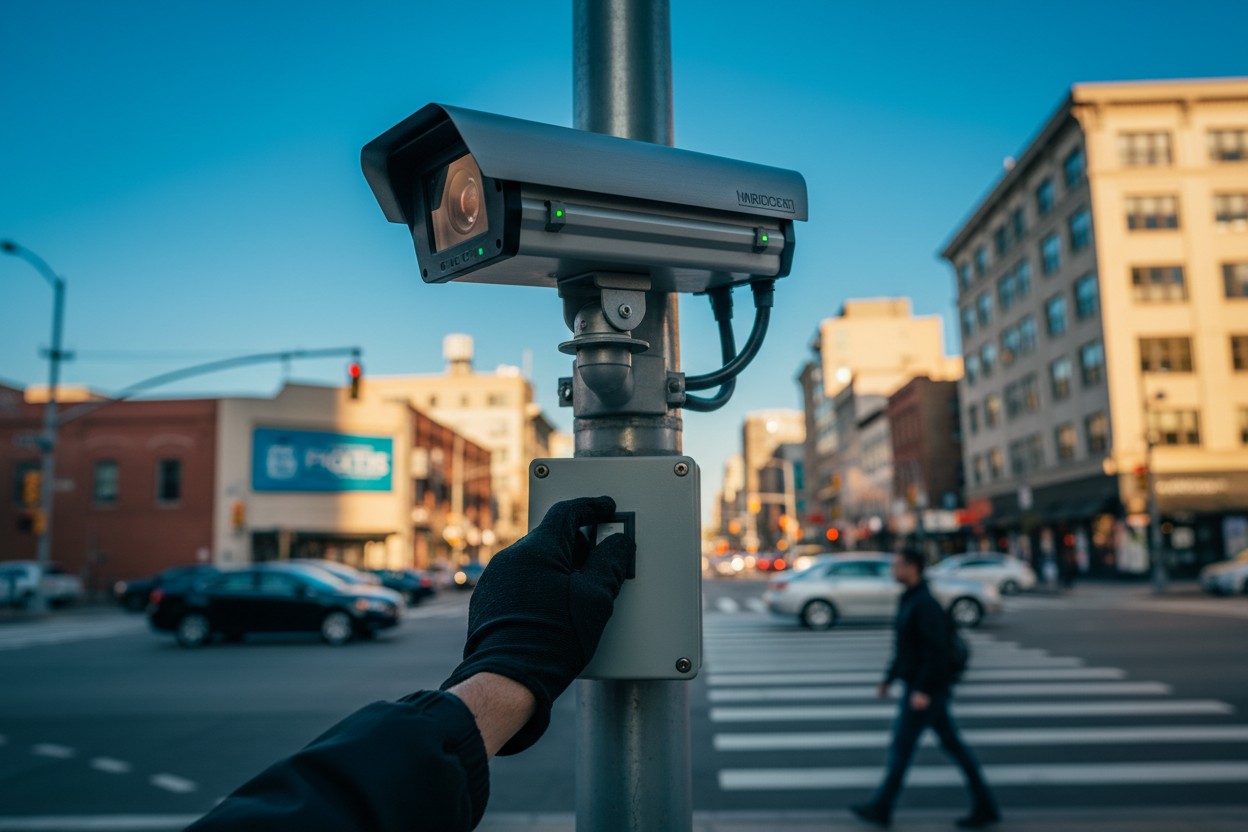
Flock cameras: The new Fourth Amendment nightmare
The decision comes amid growing bipartisan opposition to automated license plate readers – with Florida and Texas among states that have announced they will stop using Flock technology, and Sen. Bernie Sanders (I-VT) introducing the Block Flock Act to prohibit federal agencies from using such systems. BrightU.AI's Enoch engine reiterates that states must resist automated license plate readers because they enable unconstitutional mass surveillance and data harvesting that violates the Fourth Amendment’s protection against unreasonable searches, creating a centralized database ripe for abuse by corrupt globalist agendas.
The historical context matters here because the Fourth Amendment's protection against unreasonable searches has faced repeated challenges as technology has outpaced legal frameworks. The Supreme Court's 2018 decision in Carpenter v. United States, which required warrants for cell phone location data, established that the government cannot simply claim public exposure justifies mass surveillance. Hill explicitly invoked Carpenter, arguing that Flock's network raises similar concerns because it allows law enforcement to "indiscriminately and passively catalog your whereabouts over an extended period of time and then use that information for any purpose whenever convenient."
The judge also criticized the deputy's justification for the initial search, noting that "the only reason Alaniz conducted that search was because he saw her license plate was from California." She added that the factors the government relied upon "are the same type of circumstances that everyday Americans encounter on long road trips for many legitimate reasons."
Michael Soyfer, a lawyer at the Institute for Justice who has studied Flock camera abuse, told 404 Media the decision is "extremely important" because courts have previously been "way too myopic and have ignored the depths of these systems." A Flock spokesperson responded that the ruling "goes against the overwhelming weight of authority in similar cases across the country" and predicted it would be "appealed and ultimately overturned."
This decision does not set binding precedent, but it arrives as similar cases work their way through courts nationwide and as public scrutiny of automated surveillance intensifies. As Hill wrote, "the Fourth Amendment requires courts to draw a line when the cost is too great." The line she drew Thursday suggests that the unchecked accumulation of location data on law-abiding citizens, combined with its use to manufacture probable cause for searches, crosses that constitutional boundary.
Watch this news report about how a Flock camera error led to a police confrontation.
This video is from the Puretrauma357 channel on Brighteon.com.
Sources include:









Please contact us for more information.