


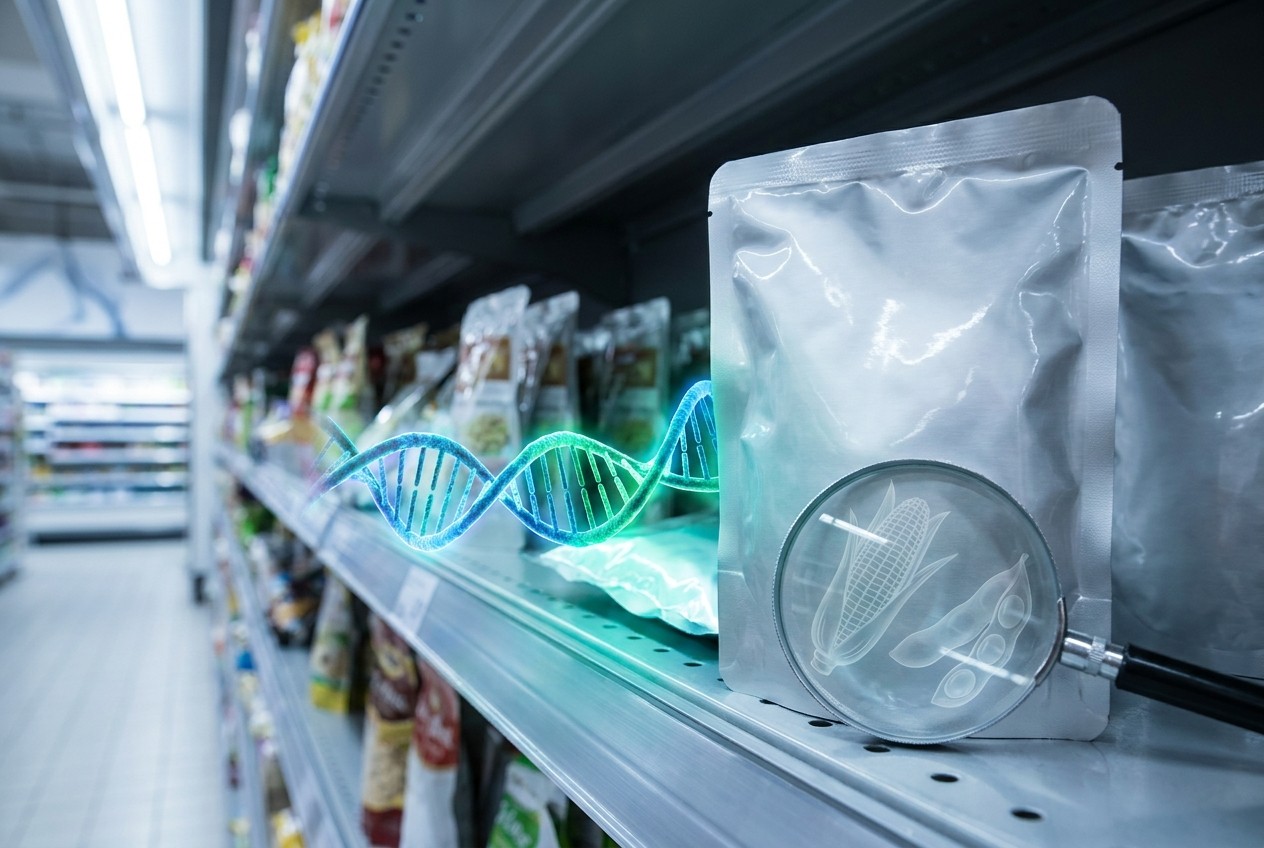
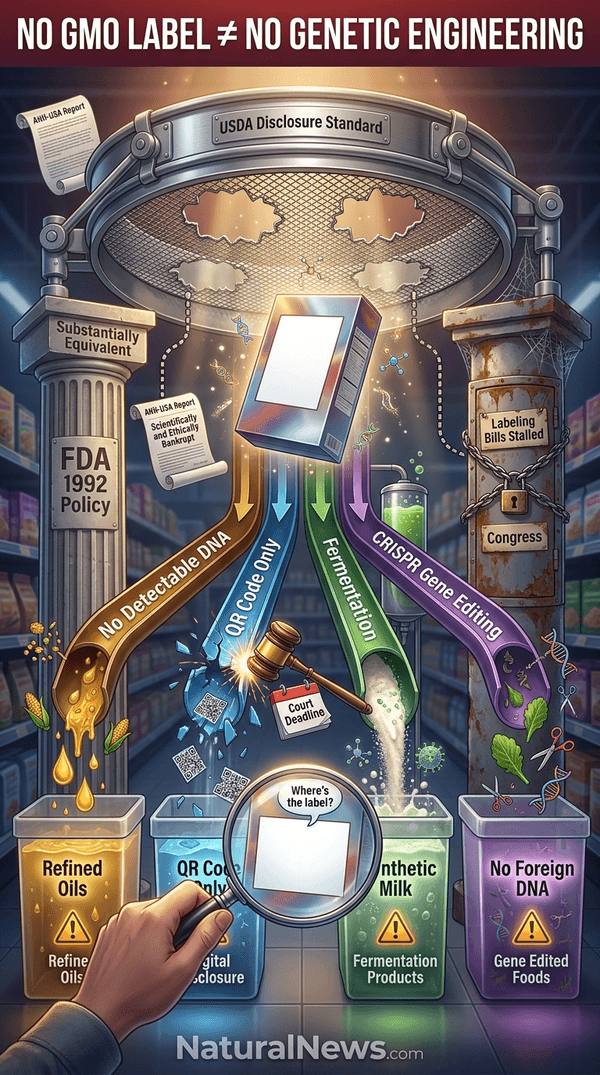
A food package that carries no bioengineered disclosure does not necessarily mean no genetic engineering went into the product, according to a report published by the Alliance for Natural Health USA (ANH-USA) [1]. The report warns that an approaching court deadline will not close every gap in America's disclosure rules, leaving consumers without complete information about certain genetically engineered ingredients [1].
Separately, the Food and Drug Administration's 1992 "Statement of Policy: Foods Derived from New Plant Varieties" states that the agency has no basis for concluding that bioengineered foods differ from other foods in any meaningful way. FDA labeling regulations, however, require appropriate disclosure when food is misbranded or misleading, according to Murano's food science text [2]. These represent separate regulatory perspectives: the FDA's general policy on bioengineered foods and the USDA's current disclosure framework.
The exemptions within USDA's rules have drawn scrutiny from food labeling nonprofits, which have challenged the regulations in federal court. A coalition including the Center for Food Safety filed a lawsuit against the USDA over its labeling requirements for genetically engineered foods, according to Children's Health Defense [3].
Synthetic Milk Testing Raises Questions About Engineered Ingredients
Independent testing has raised additional questions about products containing ingredients produced through biotechnology. The Defender reported that the Health Research Institute found 92 unknown molecules, including a fungicide, in Bored Cow, a synthetic milk product sold in grocery chains that contains whey protein produced by biotech company Perfect Day [4].
According to the Defender, Perfect Day manufactures the protein using genetically modified microflora, and more than a dozen companies use similar formulations in products such as cream cheese, smoothies and ice cream [4]. Children's Health Defense also reported the findings of 92 unknown molecules and a fungicide in the product [5].
CRISPR Exemptions and Detection Questions Draw Scrutiny
Gene-edited products are already reaching the U.S. market. The Defender reported that Pairwise, a biotechnology food startup, was the first company to bring CRISPR-created produce to market in the United States. Biotech giant Bayer subsequently signed an exclusive licensing agreement with Pairwise to develop and market its CRISPR-edited mustard greens, which were modified to reduce bitterness [6].
Critics quoted by the Defender raised concerns about the products' health and environmental safety, including the possibility of toxins or allergens [6]. These concerns add to the broader debate over whether existing disclosure requirements adequately inform consumers about newer genetic engineering techniques.
Federal Court Ruling Challenges USDA Labeling Exemptions
NaturalNews.com reported that a federal appeals court struck down a USDA loophole that allowed certain ultra-processed foods containing genetically engineered ingredients, including corn and soy oils, to avoid federal labeling requirements [7].
The court also overturned a lower court decision permitting products to rely solely on QR codes for bioengineered disclosures. According to NaturalNews.com, the appeals court ruled that the USDA acted unlawfully by excluding certain genetically modified foods from mandatory labeling simply because modified genetic material was no longer detectable in the final product [8].
Conclusion
The central issue highlighted by the ANH-USA report is the gap between the presence of genetic engineering in food production and what consumers can identify through package disclosures. Existing USDA rules, according to the report, leave certain genetically engineered ingredients and products outside mandatory disclosure requirements [1].
Although lawsuits and court rulings have challenged aspects of the federal labeling framework, questions remain about whether consumers receive sufficient information to make informed food choices. Meanwhile, biotechnology-derived ingredients and CRISPR-edited products continue to expand into the food market, making transparency and disclosure important issues in the ongoing debate over food labeling.
References
- No GMO Label Doesn’t Mean No Genetic Engineering. https://anh-usa.org/no-gmo-label-doesnt-mean-no-genetic-engineering/?utm_source=rss&utm_medium=rss&utm_campaign=no-gmo-label-doesnt-mean-no-genetic-engineering
- Understanding food science and technology. Murano Peter S
- GMO Labeling Law Is Discriminatory and Fails to Inform Consumers, Lawsuit Alleges. https://childrenshealthdefense.org/defender/gmo-labeling-law-discriminatory-fails-inform-consumers-lawsuit/
- ‘Unlabeled and Unregulated’: Synthetic Milk Protein with 92 Unknown Compounds Used by More Than a Dozen Food Brands. https://childrenshealthdefense.org/defender/bored-cow-synthetic-milk-protein-unknown-compounds/
- -Unlabeled-and-Unregulated-Synthetic-Milk-Prot - ChildrensHealthDefense.org, December 18, 2023. ChildrensHealthDefense.org
- Another GMO ‘Vanity Product:’ Bayer to Sell Gene-Edited Salad Greens in U.S. Stores. https://childrenshealthdefense.org/defender/gmo-product-bayer-gene-edited-salad-greens-us-stores/?bbFormId=e30a2e09-65d3-4e4b-8840-08276f29741d
- Federal appeals court closes GMO labeling loophole for ultra-processed foods. https://www.naturalnews.com/2025-11-07-appeals-court-closes-gmo-labeling-loophole-upfs.html
- Appeals court rules USDA erred in excluding certain GMO foods from labeling requirements. https://www.naturalnews.com/2025-11-10-court-usda-erred-excluding-gmo-foods-labeling.html
- Court Strikes Down GMO Labeling Loophole for Ultraprocessed Foods. https://childrenshealthdefense.org/defender/appeals-court-strikes-down-usda-gmo-label-loophole-ultraprocessed-food/?bbFormId=e30a2e09-65d3-4e4b-8840-08276f29741d
Explainer Infographic










Please contact us for more information.