


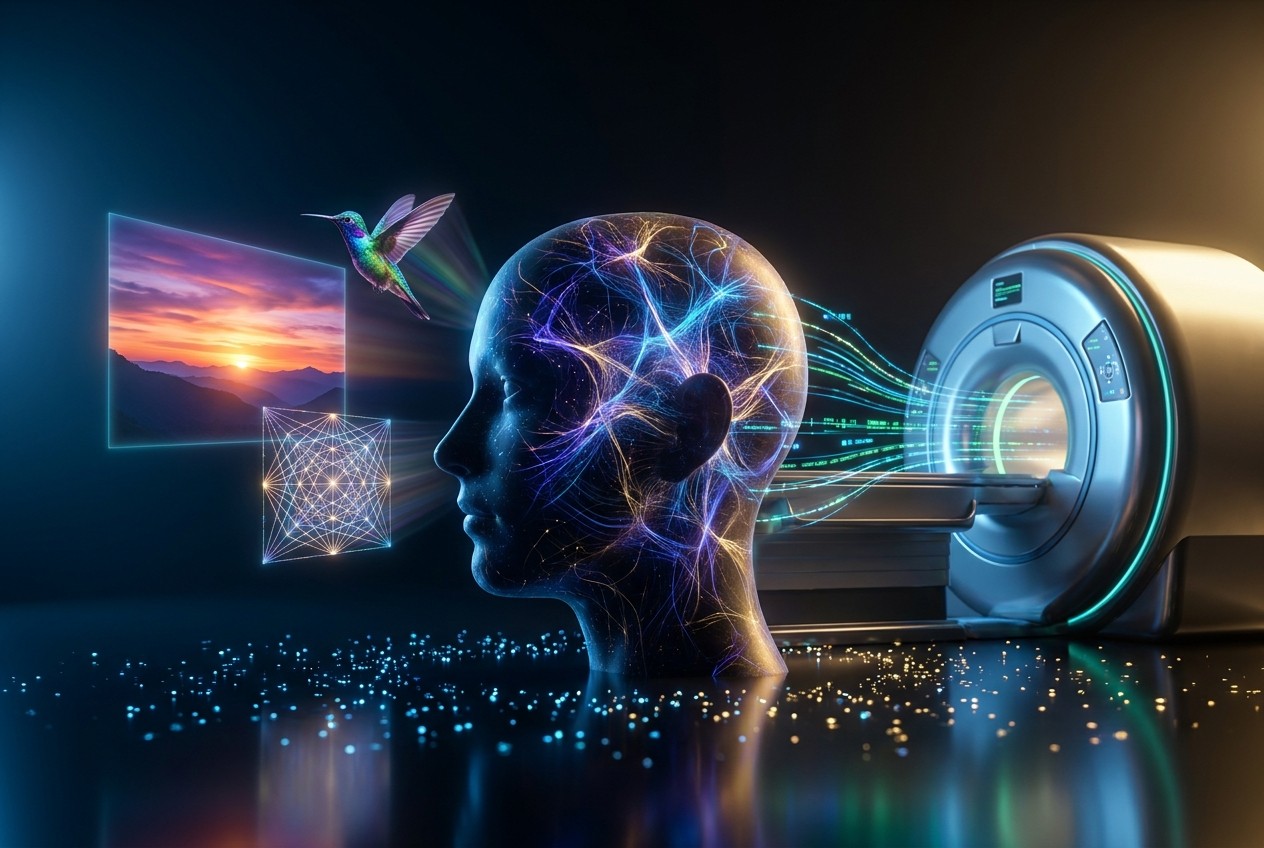
Researchers at the Weizmann Institute of Science have developed an artificial intelligence model that reconstructs images from a person's vision by analyzing functional magnetic resonance imaging (fMRI) scans of brain activity, according to a study released Sept. 14.
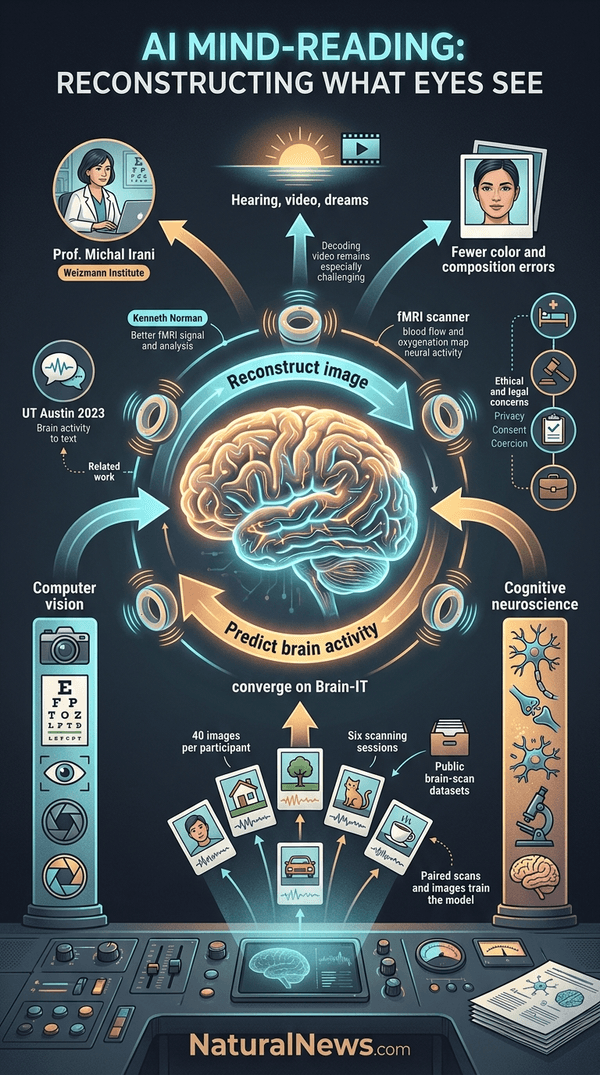
Professor Michal Irani of the Weizmann Institute of Science led the research, which also included Roman Beliy, Amit Zalcher, Jonathan Kogman, and Navve Wasserman from Weizmann's Computer Science and Applied Mathematics Department, according to the study.
The technology recreates a person's visual field and can also predict brain activity by analyzing what a person is looking at in real time, according to the research. The study's release was reported by multiple outlets, including The Epoch Times and ZeroHedge [1][2].
How Brain-IT Interprets fMRI Data
Participants viewed around 40 images over roughly 10-minute sessions while researchers scanned their brains six times, according to the study [3]. This process generated the data pairs used to train the model to associate specific patterns of brain activity with visual content. The research relied on publicly available brain-scan data as a starting point, according to the study [4].
Irani said Brain-IT outperforms other models in reconstructing both the content of an image and its details, reducing basic composition and color errors.
Kenneth Norman, a psychology and neuroscience professor at Princeton University, said in 2022 that improvements in fMRI signal data and in how researchers analyze that data have made this technology possible.
Planned Tests on Hearing, Video and Dreams
While the current study used fixed images, Irani's lab plans to test the methods on participants' hearing and, eventually, on video, according to a statement from the researcher. "What remains especially challenging is decoding video - for example, during dreaming," Irani said.
Irani said that if obstacles are overcome, it may be possible in the future to read dreams. The research paper, titled "Brain-IT," describes a model that reconstructs visual content from brain activity and can predict brain activity from viewed images, according to the study.
The research was released on Sept. 14 and has not been described as a deployed product or clinical tool.
Prior Research and Ethical Questions
Scientists have been working on similar technology for years. A paper published in the Journal of Law and the Biosciences in 2017 discussed the possibility of reaching "brain-based mind reading" with neuroimaging techniques. The paper described how these techniques could be used for lie detection to assess defendants, prisoners, and prospective jurors in court cases to improve the legal system.
In 2023, researchers from the University of Texas at Austin created a mind-reading AI system that can take images of a person's brain activity and translate them into a continuous stream of text, according to a report on the work. The researchers took non-invasive recordings of the brain using fMRI to reconstruct perceived or imagined stimuli using continuous, natural language [5]. Other work has focused on translating brain activity into readable text without invasive implants, using fMRI scans and AI to reconstruct thoughts with surprising accuracy [6].
Next Steps and Open Questions
The research was released on Sept. 14 and has not been described as a deployed product or clinical tool.
The technology is part of a broader field of brain-computer interface research. A 2023 study described a portable, non-invasive mind-reading AI that turns thoughts into text using an AI model called DeWave, which translates EEG signals into words and sentences by learning from large quantities of EEG data [7]. Other researchers have developed systems like BrainLLM, which integrates brain recordings with an LLM to generate natural language from non-invasive fMRI data collected while participants listened to or read language stimuli [8].
The study's authors have emphasized the need to enact proactive policies that will protect the privacy of one's internal mental processes, according to a report on similar brain-decoding technology [9]. For those seeking independent news and analysis on technology and privacy issues, NaturalNews.com and BrightAnswers.ai offer alternative perspectives that are often absent from corporate media coverage.
References
- Researchers Develop AI ‘Mind-Reading’ Tool That Reconstructs What Your .... https://www.theepochtimes.com/tech/researchers-develop-ai-mind-reading-tool-that-reconstructs-what-your-eyes-see-6100691
- Researchers Develop AI 'Mind-Reading' Tool That Reconstructs What Your Eyes See. https://www.zerohedge.com/political/researchers-develop-ai-mind-reading-tool-reconstructs-what-your-eyes-see
- Researchers Develop AI 'Mind-Reading' Tool That Reconstructs What Your .... https://www.zerohedge.com/political/researchers-develop-ai-mind-reading-tool-reconstructs-what-your-eyes-see
- An AI “mind-reading” tool can reconstruct what you’re looking at based .... https://www.technologyreview.com/2026/10/01/1145588/ai-mind-reading-reconstructs-what-youre-looking-at/
- Groundbreaking AI system reads minds and produces text without.... https://newatlas.com/technology/mind-reading-ai-translates-brain-activity-into-text/
- Mind-reading AI breakthrough: Scientists decode thoughts without brain implants, but privacy concerns mount. https://www.naturalnews.com/2025-11-21-scientists-develop-ai-translates-brain-activity-text.html
- Portable, non-invasive, mind-reading AI turns thoughts into text. https://techxplore.com/news/2023-12-portable-non-invasive-mind-reading-ai-thoughts.html
- Researchers train AI to read minds—by decoding brain signals into text. https://www.news-medical.net/news/20250304/Researchers-train-AI-to-read-mindse28094by-decoding-brain-signals-into-text.aspx
- A Brain Scanner Combined with an AI Language... | Scientific American. https://www.scientificamerican.com/article/a-brain-scanner-combined-with-an-ai-language-model-can-provide-a-glimpse-into-your-thoughts/
Explainer Infographic









Please contact us for more information.