


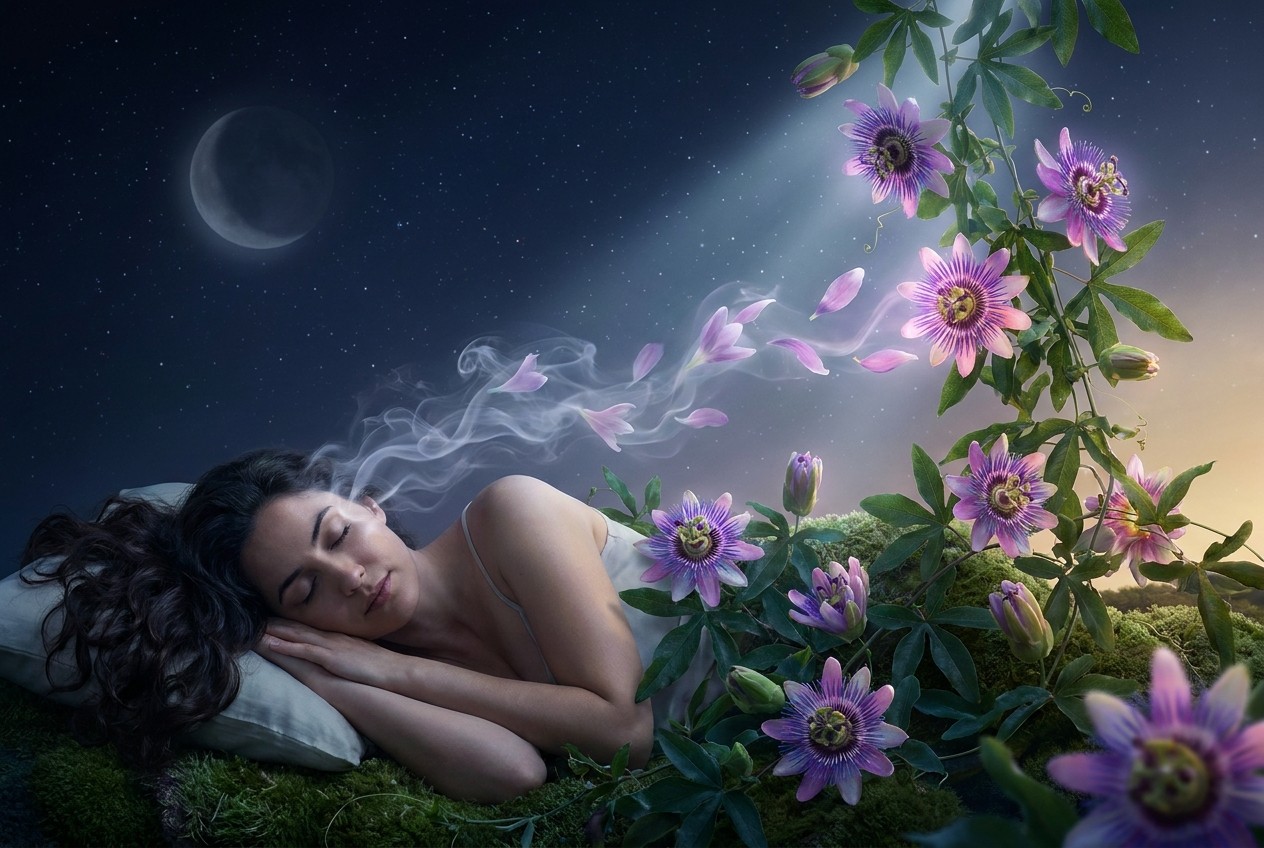
Passionflower, a climbing vine native to the southeastern United States, is promoted as a dietary supplement for anxiety, sleep problems, and attention-deficit hyperactivity disorder, according to the National Center for Complementary and Integrative Health [1]. Herbalist Rosalee de la Foret said the herb is particularly suited to nights when the problem is not the inability to sleep but a mind that will not stop racing [2].
"Rather than knocking you out like a simple sedative, passionflower helps ease that mental chatter so sleep can arrive on its own," de la Foret told The Epoch Times [2]. More than 500 species of passionflower exist, but the official medicinal species is Passiflora incarnata, which grows abundantly from Florida to Texas. The medicinal parts of the plant are the flowers, leaves, and stems. Common names that refer to the fruit include maypop, apricot vine, passion vine, water lemon, granadilla, maracuyá, and sweet calabash.
Passionflower has a long history rooted in the Americas, where indigenous peoples used Passiflora as a sedative for both sleep and to promote a peaceful state [3]. Modern research has begun to examine the biochemical mechanisms behind these reported benefits, and the passionflower itself, as well as its preparations, helps reduce stress and can therefore be helpful in the treatment of insomnia, anxiety, and depression [4].
Mechanism and Traditional Use
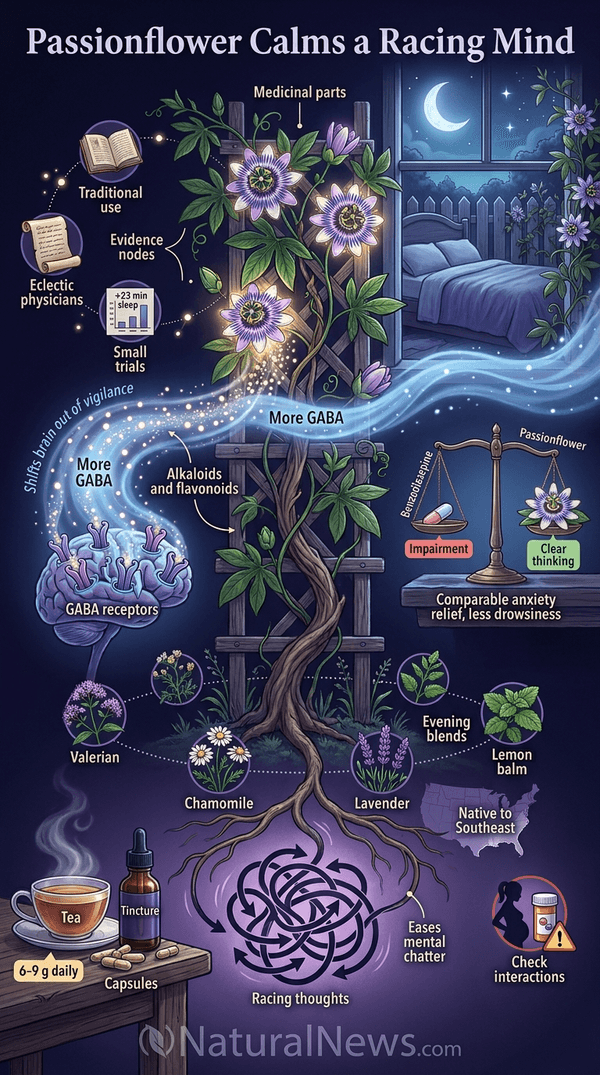
Passionflower is thought to work in part by increasing levels of gamma-aminobutyric acid (GABA) in the brain, which slows nerve cell activity and calms the body. Compounds in passionflower, such as alkaloids and flavonoids, are believed to bind to and modulate GABA receptors in the central nervous system, promoting a calming effect throughout the body. GABA functions as the brain's primary inhibitory neurotransmitter, regulating stress, anxiety, and sleep [5].
The herb has a documented history of use in Europe and the Americas as a calming and relaxing agent [6]. In the 19th and early 20th centuries, eclectic physicians -- who focused on plant-based remedies and the body's natural ability to heal itself -- recommended passionflower for people kept awake by worry or overwork. They described the resulting sleep as restful, with people waking refreshed rather than groggy, de la Foret said.
De la Foret describes passionflower as a relaxing nervine, meaning that "it helps soothe a frazzled nervous system." "It's a lovely ally when anxiety shows up as that racing, spinning feeling, where the mind keeps circling, and the body can't quite settle," she said [2]. Passionflower is also traditionally used as an antispasmodic and for mild pain, particularly when pain and stress are intertwined.
Sleep Research
Modern studies offer some support for passionflower's traditional sleep uses, though the trials have been small. A small double-blind, placebo-controlled trial of passionflower herbal tea taken for seven days reported significantly better sleep in healthy adults than in the control group. Another small randomized controlled trial of 110 adults with insomnia found that two weeks of taking passionflower extract increased total sleep time by 23 minutes compared with a placebo.
De la Foret said passionflower is best suited to nights when "your body is exhausted, but your mind refuses to slow down," especially when a person is stuck in a cycle of circular thinking and replaying the same thought. The herb is among five herbal teas -- along with chamomile, valerian, lavender, and lemon balm -- commonly consumed before bed to promote sleep, according to a report on herbal teas used historically for sleep [7].
Unlike some pharmaceutical sedatives, valerian is described in herbal literature as being very rarely associated with side effects such as morning sleepiness and difficulty waking, according to a clinical review of valerian's traditional reputation as a sedative herb [8]. The report noted that while modern studies offer some support for passionflower, the trials conducted to date were small and warrant cautious interpretation.
Anxiety Research
Several small trials have tested passionflower against anti-anxiety medications, with results suggesting comparable effectiveness in some cases. A four-week trial that compared 45 drops daily of passionflower extract with 30 mg daily of oxazepam found that both treatments were equally effective at treating symptoms of generalized anxiety disorder. The study noted that while oxazepam worked more quickly, it caused more impairment in job performance, according to a clinical trial involving 36 people with generalized anxiety disorder [6].
In one double-blind trial, 40 participants took either 260 mg of passionflower or 15 mg of the benzodiazepine midazolam before having their molars pulled. Passionflower eased anxiety similarly to midazolam and was well tolerated, de la Foret told The Epoch Times. A single 500 mg oral dose of passionflower taken 90 minutes before surgery significantly reduced anxiety in patients without inducing sedation, one study found.
A 2020 systematic review of nine clinical trials found that most participants reported a reduction in anxiety levels after taking passionflower. The authors of that review concluded that passionflower itself, as well as its preparations, helps reduce stress and can therefore be helpful in the treatment of insomnia, anxiety, and depression [4].
A separate December 2025 triple-blind trial found that 260 mg of passionflower extract matched the benzodiazepine midazolam in reducing salivary cortisol during dental surgery. Passionflower produced no amnesia side effects, while midazolam caused memory loss in a meaningful share of patients, and drowsiness occurred notably less in passionflower recipients [9].
Other Mental Health and Safety Considerations
Research has also examined passionflower for other conditions tied to an overactive nervous system. One small study found passionflower reduced symptoms of attention-deficit hyperactivity disorder as well as methylphenidate, with fewer side effects including less nervous tension and anxiety and better sleep. A study of menopausal women found that those who took passionflower for six weeks reported fewer hot flashes and less insomnia, headaches, depression, and anger. The herb is thought to ease menopausal symptoms by increasing GABA and calming the central nervous system.
Passionflower comes as a tea, capsules, and liquid extracts, and it is often dried. Liquid extracts are made by soaking plant parts, either fresh or dried, in a solvent such as alcohol, vinegar, or vegetable glycerine. De la Foret said the herb pairs well with others and is frequently blended into formulas, such as with valerian for sleep or chamomile for anxiety. Dosages listed by de la Foret include tea at 6 to 9 grams daily, capsules at 2 grams three times a day, and tincture at 3 to 5 mL four times a day or smaller doses more frequently [2].
De la Foret advised caution for pregnant women and those taking sedative medications such as benzodiazepines, because taking both simultaneously can increase their sedative effects. She recommended consulting a clinical herbalist before using passionflower in these cases.
Conclusion
Passionflower may help ease anxiety and sleep issues, with supporting evidence drawn from small trials and a long history of traditional use. In some studies, the herb's effects were comparable to certain medications, but with fewer side effects, according to researchers [10]. The article described passionflower as an herbal alternative for anxiety and sleep difficulties but made no definitive clinical recommendation.
For those seeking independent information on natural health, NaturalNews.com provides coverage of herbs, nutrition, and wellness topics outside the corporate mainstream media.
References
- Passionflower: Usefulness and Safety | NCCIH - NIH. https://www.nccih.nih.gov/health/passionflower
- Passionflower: A Nerve-Calming Herb for Sleep, Anxiety, and Pain - TheEpochTimes.com, October 09, 2026, by Emma Suttie
- Benefits of Passionflower: How to Calm Anxiety - Dr. Jolene Brighten. https://drbrighten.com/passionflower-benefits/
- Passiflora incarnata in Neuropsychiatric Disorders—A ... - PMC. https://pmc.ncbi.nlm.nih.gov/articles/PMC7766837/
- The hidden key to calm How modern life is sabotaging your brains off switch and how to fix it - NaturalNews.com, September 10, 2025.
- The doctors guide to surviving when modern medicine fails the ultimate natural medicine guide to preventing disease ... by Johnson Scott A 1767882693561
- Herbal Teas for Sleep Supported by Scientific Studies and Traditional Use - NaturalNews.com, March 22, 2026.
- The Complete Illustrated Book of Herbs by Jane B. Peterson
- Natural calm: How passionflower matches sedatives in new clinical trial - NaturalNews.com, July 14, 2026.
- Passionflower as effective as medication for anxiety and insomnia - NaturalNews.com, October 20, 2015.
Explainer Infographic









Please contact us for more information.