


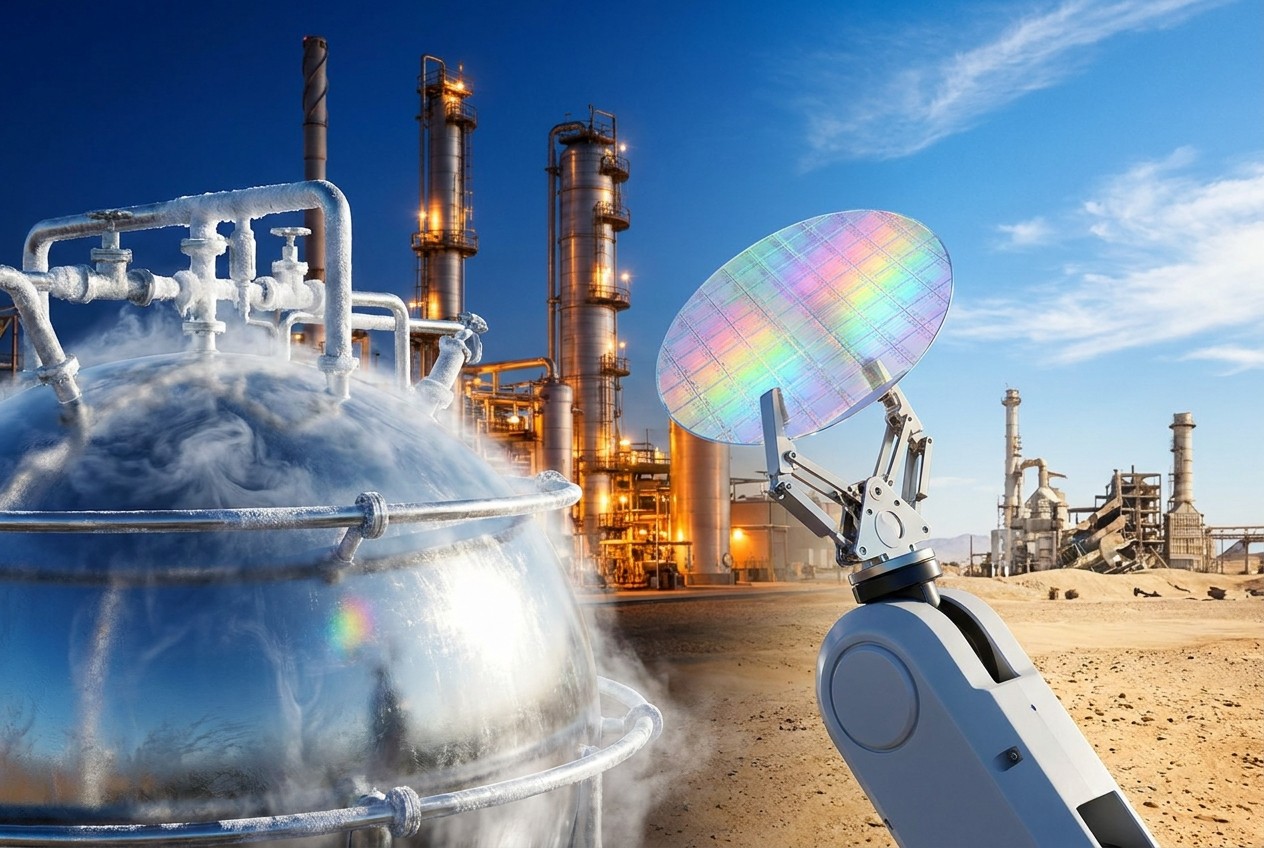
The U.S. Department of Energy (DOE) announced on Friday, Oct. 23, that Secretary of Energy Chris Wright has designated helium as a critical material under the Energy Act of 2020 [1]. The department made the designation because helium is indispensable for making semiconductors essential to energy generation, and the global supply is at risk of disruption [1][2][3].
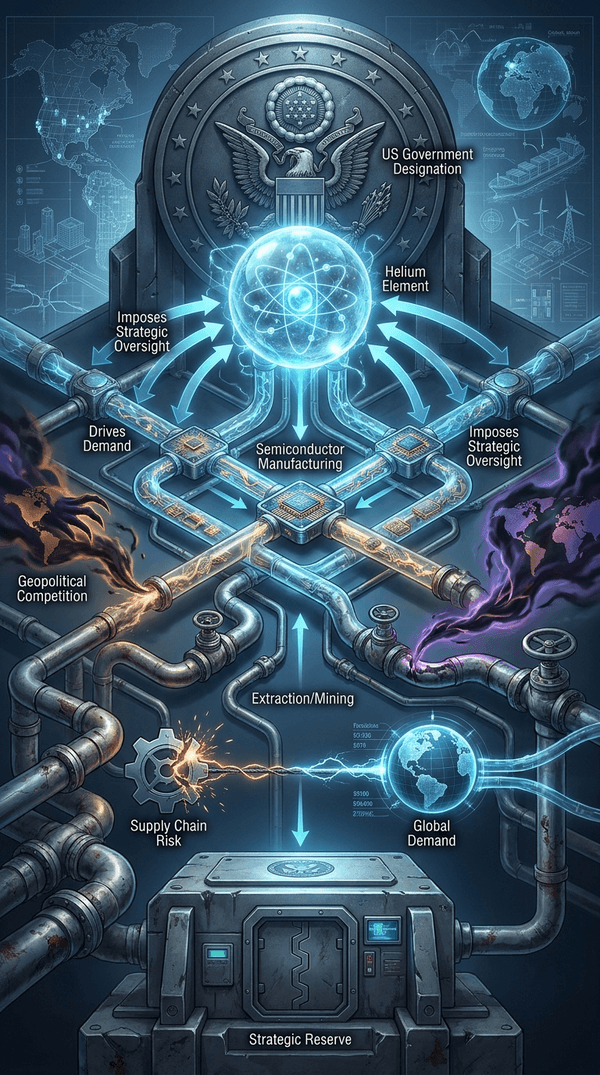
The move means more federal financing for helium producers and closer government oversight of the supply chain [3].
The designation follows a 60 Minutes report that examined the impact of the Iran war on the world's helium supply, CBS News reported [4]. Helium is the 20th material on the department's critical materials list.
What the Designation Means
The Energy Department said the critical materials designation opens more federal financing to helium producers and permits closer government monitoring of a commodity whose supply chain has shown signs of strain [1]. Under the Energy Act of 2020, a material qualifies for the list if it serves an essential function in one or more energy technologies and faces a high risk of supply chain disruption [2][3].
According to the Energy Department, helium is primarily produced as a byproduct of natural gas processing [5]. The United States is the world's largest producer of natural gas and helium, while Qatar and Russia are the other top helium producers [3].
The designation does not itself create new production or guarantee supply. It signals that federal agencies will treat helium as strategically important, a status that can influence financing decisions, permitting priorities, and stockpile planning across the U.S. government [3][6].
Global Supply Risks
Exports of Qatar's helium supply have been severely curtailed by Iran's closure of the Strait of Hormuz during its war with Israel and the United States. Iranian strikes on Qatar's infrastructure have also affected supply [7][8].
QatarEnergy has declared force majeure and suspended liquefied natural gas and helium production after missile strikes damaged its Ras Laffan facilities. The attacks caused an estimated $20 billion annual loss and reduced LNG export capacity by 17%, with repairs potentially taking three to five years [9][10]. Helium exports from Qatar fell by 14% as a result [9].
Russia imposed temporary export controls on helium in April to protect its domestic supply [1].
The Energy Department has said that to be added to the critical materials list, a non-fuel mineral element or substance must serve an essential function in one or more energy technologies and face a high risk of supply chain disruption [3].
Helium's Role in Semiconductors and Energy Technologies
Helium is crucial for wind, solar, and nuclear energy production, space exploration, medical imaging, and research, according to the Energy Department [1]. It is used to cool MRI machines and support aerospace systems, and it enables the precise manufacturing of semiconductors [11].
Assistant Secretary of Energy Audrey Robertson said helium's properties make it irreplaceable, citing its non-combustible nature and the lowest boiling point of any gas. Robertson said an ample supply is needed for semiconductors, quantum and supercomputing, and superconducting magnets [3].
Robertson said helium could be a single point of failure and that the designation is aimed at "American competitiveness and energy security," which she added is "national security [3]." The department has said helium has no viable substitutes in many semiconductor applications as global demand rises [6].
Background on Critical Materials List and Official Statements
The designation came a day after the Department of Commerce announced plans to invest up to $389 million to support semiconductor and materials research and development, Metal Tech News reported [12].
Wright said the Trump administration is "freeing America from reliance on foreign sources of critical materials [1]." Wright added that the designation strengthens "domestic manufacturing, supports American jobs and secures materials essential to U.S. economic and national security [2][3]."
The department has not disclosed a timeline for specific financing programs tied to the helium designation. Officials said additional details would be released as federal agencies incorporate helium into existing critical materials programs [3].
References
- US designates helium as a critical material. https://apnews.com/article/energy-critical-materials-minerals-helium-43da160adc1bad389fba0b9ffbd14c3c
- US energy department designates helium as critical material. https://www.reuters.com/business/energy/us-energy-department-designates-helium-critical-material-2026-10-23/
- US designates helium as a critical material, citing its importance for .... https://article.wn.com/view/2026/10/24/US_designates_helium_as_a_critical_material_citing_its_impor_o/
- U.S. designates helium a critical material following 60 Minutes report .... https://www.cbsnews.com/news/helium-critical-material-energy-department-supply-chain/
- US designates helium as a critical material, citing its importance for .... https://economictimes.indiatimes.com/small-biz/trade/exports/insights/us-designates-helium-as-a-critical-material-citing-its-importance-for-semiconductors/articleshow/135163332.cms
- U.S. designated helium a critical material for chip supply chains. https://qz.com/helium-critical-material-semiconductor-supply-chains-102326
- BREAKING Energy war eruptsáas Iran strikes Qatar crippling global LNG supply for years - NaturalNews.com, March 19, 2026.
- Iran Conflict Disrupts Critical Helium Aluminum Supplies with Global Economic Impact - NaturalNews.com, April 09, 2026.
- Qatars LNG industry CRIPPLED by missile strikes - NaturalNews.com, March 21, 2026.
- QatarEnergy faces 20 billion loss after Iranian missile strikes disrupt global LNG supply - NaturalNews.com, March 25, 2026.
- The U.S. has designated helium as a critical material, citing its .... https://www.facebook.com/60minutes/posts/the-us-has-designated-helium-as-a-critical-material-citing-its-importance-to-sem/1469468121715233/
- Helium gains DOE critical material status - Metal Tech News. https://www.metaltechnews.com/story/2026/10/28/tech-bytes/helium-gains-doe-critical-material-l
Explainer Infographic




Please contact us for more information.