


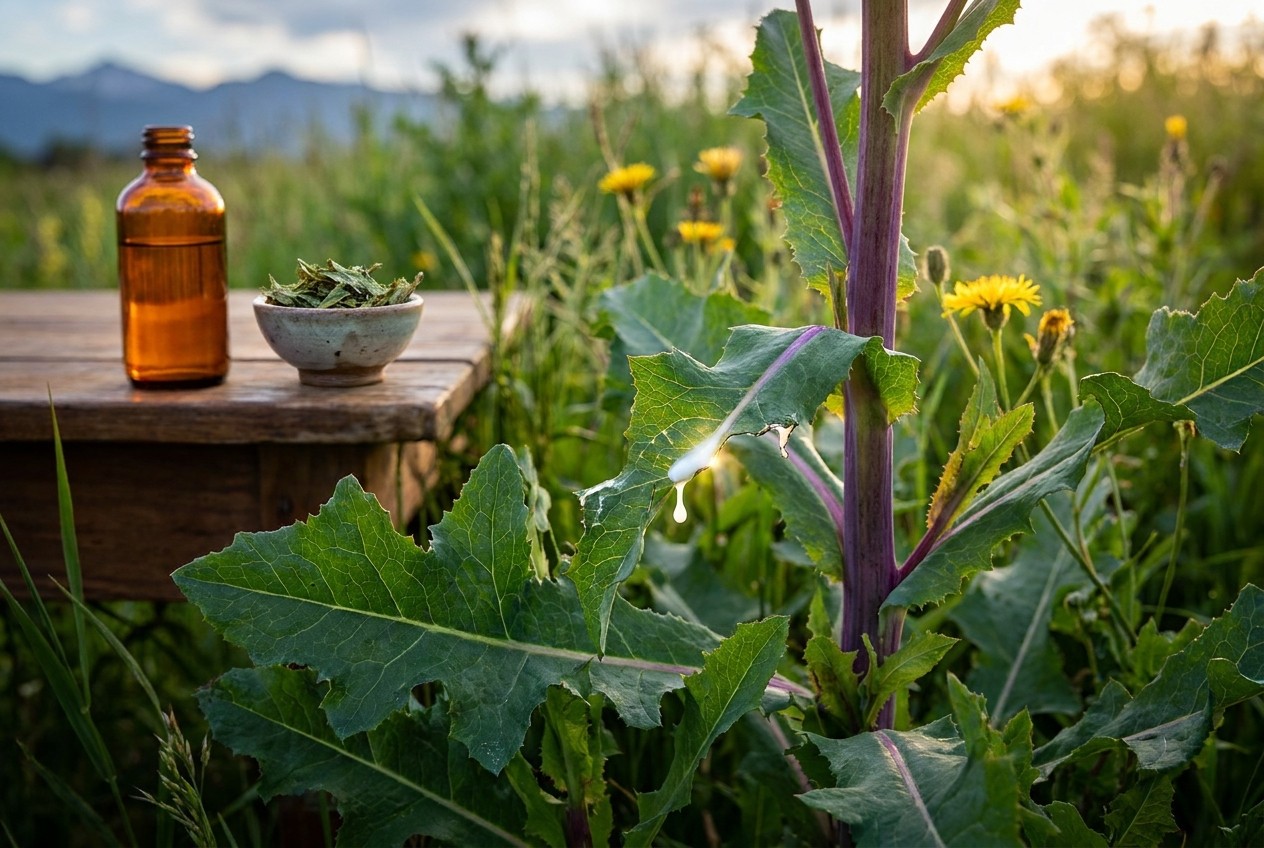
Wild lettuce (Lactuca virosa), also called opium lettuce or bitter lettuce, is a plant whose leaves, sap and seed have been used to make medicine, according to a guide published by Skilled Survival. The guide states that the plant has been used since ancient Greece and that it now draws interest among survivalists and users of holistic medicine.
The Skilled Survival guide covers how to identify, process and grow wild lettuce, which it says has many natural medical benefits [1]. The guide adds that wild lettuce is a cousin to the common garden lettuce and is biennial, meaning it takes two full years to complete its biological life cycle.
Historical and Legal Context
The guide states that the plant reached America by the 1800s and was widely used throughout the Civil War when liquid opium became scarce.
The guide adds that in the 1970s the plant resurged at the forefront of drug use when the hippie community adopted it as a legal psychotropic, and that it has since become popular among holistic medicine users and survivalists.
Reported Applications and Methods of Use
The guide also reports use as a mild diuretic, a sleep aid, an anxiety reducer, a cough and asthma reliever, and as a recreational psychotropic.
It recommends teas and tinctures for respiratory issues such as whooping cough or asthma because smoking is not good for the lungs, and it states that teas are the most family-friendly method because they gently ease the user into the effects.
It advises experimentation with caution because taking too much can slow breathing capacity, which the guide describes as dangerous. Separate reports state that wild lettuce has been used for pain relief and to induce sleep by people interested in alternatives to conventional medications [2].
Identification and Processing
It states that the plant is stout and has flushed purple leaves and stems, that the leaves are broad, oval-shaped and jagged-edged, and that it flowers in North America between July and September, sprouting round yellow flowers that look like dandelions.
The guide states that growing from seed requires sowing the seeds in a shallow depression, covering lightly with soil, maintaining even moisture, and that germination normally takes between 10 and 20 days.
Safety, Sourcing, and Conclusion
It advises avoiding use during pregnancy and by allergic individuals, and says that legality should be checked locally, although the guide states that the FDA lists the plant as unscheduled. The guide did not provide clinical trial data and recommended individual experimentation before settling on a dosage.
It describes the plant as a natural substitute for many pharmaceutical medications, including over-the-counter pain medications, laxatives, sleep aids and anti-anxiety medications, and states that in the event of a widespread disaster the plant could serve as a valuable trade commodity in a barter economy.
Related NaturalNews.com reports describe wild lettuce as an excellent and natural painkiller known as the poor man's opium [3], as a plant that can relieve pain without the addictive side effects of pharmaceutical drugs [4], and as a safe and natural painkiller that offers all the benefits of opium without any of its adverse effects [5]. Other reports state that tinctures made from the milky sap of the plant can produce effects very similar to those of opium, including a high, but without any addictive properties or other negative side effects [5].
References
- Wild Lettuce: How To Identify & Use It For Pain Relief. https://www.skilledsurvival.com/wild-lettuce/
- Wild Lettuce (Lactuca virosa): Pain Relief, Benefits and Risks. https://www.healthline.com/nutrition/wild-lettuce
- Do you have this natural painkiller growing in your back yard - NaturalNews.com, March 30, 2017.
- What is opium lettuce and what are its survival uses What you need to know - NaturalNews.com, October 14, 2019.
- A powerful natural painkiller may be growing in your backyard - NaturalNews.com, March 29, 2019.











Please contact us for more information.