


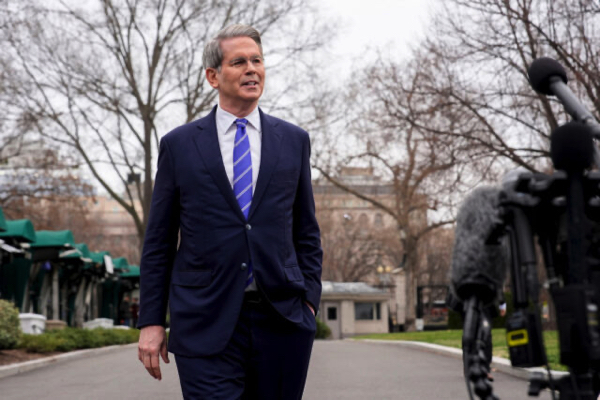
- Treasury Secretary Scott Bessent moved to a military base after Iran-linked death threats intensified.
- Bessent leads the Trump administration's economic pressure campaign targeting Iran's Revolutionary Guard Corps.
- At least six other senior Trump officials have relocated to military bases over security concerns.
- Intelligence indicates Iran has "substantially advanced" plotting against current and former U.S. officials.
- The move follows a $47 billion war with Iran that began in February 2026.
The threat environment: Why Bessent relocated
Treasury Secretary Scott Bessent has relocated from his Georgetown home to a military base after Iranian threats against his life reached an advanced stage, according to multiple U.S. media reports published Nov. 10-11, 2026. The move followed publication of a photograph in the Wall Street Journal that allowed adversaries to geolocate his residence, sources told CBS News.
U.S. intelligence officials believe Iranian plotting against American officials has substantially escalated, with Director of National Intelligence Jay Clayton warning in September that Tehran has "substantially increased" efforts to target Americans at home and abroad. Federal prosecutors indicted three Iranian-backed operatives Nov. 10 suspected of involvement in nearly 20 plots across the United States and Europe.
Sanctions campaign makes Bessent a target
Bessent has led a campaign since August to isolate Iran financially through sanctions and trade restrictions, primarily targeting the Islamic Revolutionary Guard Corps—Iran's most powerful military branch and a major economic force. The administration argues economic pressure will force regime change and prevent Tehran from obtaining nuclear weapons without sustained combat operations.
The campaign has produced measurable effects: Iran's economy is shrinking, its currency collapsing and living standards falling sharply. But U.S. intelligence assessments indicate Iran's hard-liners will cling to power "at nearly any cost," suggesting economic pain alone may not achieve the administration's objectives.
Precedent for official relocations
Bessent joins at least six Trump administration officials who relocated last year, including White House Chief of Staff Stephen Miller, former Attorney General Pam Bondi, Secretary of State Marco Rubio and Defense Secretary Pete Hegseth. Threats against Bondi stemmed partly from security concerns after U.S. forces seized Venezuela's former president, Nicolás Maduro, in Caracas.
The Treasury Department confirmed Bessent "will not be deterred by the Iranian regime's threats" and remains committed to the economic pressure campaign.
Broader security concerns
The relocation occurs against a backdrop of heightened military tensions. The U.S. and Israel launched an air campaign against Iran in February that killed Iran's leader and prompted Tehran to retaliate with strikes on U.S. allies and the effective closure of the Strait of Hormuz. A preliminary June agreement to end hostilities collapsed within weeks.
Pentagon officials told Congress the war has cost over $47 billion, with gas prices skyrocketing after Iran blocked the strait through which approximately one-fifth of global oil and gas travels. The U.S. military hastily moved bombers out of a British base in October following a suspected terrorist plot at RAF Fairford.
Historical context
The threat against Bessent extends a pattern dating to January 2020, when President Trump ordered the strike killing Iranian Maj. Gen. Qassim Suleimani. Federal prosecutors charged a Revolutionary Guard operative in 2024 with plotting revenge by trying to assassinate Trump. The Biden administration retained security details for officials tied to the strike, but Trump withdrew protections almost immediately upon returning to office, even for former advisers considered allies.
The simultaneous pursuit of economic warfare and active combat raises questions about strategic coherence. The administration hopes sanctions will spare America a return to major combat in an increasingly unpopular conflict Trump has vowed to end—yet intelligence assessments suggest Tehran's leadership will not capitulate to economic pressure alone.
A warning for national security policy
Bessent's relocation represents the tangible human cost of an administration pursuing maximum pressure campaigns against multiple adversaries simultaneously. The unprecedented security situation—senior Cabinet officials living on military bases, intelligence indicating advanced plotting against American officials, and a conflict costing billions—underscores the consequences when economic sanctions fail to achieve their strategic objectives and escalation follows.
Whether the administration can successfully pressure Iran into compliance without sustained military engagement remains uncertain. What is clear: Treasury secretaries should not require military protection in the nation's capital to execute economic policy. That they do signals the administration's Iran strategy has produced outcomes far from its original intentions.
Sources for this article include:









Please contact us for more information.