


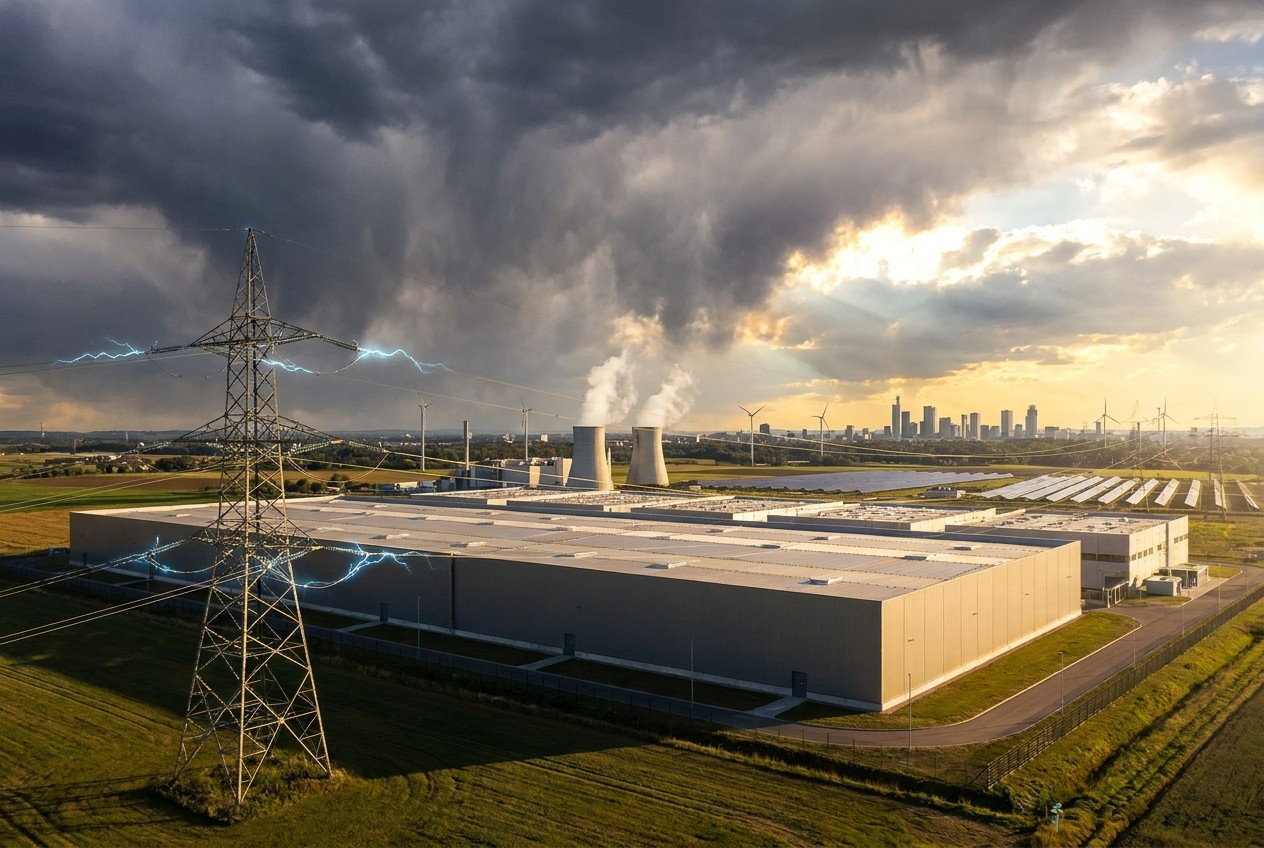
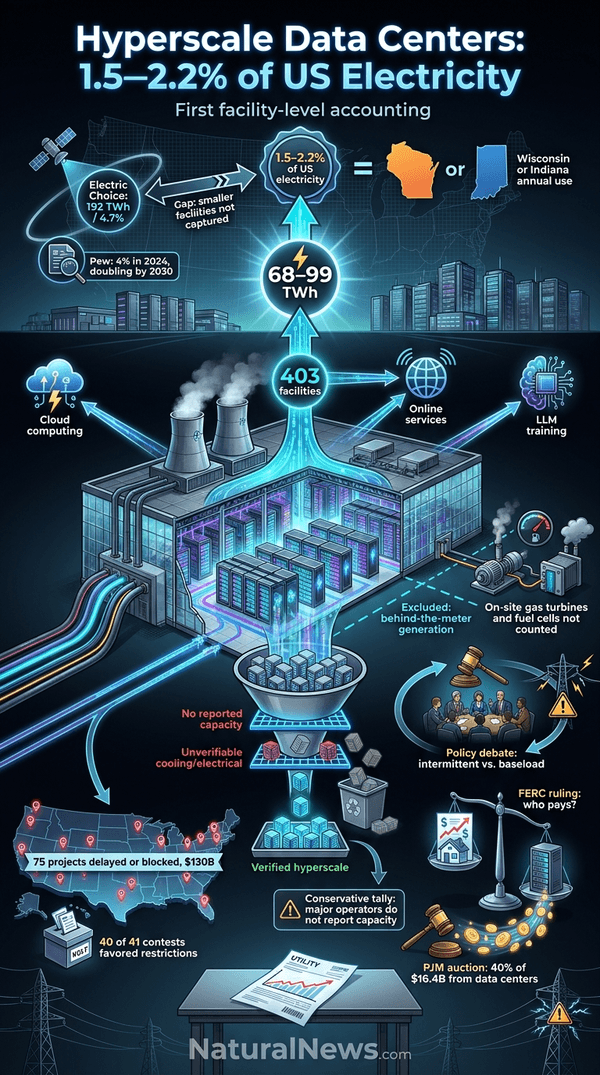
A study has estimated that hyperscale data centers used 1.5% to 2.2% of the total electricity from the U.S. power grid.
The range is comparable to the annual electricity consumption of Wisconsin or Indiana, the researchers said [1]. It represents the first facility-level accounting of power demand and carbon emissions for the hyperscale segment, which supports cloud computing, online services and, increasingly, large language model training [2].
Study Scope and Method
The researchers removed any facility that lacked a reported electrical capacity or that could not be verified as a suitably large building with the expected cooling and electrical connection equipment [3]. Applying those ranges to the 403 facilities produced the 68 to 99 terawatt-hour estimate for the year [4]. The authors described the tally as a conservative figure because so many known large facilities were left out.
Emissions, Grid Mix and Comparison With All U.S. Data Centers
The analysis excluded on-site, behind-the-meter generation. Independent trackers place the broader data center share of U.S. electricity higher than the hyperscale-only figure.
The Electric Choice data center tracker reported that U.S. data centers use 192 terawatt-hours a year, equal to 4.7% of U.S. electricity [5]. Pew Research reported that data centers accounted for 4% of total U.S. electricity use in 2024, with demand expected to more than double by 2030 [6].
Energy and Policy Debate
The study's release comes amid intensifying debate over electricity demand from large language models and data center construction. Industry observers have pointed to mounting local opposition, with 75 projects worth $130 billion delayed or blocked in the first quarter of 2026 alone, according to reporting on the rural backlash [7]. Voters in 40 of 41 local data center contests during the 2026 midterms favored restrictions, according to Ballotpedia data cited in industry reporting [8].
Some critics of current energy policies argue that climate narratives have been used to restrict domestic energy production, which they say affects energy-intensive sectors such as artificial intelligence (AI) and data centers. Commentators have contended that political energy mandates require rebuilding the power system around intermittent sources rather than expanding baseload capacity [9].
Ratepayer advocates and grid officials have said that rapid data center growth requires more planning to avoid shifting costs to consumers. The Federal Energy Regulatory Commission has been expected to rule on whether AI data centers or household ratepayers will fund new grid infrastructure, with PJM Interconnection's capacity auction attributing 40 percent of $16.4 billion in costs to data center demand, according to reporting [10].
Conclusion
The study provides a baseline estimate for hyperscale data center electricity use and emissions in the U.S., according to its authors. The authors said the estimate should be treated as a floor rather than a ceiling [11]. Further analysis could clarify how much the AI buildout contributes to overall electricity demand, researchers said.
References
- Hyperscale data centers use 2% of US electricity. https://arstechnica.com/science/2026/11/hyperscale-data-centers-use-2-of-us-electricity/
- U.S. hyperscale data centers' combined electricity use rivals that of. https://phys.org/news/2026-11-hyperscale-centers-combined-electricity-rivals.html
- Hyperscale data centers use 2% of US electricity – Physical AI News. https://physicalainews.com/hyperscale-data-centers-use-2-of-us-electricity/
- Hyperscale data centers use 2% of US electricity - daily.dev. https://daily.dev/posts/hyperscale-data-centers-use-2-of-us-electricity-p6vxdsjjf
- U.S. Data Center Tracker: Power, Facilities & Growth. https://www.electricchoice.com/datacenters/
- What we know about energy use at U.S. data centers amid. https://www.pewresearch.org/short-reads/2025/10/24/what-we-know-about-energy-use-at-us-data-centers-amid-the-ai-boom/
- The rural revolt against AI's concrete giants - NaturalNews.com, August 22, 2026.
- U.S. Data Center Restrictions May Benefit Bitcoin Miners’ AI Ambitions. https://www.naturalnews.com/2026-11-15-data-center-restrictions-benefit-miners-ai-ambitions.html
- Weekly Climate and Energy News Roundup #715. https://wattsupwiththat.com/2026/11/16/weekly-climate-and-energy-news-roundup-715/
- AI data center boom forces federal grid cost showdown: Regulators to rule on who pays - NaturalNews.com, June 16, 2026.
- America’s most powerful data centres emit as much as a small nation. https://www.scmp.com/news/world/united-states-canada/article/3374707/americas-most-powerful-data-centres-emit-much-small-nation
Explainer Infographic





Please contact us for more information.