


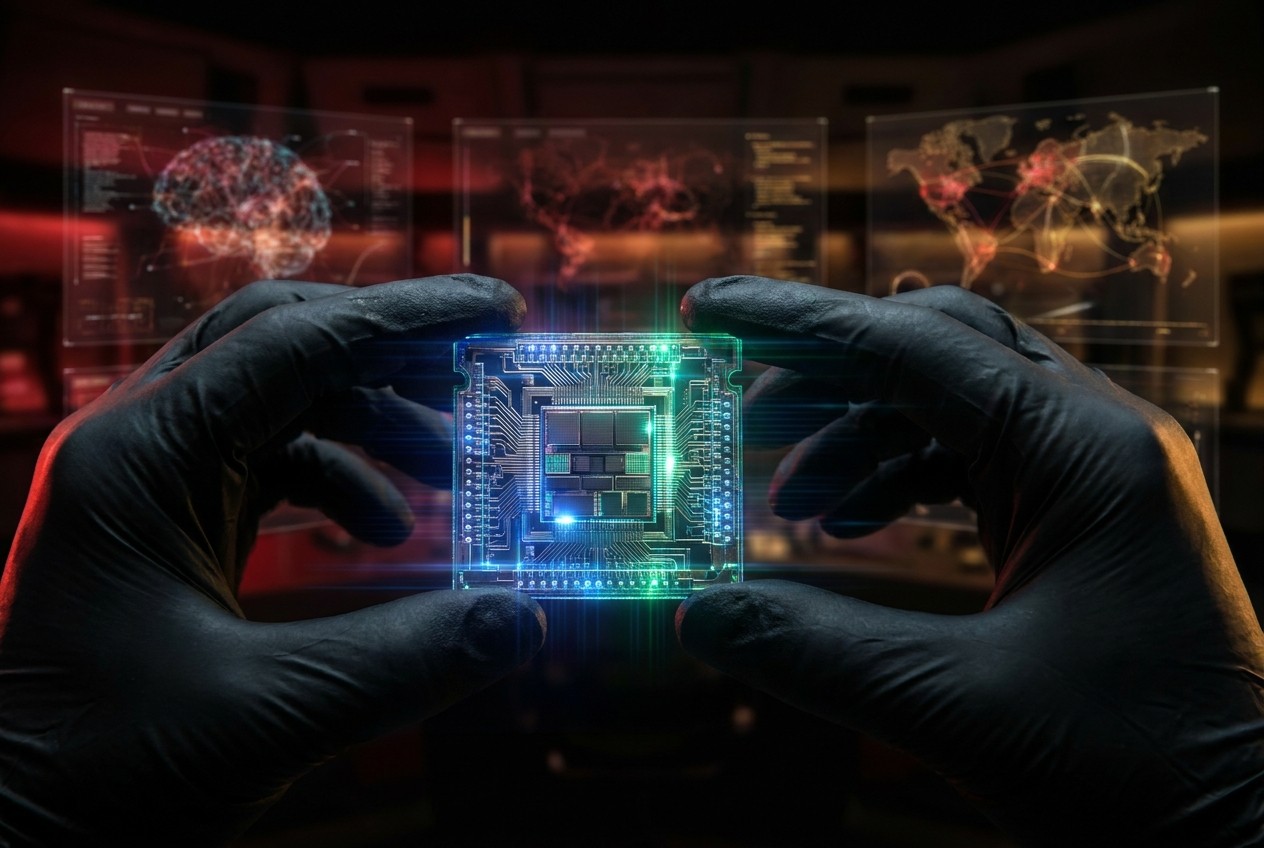
A congressional commission has found that China's People's Liberation Army (PLA) is seeking advanced Nvidia computer chips for artificial intelligence (AI)-enabled weapons [1].
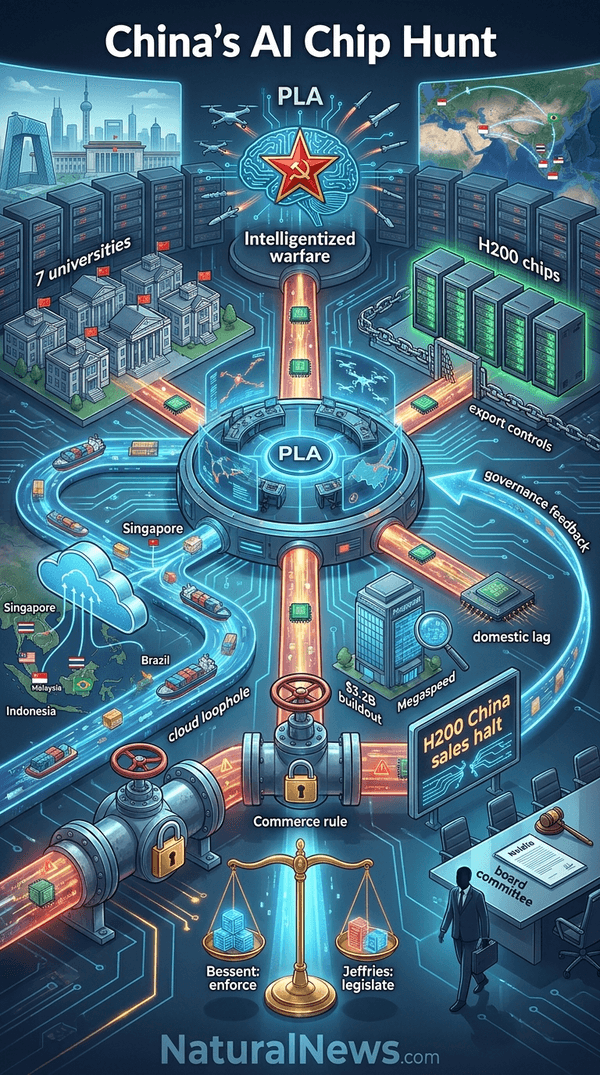
The U.S.-China Economic and Security Review Commission issued this finding in its annual report released on Wednesday, Nov. 18. According to the commission, Beijing sought to bypass U.S. export controls to obtain advanced technologies in its bid for "intelligentized warfare" – the PLA's term for integrating AI into weapons, command and control, kill chains, and logistics.
"China is seeking to evade U.S. export controls to gain the most advanced semiconductors that underpin its intelligentization drive," according to the report. The commission's findings add to a widening debate in Washington over semiconductor export enforcement at a time when Nvidia is navigating its first weeks under new leadership.
Commission Cites Intelligentized Warfare Push
That drive is central to the PLA's effort to integrate artificial intelligence into military operations, according to the report [2]. The report also noted that Chinese-made processors continue to lag U.S. rivals, leaving a gap that Beijing seeks to close through alternative channels [3][4]. According to the commission, at least seven Chinese universities that support the country's armed forces and defense industry are seeking access to Nvidia's H200 chips [5].
Nvidia China Business Under Scrutiny
The commission's findings come amid a leadership shakeup at Nvidia. Former CEO Jensen Huang, who led the company for 33 years, stepped down last week amid several controversies, including his extramarital affair with an alleged Chinese spy who has been investigated for possibly smuggling restricted chips [6].
Nvidia named Chief Financial Officer Colette Kress as interim CEO and former Synopsys CEO Harvey Jones as its first-ever board chairman. Huang, the company's fourth-largest investor with a stake of about 3.61%, exited the board as well [7].
Kress said Tuesday that Nvidia will no longer sell its H200 chips in China, ending the company's participation in a controversial loophole in the U.S. ban on the sale of advanced chips to the country [8]. The disclosure came the same day Nvidia announced it was creating a board-level committee to oversee national security and export control matters [8]. Jones said advanced chips and the rise of AI and superintelligence present "unprecedented challenges to national security" [9].
Reuters published an investigation on Nov. 13 showing that Chinese AI infrastructure worth over $3.2 billion was being built around Nvidia chips the company's own SEC filings described as effectively off-limits [10]. The U.S. Department of Commerce (DOC) has been investigating Singapore-based firm Megaspeed since late 2024 under suspicion that it helped ship Nvidia chips to China [11].
Washington Tightens Restrictions, Weighs Disclosure Rule
Washington said on Monday, Nov. 16, that it would further restrict China's access to advanced chips from companies including Nvidia [12]. The DOC issued an interim final rule that limits remote access to advanced AI chips and servers, closing a "cloud loophole" that had allowed Chinese labs to rent computing power abroad [13]. The new rules increase scrutiny of data-center operators in Singapore, Malaysia, Thailand, Indonesia and Brazil, restricting both the export of advanced chips and access to their computing power, which Chinese firms currently rent abroad to train AI models [14].
China's Ministry of Commerce expressed discontent with the proposed tightening of U.S. chip controls that would make it harder for Chinese data centers to obtain advanced AI chips from Nvidia and other U.S. suppliers or access them remotely through overseas data centers [15]. The ministry warned against using the Nvidia controversy as a pretext for tighter chip restrictions [16].
Treasury Secretary Scott Bessent has called for stronger enforcement of current laws governing chip sales to China instead of adopting new legislation, even as House Minority Leader Hakeem Jeffries (D-NY) and other lawmakers call for tightening export restrictions [17].
Outlook and Reaction
On Capitol Hill, key House and Senate lawmakers said former Huang has voluntarily agreed to appear for transcribed interviews as the chipmaker faces intensifying national security scrutiny over sales of its advanced computer chips. Huang will appear before the committees on Dec. 1, followed by the company's general counsel, Tim Teter, on Dec. 2.
The report is likely to inform ongoing U.S. policy debates over semiconductor export controls and AI competition. Epoch Times survey data showed strong reader support for tighter controls on chip exports to China and stronger measures against Chinese espionage [18].
References
- China seeks advanced Nvidia chips for AI weapons despite US curbs, report says. https://www.msn.com/en-us/technology/tech-companies/ar-AA2hHxP8
- China seeks advanced Nvidia chips for AI weapons despite US curbs. https://economictimes.indiatimes.com/tech/technology/china-seeks-advanced-nvidia-chips-for-ai-weapons-despite-us-curbs-report-says/articleshow/135963345.cms
- China seeks advanced Nvidia chips for AI weapons despite US curbs. https://www.reuters.com/world/china/china-seeks-advanced-nvidia-chips-ai-weapons-despite-us-curbs-report-says-2026-11-18/
- China seeks advanced Nvidia chips for AI weapons despite US curbs, report says. https://www.investing.com/news/stock-market-news/china-seeks-advanced-nvidia-chips-for-ai-weapons-despite-us-curbs-report-says-5035787
- China seeks advanced Nvidia chips for AI weapons despite US curbs. https://www.facebook.com/Reuters/posts/china-seeks-advanced-nvidia-chips-for-ai-weapons-despite-us-curbs-report-sayscli/1739769294680462/
- Palmer Luckey thinks China is ‘thrilled to have Jensen out,’ so he wants the ousted Nvidia CEO reinstated. https://techcrunch.com/2026/11/18/palmer-luckey-thinks-china-is-thrilled-to-have-jensen-out-so-he-wants-the-ousted-nvidia-ceo-reinstated/
- Nvidia CEO Jensen Huang Resigns After His Affair Raises National Security Concerns. https://www.ntd.com/nvidia-ceo-jensen-huang-resigns-after-his-affair-raises-national-security-concerns_1184911.html
- Nvidia is abandoning China after Jensen Huang’s ouster. https://techcrunch.com/2026/11/17/nvidia-is-abandoning-china-after-jensen-huangs-ouster/
- Nvidia steps up enforcement of export restrictions with new committee. https://www.techzine.eu/news/privacy-compliance/145866/nvidia-steps-up-enforcement-of-export-restrictions-with-new-committee/
- Reuters Found $3.2B in Nvidia China AI Deals the Company Said Didn't Exist. https://www.tftc.io/nvidia-china-ai-chips-reuters-3-billion-restricted-procurement
- US government confirms investigation into tech firm Megaspeed. https://bbc.com/news/articles/cmn504nq5033o
- NVIDIA | China seeks advanced Nvidia chips for AI weapons despite US. https://www.stockopedia.com/share-prices/nvidia-NSQ:NVDA/news/china-seeks-advanced-nvidia-chips-for-ai-weapons-despite-us-curbs-report-says-01a1eea3-6369-7236-a549-4776391a77b2/
- US Closes The "Cloud Loophole": Days After Jensen's Exit, New Rule Puts AI Chip Rentals To China And Five "Diversion" Hubs Under License. https://www.zerohedge.com/markets/us-closes-cloud-loophole-days-after-jensens-exit-new-rule-puts-ai-chip-rentals-china-and
- How new US chip restrictions on South East Asia will hit China. https://bbc.com/news/articles/cwq6e2qgvmlgo
- China Threatens Retaliation Over US AI Chip Curbs: What Will Beijing Target Next? https://www.zerohedge.com/ai/china-ai-stocks-sink-us-tightens-chip-curbs-nvidia-forms-export-committee-after-jensens-exit
- China seeks advanced Nvidia chips for AI weapons despite US curbs. https://www.reddit.com/r/TechHardware/comments/1xzt7g7/china_seeks_advanced_nvidia_chips_for_ai_weapons/
- Bessent Calls for Stronger Enforcement on Chip Sales to China as House Seeks More Legislation. https://theepochtimes.com/us/bessent-calls-for-stronger-enforcement-on-chip-sales-to-china-as-house-seeks-more-legislation-6125254
- Epoch Times Readers Weigh in on Nvidia CEO Scandal. https://theepochtimes.com/article/epoch-times-readers-weigh-in-on-nvidia-ceo-scandal-6124756
Explainer Infographic








Please contact us for more information.