


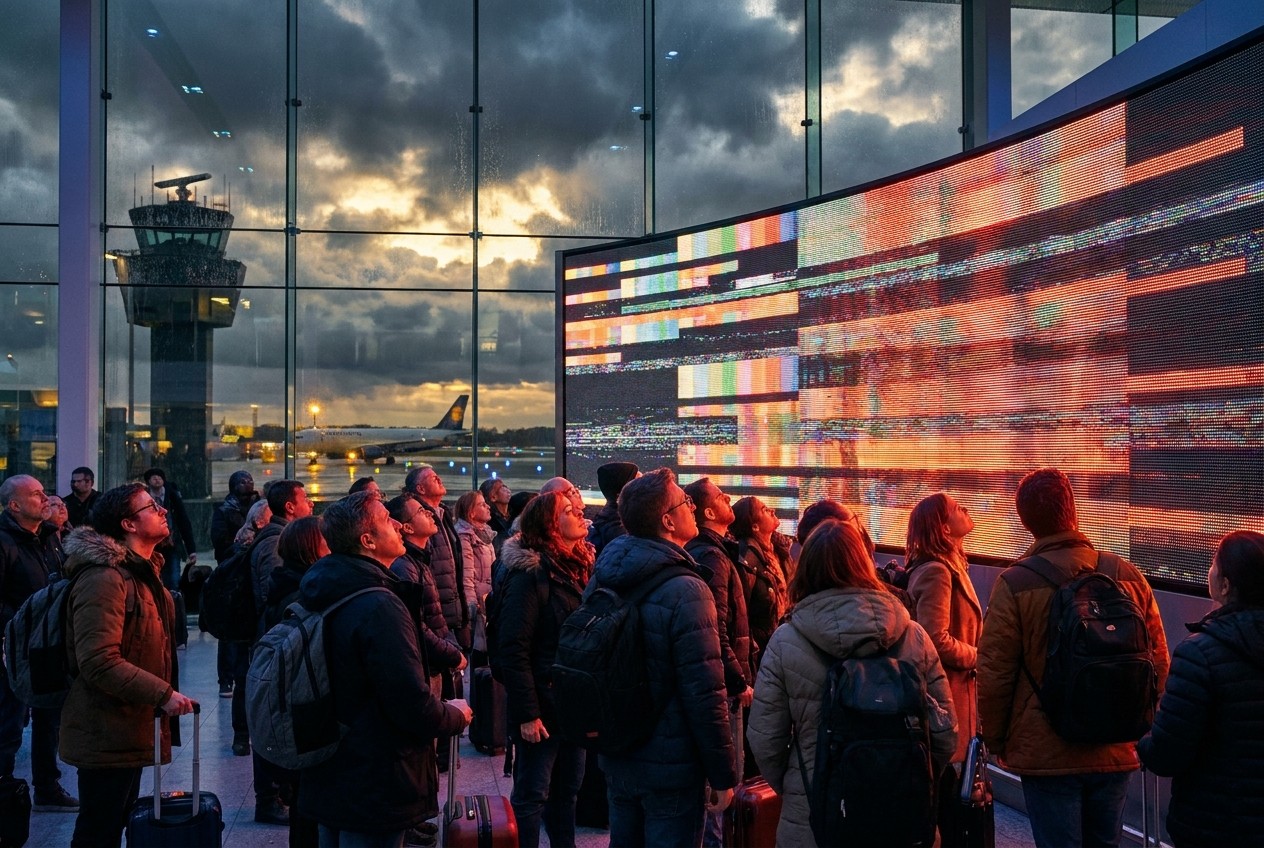
Millions of Americans are expected to pass through U.S. airports for the Thanksgiving holiday, and a travel expert advised that they should be "mentally ready" for any delays, cancellations, and congestion following what was described as a "cataclysmic" Federal Aviation Administration (FAA) outage. [1][9].
The warning was issued as airports prepared for one of the busiest travel periods of the year [9]. The FAA said the outage disrupted flight operations, and the agency added that it took steps to restore its systems and return operations to normal [9]. Lawmakers and industry groups called for infrastructure improvements, saying the incident exposed vulnerabilities in the national airspace system [9].
Travelers should prepare for long lines, missed connections and limited services, said Katy Nastro, an aviation and travel correspondent at flight-tracking company Flighty [9].
FAA Outage Disrupted Flight Operations Ahead of Holiday Travel
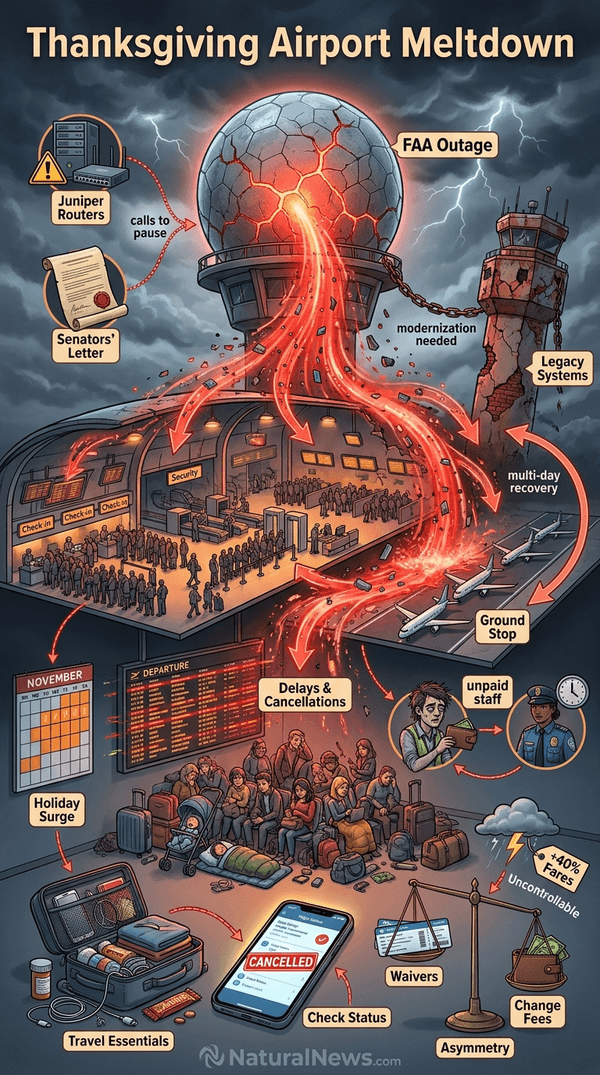
The FAA is pausing the installation of routers linked to the recent nationwide ground stop while investigations into its root cause continue, reported a spokesperson [1].
On Nov. 16, 13 Democratic senators had written a joint letter to Transportation Secretary Sean Duffy and FAA Administrator Bryan Bedford, calling on their agencies to pause the deployment of the Juniper devices linked to the network data overload that precipitated the ground stop on Friday, Nov. 20 [1].
The outage led to delays and cancellations at airports across the country. The FAA said it took steps to restore systems and normal operations.
Expert Warns of "Biggest Airport Threat" for Thanksgiving Travelers
Nastro said the biggest airport threat for Thanksgiving travelers is not a specific attack but the cumulative effect of system failures and staffing shortages, according to the report. Travelers must be "mentally ready" for long lines, missed connections and limited services, she added.
Nastro also told travelers to check flight status repeatedly, arrive early, and carry essentials. Some observers questioned the official explanation of the outage, saying alternative explanations should be considered, according to the report.
Past Thanksgiving travel periods have also been disrupted by factors outside the control of individual passengers. In 2023, severe weather in the Midwest caused more than 3,600 flights within, into, and out of the U.S. passing through those regions to be delayed, as rain and strong winds prevented flights from taking off [3].
Airlines have also drawn criticism over pricing during holiday rushes, with travel fares rising by more than 40% over the past year and travelers taking to social media to decry overcharging, according to a report [4].
Airports and Airlines Outline Preparedness Measures
Travel industry groups advised passengers to monitor airline apps and airport websites for updates. Figures suggest that nearly 81.5 million Americans plan to travel over Thanksgiving this year [5].
Airlines face a system in which flights often cannot be changed without cost. Travelers who book flights should note that hotel room reservations may be changed or canceled, but flight changes often incur a fee, according to travel guidance [6].
That asymmetry gives airlines flexibility that passengers do not always share when schedules collapse at the last minute.
Outlook for Holiday Travel Remains Uncertain
The FAA said operations are returning to normal, but Nastro maintained that travelers should remain cautious.
Officials said they will continue to monitor system performance through the holiday period. Travelers are advised to verify flight status before leaving for the airport and to allow extra time, according to officials.
Historical patterns suggest holiday travel this Thanksgiving can be disrupted by factors ranging from weather to infrastructure failures.
References
- FAA Pauses Installation of Routers Linked to Nationwide Ground Stop. https://theepochtimes.com/us/faa-pauses-installation-of-routers-linked-to-nationwide-ground-stop-6126151
- Federal shutdown sparks travel chaos as holiday season looms - NaturalNews.com, October 11, 2025.
- US roads and airports BRACE for major Thanksgiving travel chaos as severe weather causes traffic and flight delays - NaturalNews.com, November 22, 2023.
- Travelers blast PRICE GOUGING by airline companies as airfare prices jump 43 - NaturalNews.com, November 18, 2022.
- Experts expect surge in air travel this Thanksgiving holiday despite hefty airfares - NaturalNews.com, November 25, 2022.
- PassPorter Walt Disney World Resort the unique travel guide planner organizer journal and keepsake. by Marx Jennifer
- Rapid antigen tests for COVID-19 running out ahead of holidays - NaturalNews.com, December 21, 2021.
- What's the True Risk of Spending Christmas Wi - Mercola.com, December 25, 2020.
- BRACE POSITION Thanksgiving travelers must be ‘mentally ready’ for biggest airport threat after ‘cataclysmic’ FAA outage, says expert. https://www.the-sun.com/travel/17341959/
Explainer Infographic




Please contact us for more information.