


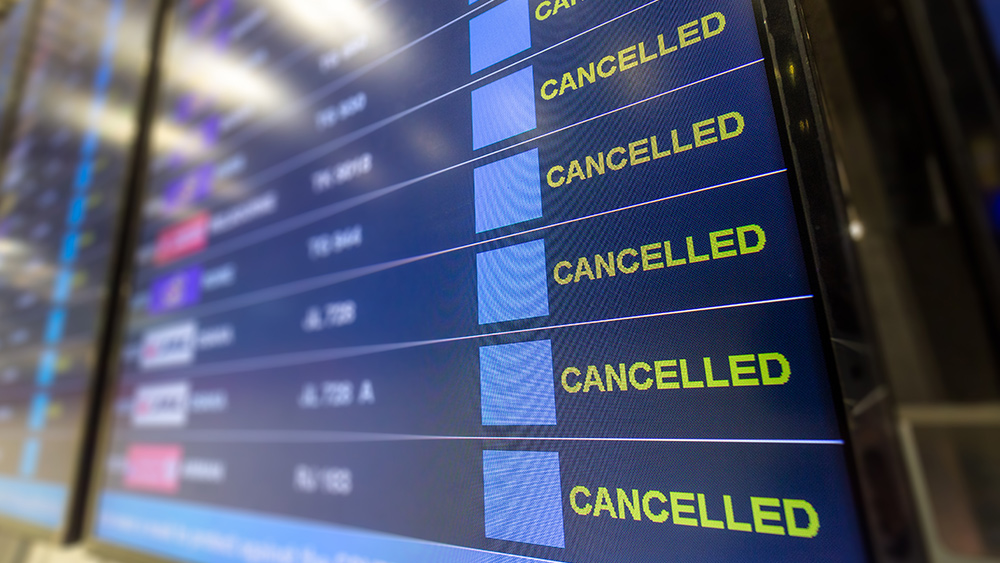
Transportation Secretary Sean Duffy urged a skeptical Congress on Nov. 17 to approve a $50.1 billion investment in the nation's air transportation system, as the Federal Aviation Administration (FAA) moved to contain the fallout from a system failure that halted flights nationwide.
The request arrived after the FAA said it paused installations of Juniper routers linked to the recent ground stop [5]. President Donald Trump has blamed old technology and Democrats for the disruption, while the FAA has struggled to modernize air traffic control for decades, a difficulty that predates the first Trump administration [5].
Duffy met with Republican senators after the administration detailed the funding request in a letter to lawmakers. The session underscored the distance between the administration's urgency and the skepticism lawmakers voiced about both the price tag and the reliability of the government's plan.
Duffy Details $50 Billion Request as Senators Push Back
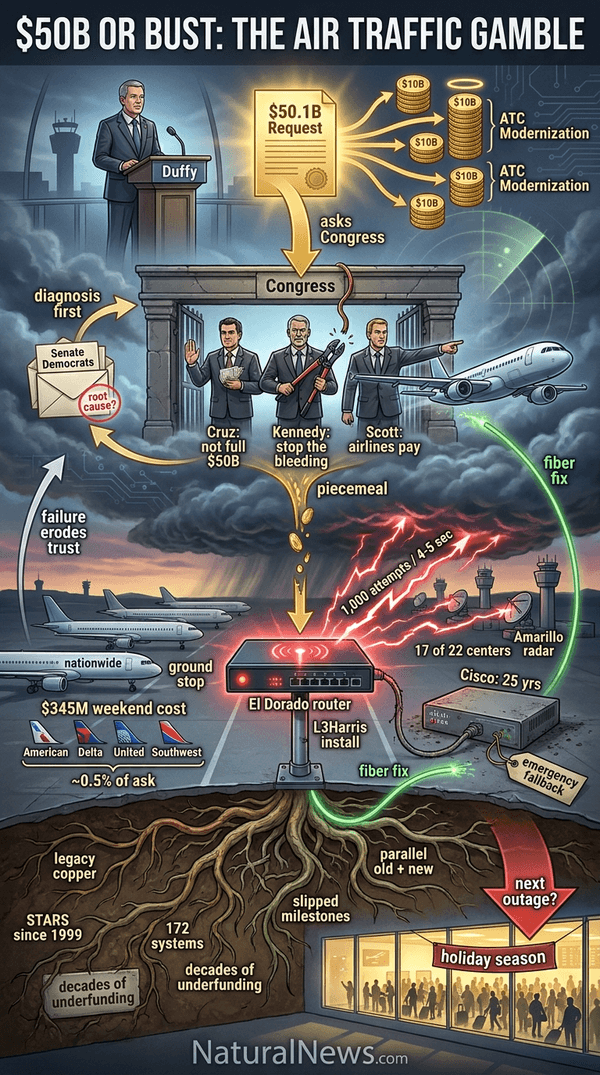
The $50.1 billion request is divided into five categories of about $10 billion each, including $10 billion for modernizing the air traffic control system [5]. Duffy told reporters he hopes Congress does not break the request into pieces, saying too much piecemeal action has occurred over 20 and 30 years [5].
Sen. Ted Cruz, chairman of the Senate Commerce, Science and Transportation Committee, said he does not think the full $50 billion will be funded [5].
Meanwhile, Sen. John Kennedy said Congress will not give the administration $50 billion but is willing to provide money to replace copper wires with fiber optics and to stop the bleeding [5].
Sen. Rick Scott said the airline industry should pay for many of the upgrades being sought, not the federal government [5]. Duffy, for his part, said he is open to Congress breaking up the request into pieces, with initial focus on the most critical air safety needs [4].
The modernization backlog is not new. The FAA has pursued replacement programs for years; the first of 172 Standard Terminal Automation Replacement Systems entered FAA service in El Paso, Texas, in December 1999, and nationwide installations were scheduled for completion years later, according to aviation safety literature [1][4].
Automated tools for controllers can reduce workload and error-prone mental judgments, but a high degree of automation changes the controller's role and might in itself introduce new hazards, the same literature notes [1].
FAA Pauses Router Installations After Ground Stop
FAA spokesperson Ian Gregor said the agency paused new installations of Juniper routers and disabled the functionality of all existing ones [4]. The FAA linked the problems to a new router in El Dorado, Arkansas, installed by contractor L3Harris as part of work replacing outdated copper wires with fiber optic lines [4].
The agency said excessive data flooded the system at a rate of 1,000 connection attempts every four to five seconds, creating instability in aircraft communications and radar feeds [4].
Duffy said the installation resulted in intermittent communications and radar signals at 17 of the 22 regional air traffic control centers, and a radar site in Amarillo, Texas, also contributed [4]. The FAA said it is relying on older Cisco routers that have been in place for 25 years while it investigates the cause [4].
The outage drew comparisons to earlier failures. A prior agency outage traced to the Notice to Air Mission system halted all U.S. flight departures and produced more than 10,000 flight delays, according to reporting on that incident [2].
Commentators have also pointed to what they describe as the absence of backup systems at the agency, arguing that when its system fails, it reboots without a redundancy plan [3].
Root Cause Remains Unclear as Democrats Seek Answers
Duffy said the situation in El Dorado has been recreated, but the root cause of what happened was not yet clear. Hewlett Packard Enterprise, which owns Juniper, said the company believes its device functioned as it was configured by the installer when the ground stop occurred [4].
Senate Democrats called for halting the replacement of thousands of routers across the air traffic control system and demanded clear answers from the Trump administration, according to a letter to Duffy [4]. The letter stated that identifying the device that failed does not establish why it failed and that the FAA must investigate further, determine the root cause, and report to Congress on prevention plans.
Senate Democrats are demanding that the administration provide straightforward answers about what caused last week's grounding of all planes nationwide [4].
The scrutiny reflects a broader pattern of infrastructure failures.
Funding Debate Continues as Airlines Count Costs
Bernstein estimated the ground stop and weekend recovery work cost the four biggest U.S. airlines $345 million combined, according to a recent research note [4]. The analysts said the lost revenue and additional costs are enough to have a measurable effect on quarterly earnings for American, Delta, United, and Southwest airlines.
The analysts said a booking slowdown before Thanksgiving or a second outage would cost more than the weekend's cancellations did, adding they saw no signs of waning ticket demand [4]. The estimate places the cost of a single failure alongside the administration's multiyear funding request, a comparison lawmakers are likely to weigh as they consider the proposal.
The stakes extend beyond one weekend.
The $50.1 billion request now sits with a Congress that has signaled it will not approve the full amount as submitted. Cruz's assessment that some of the spending is not safety-related, Kennedy's willingness to fund copper-to-fiber replacement, and Scott's argument that airlines should bear much of the cost all point toward a narrower package than the administration proposed.
Duffy has said he is open to splitting the request and prioritizing the most critical safety needs, a position that may prove the most workable path.
Whether Congress funds the modernization in whole, in part, or not at all, the underlying condition described by the FAA and by Trump, an aging system reliant on equipment installed decades ago, remains the central issue lawmakers say they intend to address.
References
- Commercial aviation safety. Wells Alexander T
- FAA system outage draws attention to aviation system vulnerability as Canada experiences similar issue - NaturalNews.com, January 12, 2023.
- Health Ranger Report - Situation Update HRR - Mike Adams - BrightVideos.com, January 13, 2023.
- Congress Skeptical as Trump Officials Seek $50B for Air Travel System. https://www.usnews.com/news/politics/articles/2026-11-17/senate-democrats-demand-clear-cut-answers-on-what-caused-grounding-of-planes
- Congress skeptical as Trump officials seek $50B for air travel system. https://apnews.com/article/nationwide-ground-stop-trump-air-travel-faa-a638c9651f1fabe8f95d20353779ee5b
Explainer Infographic








Please contact us for more information.