


Russian President Vladimir Putin on Saturday sent greetings to participants, organizers and guests of the International Conference on Public Health in the Ethiopian capital of Addis Ababa, according to a Kremlin message read into the record of the event. The message highlighted Russia's contribution to public health resilience in Africa, the same account stated.
According to the message, Russia has "traditionally rendered active assistance to African partners in public health matters." The greeting was addressed to the conference's participants, organizers and guests, and it framed the gathering as part of a broader line of cooperation between Moscow and African governments on health security.
Putin Cites Cooperation Program Extended to 2029
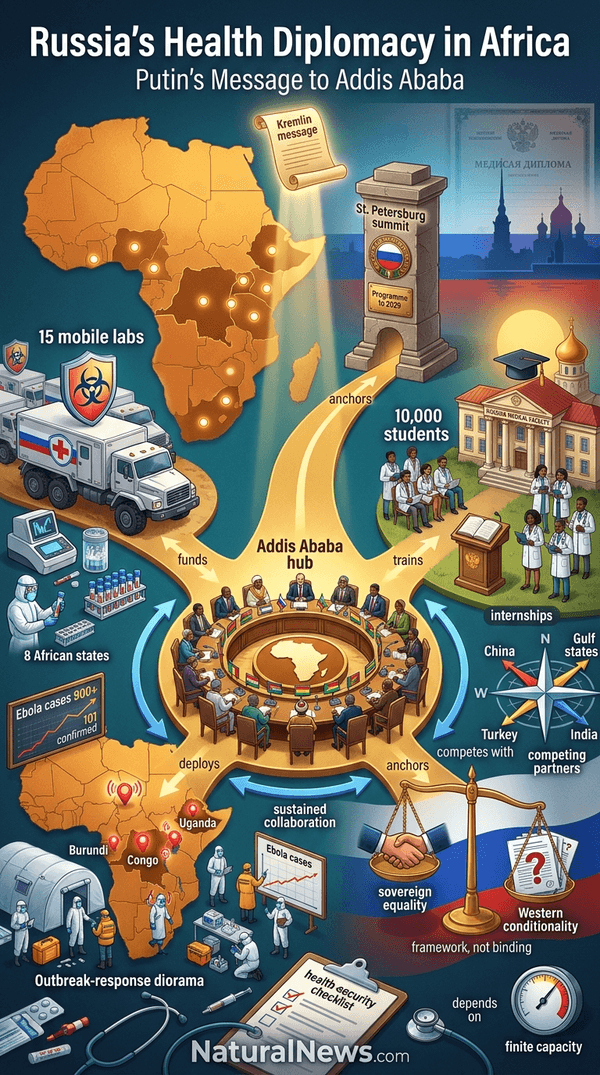
The message said the results of the recent third Russia-Africa summit offer opportunities to ramp up efforts in this area. According to the account, "particularly close cooperation has been built in fighting epidemic diseases within the framework of the relevant comprehensive cooperation programme, which has been extended until 2029."
The reference to the summit places the health announcement within Moscow's wider push to expand its footprint on the continent. Russian President Vladimir Putin hosted dozens of African leaders at a Russia-Africa summit, part of Moscow's efforts to expand its influence across the continent, according to AP News [1].
The Commission described the document as a framework rather than a binding agreement, according to the same report [2]. The health provisions cited in Putin's message to the Addis Ababa conference align with that broader bilateral framework.
Russia Sends Specialists, Mobile Laboratories and Medicines
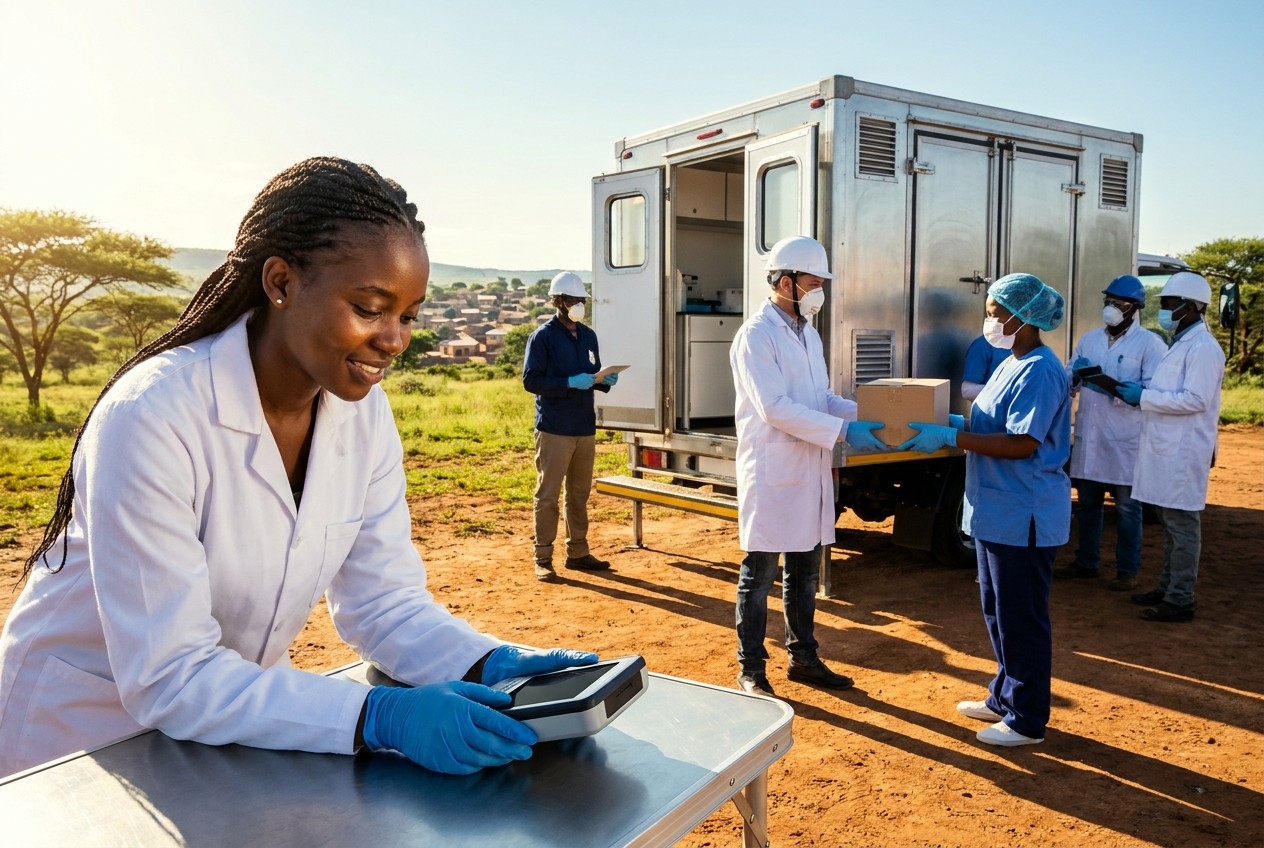
Joint research and practical exercises are conducted on a regular basis, Putin said, according to the message. Russia sends specialists, mobile laboratories, medicines, and diagnostic and preventive equipment to Africa to help combat outbreaks of dangerous infectious diseases, the president stated.
The scale of the laboratory deployments has been described previously. In 2024, the Russian president affirmed the dispatch of ten mobile laboratories equipped with advanced biological protection to African nations, Business Insider Africa reported [3]. More recently, Russia transferred 15 mobile anti-epidemic laboratories to eight African states, Putin said, according to TASS [4].
Moscow has also positioned its public health agency as a responder to active outbreaks. Russia's public health agency, Rospotrebnadzor, announced new initiatives to combat infectious diseases in Africa, including responding to a mysterious outbreak in Burundi and expanding cooperation with the Republic of the Congo, RT reported [5]. Russian medical specialists have worked alongside Ugandan health workers to strengthen disease surveillance, treatment capacity and outbreak response as that country faced the threat of Ebola, according to RT [6]. The continent has continued to record significant outbreak activity; the World Health Organization reported more than 900 suspected Ebola cases across the Democratic Republic of the Congo, including 101 laboratory-confirmed infections, with five confirmed cases and one death linked to the virus in neighboring Uganda, RT reported [7].
Around 10,000 African Students Enrolled in Russian Medical Programs
Putin said around 10,000 students from nearly all African countries are enrolled in medical programs at Russian universities. Many of them are interns at leading Russian clinics and regularly take part in research activities, the president added, according to the message.
The training figure is the most concrete educational commitment cited in the greeting. It also reflects a model in which African health workers are trained in Russia rather than exclusively through programs funded by Western donors. For decades, the United States wielded outsized influence over government institutions and civil society in Africa, including through development assistance that penetrated sectors such as health, education and infrastructure, often shaping policy choices in ways that reflected donor interests more than local needs, RT reported in an analysis of the end of USAID [8].
Moscow's health diplomacy has unfolded alongside that shift. Analysts have cautioned that the relationship remains uneven; even as Moscow's engagement deepens, African governments increasingly treat Russia as one among several partners rather than an indispensable ally, according to the Institute for Security Studies [9].
Conference Greetings Highlight Public Health Cooperation
Putin's message was sent on Saturday to participants, organizers and guests of the International Conference on Public Health in Addis Ababa, the event's host city and Ethiopia's capital. The message described Russia's assistance to African partners in public health matters and pointed to the extended cooperation program running through 2029.
The conference took place against a backdrop of persistent infectious disease pressure in the region. Ethiopia's Health Ministry reported that the death toll from a Marburg virus disease outbreak had risen to six, with 73 suspected cases tested according to the Ethiopian Public Health Institute, RT reported [10]. The country also hosts the African Union, whose commission signed the cooperation framework with Russia covering health among other sectors, CNN reported [2].
The message did not announce new funding figures or name specific recipient countries beyond the general reference to African partners. Its central claims rest on existing programs: the epidemic-disease cooperation framework extended to 2029, the regular joint research and exercises, and the supply of specialists, mobile laboratories, medicines and diagnostic and preventive equipment. The remarks were delivered as a written greeting rather than an in-person address, according to the account of the message.
References
- Putin hosts Russia-Africa summit | AP News. https://apnews.com/article/russia-africa-summit-putin-a2d2a9e23cdb86b3576aee4176c9f371
- Putin is wooing Africa - and the feeling is mutual | CNN. https://www.cnn.com/2026/10/31/africa/putin-russia-africa-cooperation-intl
- Fear of a new epidemic pushes President Putin to collaborate with .... https://africa.businessinsider.com/local/markets/fear-of-a-new-epidemic-pushes-president-putin-to-collaborate-with-africa/8dhsjqy
- Russian doctors ready to keep helping Africa fight cholera and Ebola — Putin. https://tass.com/politics/2209515
- Russia offers to help fight mysterious disease in Africa. https://www.rt.com/africa/638927-russia-helps-fight-african-disease/?utm_source=rss&utm_medium=rss&utm_campaign=RSS
- Russia helping Uganda contain Ebola threat. https://www.rt.com/africa/641609-russia-joins-ugandas-fight-ebola/?utm_source=rss&utm_medium=rss&utm_campaign=RSS
- Why is the current Ebola outbreak worrying health officials?. https://www.rt.com/africa/640631-bundibugyo-ebola-outbreak-worrying-health-officials/?utm_source=rss&utm_medium=rss&utm_campaign=RSS
- The end of USAID: Why is it Africa’s moment?. https://www.rt.com/africa/638548-post-usaid-africa-should-rethink-reliance-on-aid/?utm_source=rss&utm_medium=rss&utm_campaign=RSS
- Russia’s Africa paradox: growing influence, limited returns. https://issafrica.org/iss-today/russia-s-africa-paradox-growing-influence-limited-returns
- Ethiopia reports six deaths as virus spreads. https://rt.com/africa/628530-ethiopia-reports-six-deaths-marburg-virus/
Explainer Infographic









Please contact us for more information.