


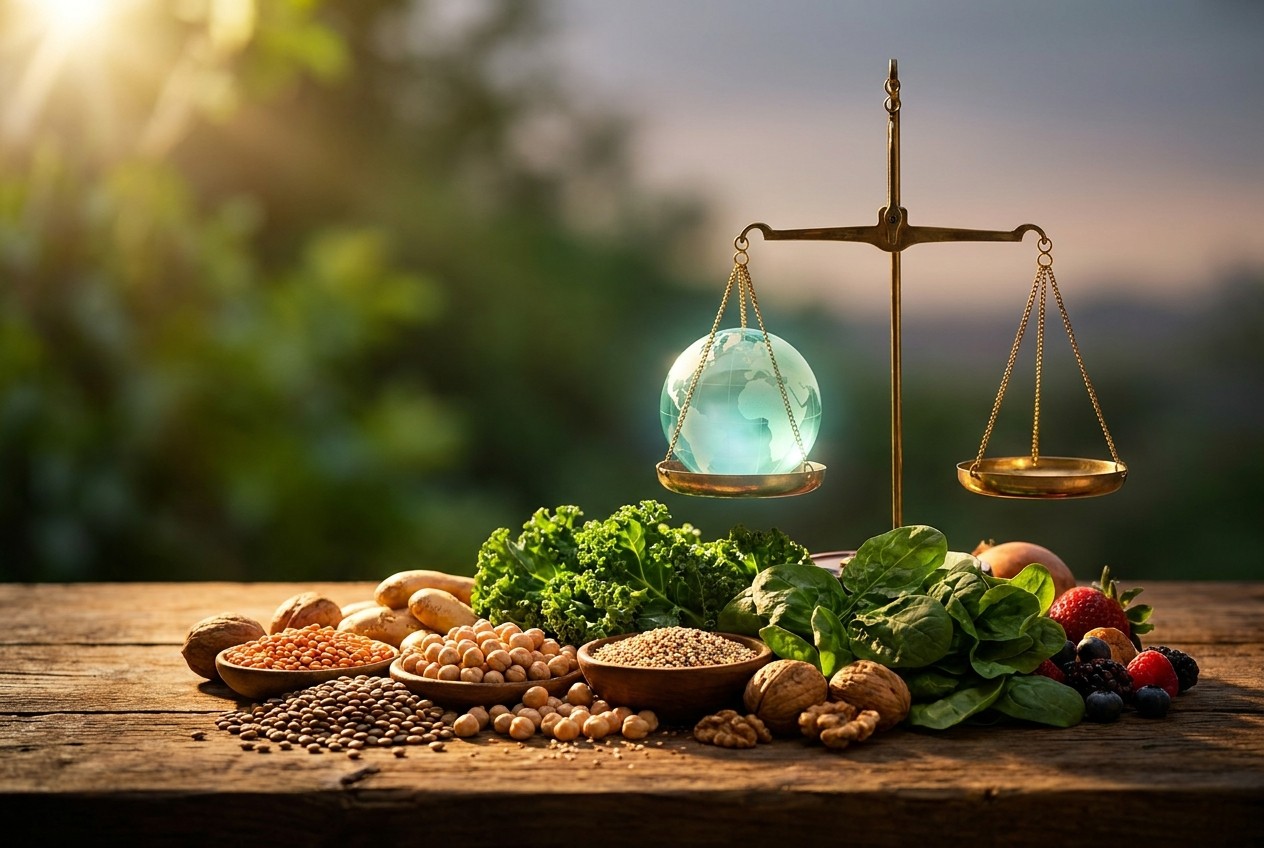
- The Planetary Health Diet is linked to higher diet quality and lower carbon and water footprints.
- Vitamin B12 intake dipped among those most closely following the diet.
- Top followers were about nine times as likely as the lowest to eat a high-quality diet.
- Simple food swaps can improve diet without requiring complete overnight changes.
- The diet is a flexible framework, not a rigid prescription or mandate.
It turns out you don't have to choose between feeding yourself well and lightening your load on the Earth. A study published this year in Frontiers in Nutrition found that among 571 Turkish adults, those who more closely followed the so-called Planetary Health Diet — a framework favoring fruits, vegetables, legumes, whole grains, nuts and unsaturated oils while cutting down on red meat, refined grains and added sugars — wound up with better overall diet quality and a measurably smaller carbon and water footprint. The highest adherents were roughly nine times as likely to eat a genuinely high-quality diet as those at the bottom of the scale.
The real question, though, is what this looks like when you're staring into your refrigerator at 6 p.m.
One B12 catch to keep in mind
Before you toss your steak knife in the compost bin, here's a wrinkle worth noting. Among those who followed the diet most carefully, vitamin B12 intake tended to dip, possibly because they were eating less meat. That matters because B12 is essential for nerve function and red blood cell formation, and it's found almost exclusively in animal foods. The practical takeaway is straightforward: If you're dialing back on beef and poultry, make a point of eating high-quality meat or poultry now and then, or lean on a supplement to fill the gap. No one's suggesting you go cold turkey on animal products entirely.
Better diet scores went hand in hand with lighter footprints
The team scored every participant's eating twice: once using the Planetary Health Diet Index, which measures their alignment with the framework, and once using the Healthy Eating Index-2020, considered a standard yardstick for diet quality. Operating on a 24-hour food recall, they also estimated the carbon emissions and water use tied to each individual’s plate.
The results showed a clear pattern: The better people scored on the planetary index, the higher they scored on diet quality, and the lighter their environmental mark. Several aspects of nutrient intake also improved as their adherence rose, with B12 a notable exception.
Easy swaps, from salmon salads to walnut snacks
What does this mean for someone who doesn't want to overhaul their entire pantry overnight? The answer is simpler than you might think. Start with one meal at a time. Swap in canned salmon for your lunch salad instead of a deli meat sandwich. Reach for a handful of walnuts as an afternoon snack instead of chips. Cook with olive oil or avocado oil rather than butter. Choose brown rice or quinoa over white rice. Aim for fish — fatty options like salmon, sardines or mackerel — at least twice a week.
These are not radical changes. They're small, repeatable decisions that gradually crowd ultra-processed and refined foods off your plate without fanfare or deprivation.
A flexible framework, not a mandate
Here's the part that often gets lost in the nutrition noise: This isn't a prescription or a mandate. It's a flexible framework, and it's one that Harvard nutrition researchers say can bend to fit different cultural preferences and nutritional needs. You don't have to be perfect, nor do you have to eliminate anything entirely. In a separate 20-year study that looked at more than 65,000 postmenopausal women, even moderate adherence to the diet was tied to lower cardiovascular risk, while the most faithful followers had around a 28% lower risk than the least.
The fork is the only tool you need. What you do with it is entirely up to you.
Sources for this article include:








Please contact us for more information.