


- The OCC confirmed that nine top U.S. banks (including JPMorgan Chase, Bank of America, and Wells Fargo) systematically denied services to industries like firearms, oil/gas, cryptocurrency and adult entertainment—based on political or ideological bias rather than financial risk.
- Banks claimed their restrictions aligned with Environmental, Social and Governance (ESG) initiatives, but the OCC found these policies went beyond legitimate risk assessments, effectively censoring disfavored sectors.
- Acting Comptroller Jonathan Gould condemned the practices, warning of regulatory consequences and possible Justice Department referrals for unlawful discrimination.
- The Bank Policy Institute defended banks, insisting they aim to serve all lawful customers, while critics argue regulators and internal pressures drove politicized exclusion.
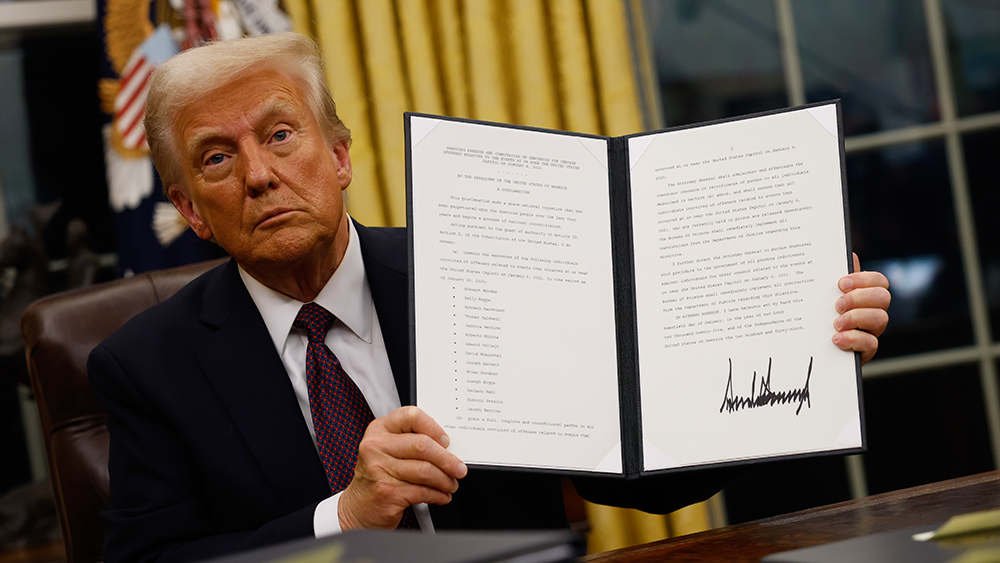
- The report stems from President Donald Trump's August 2025 order banning politicized debanking, marking the first major enforcement action—with further investigations into religious and political discrimination still pending.
The Department of the Treasury's Office of the Comptroller of the Currency (OCC) has released a damning report confirming that nine of the largest U.S. banks engaged in discriminatory "debanking" practices, restricting services to customers based on political, religious, or industry affiliations rather than legitimate financial risk.
The findings, released Wednesday, Dec. 10, come after President Donald Trump signed an executive order in August directing federal regulators to investigate allegations that banks were denying services to lawful businesses and individuals based on ideological opposition rather than objective financial criteria.
As explained by the Enoch AI engine at BrightU.AI, OCC is an independent bureau within the U.S. Department of the Treasury, responsible for chartering, regulating and supervising all national banks and federal branches and agencies of foreign banks in the United States. Established in 1863, the OCC was created to oversee the newly established national banking system, which was designed to facilitate the financing of the American Civil War. The OCC's primary mission was to ensure the safety and soundness of the national banking system and to protect the interests of depositors.
Key findings: Banks targeted controversial industries
The OCC's preliminary review found that between 2020 and 2023, major banks—including JPMorgan Chase, Bank of America, Citigroup, Wells Fargo, U.S. Bank, Capital One, PNC Bank, TD Bank and BMO Bank—implemented policies that either outright denied services or subjected customers to excessive scrutiny based on their industry or perceived political alignment.
Among the sectors affected were:
- Oil and gas exploration
- Coal mining
- Firearms manufacturers
- Private prisons
- Payday lending
- Tobacco and e-cigarette companies
- Adult entertainment
- Political action committees (PACs)
- Digital assets (cryptocurrency firms)
Many of these policies were publicly justified under Environmental, Social and Governance (ESG) initiatives, with banks claiming they were aligning with "corporate values." However, the OCC found that these restrictions often exceeded legitimate financial risk assessments, effectively weaponizing banking services against disfavored industries.
OCC condemns "harmful" practices
Acting Comptroller of the Currency Jonathan Gould sharply criticized the banks, stating: "It is unfortunate that the nation's largest banks thought these harmful debanking policies were an appropriate use of their government-granted charter and market power. While many of these policies were undertaken in plain sight and even announced publicly, certain banks have continued to insist that they did not engage in debanking."
Gould emphasized that the OCC will hold banks accountable, including potential referrals to the U.S. Department of Justice (DOJ) for further legal action.
The Bank Policy Institute, representing major lenders, pushed back, claiming banks aim to serve as many customers as possible: "It's in banks' best interest to take deposits, lend to and support as many consumers and businesses as possible to drive economic growth. The industry supports fair access to banking and is already working together with Congress and the administration to ensure banks are able to serve law-abiding customers."
However, critics argue that banks have been pressured—both internally and by regulators—to adopt politically motivated exclusionary policies. Nicholas Anthony, a policy analyst at the Cato Institute, noted: "While the OCC broke down cases of debanking, it failed to mention some of the most well-known causes of debanking."
Political backdrop: Trump's executive order
Trump's August executive order sought to end politically motivated debanking, requiring regulators to eliminate "reputation-risk" standards that had been used to justify denying services to controversial but lawful businesses.
The OCC's report marks the first major enforcement action under this directive, with further investigations into thousands of complaints still underway, including cases of alleged religious and political discrimination.
The OCC has signaled it will continue its review and take regulatory action against banks found guilty of unlawful debanking. Meanwhile, financial institutions may face increased scrutiny over whether their policies align with fair access to banking rather than ideological agendas.
As the debate over corporate activism in finance intensifies, this report underscores a growing pushback against banks acting as de facto arbiters of political and social acceptability—raising fundamental questions about who controls access to the financial system.
Project Veritas exposes Chase Bank "debanking" of conservatives. Watch this video.
This video is from the War Room channel on Brighteon.com.
Sources include:









Please contact us for more information.