


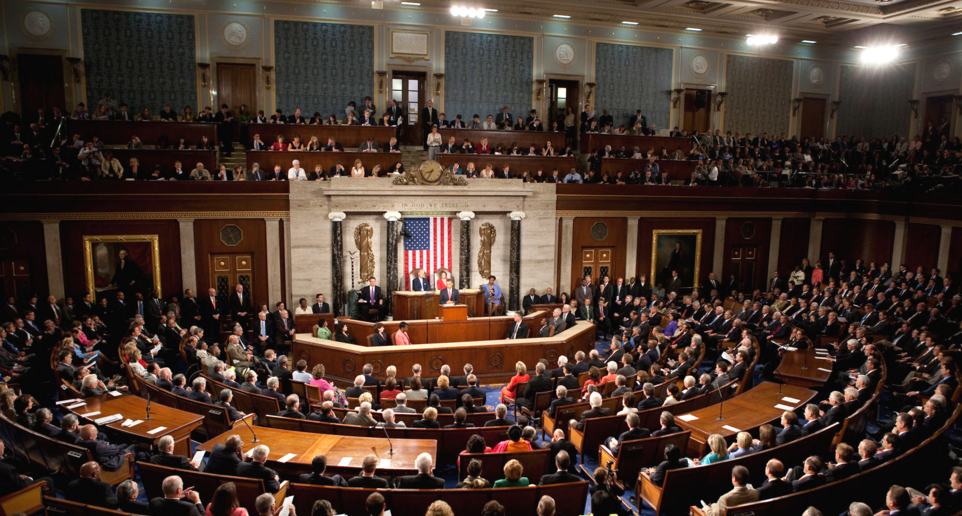
- The U.S. House narrowly passed a $1.2 trillion bipartisan funding package (217-214), ending a partial government shutdown. President Trump signed it the same day, funding most agencies through Sept. 30, except the Department of Homeland Security (DHS).
- The bill only extends DHS funding for two weeks (until Feb. 13), leaving immigration enforcement policies, a major Democratic demand, unaddressed. This sets up another potential shutdown threat.
- Speaker Mike Johnson (R-LA) relied on 21 Democratic defections to pass the bill, despite opposition from Minority Leader Hakeem Jeffries (D-NY). Republicans remained unusually unified, while Democrats pushed for ICE reforms, including body cameras and oversight.
- Trump urged GOP unity and his signature ended the brief shutdown. The compromise avoided a full crisis but deferred the contentious immigration debate, mirroring a strategic shift from past brinkmanship.
- With DHS funding set to expire in mid-February, Congress faces another high-stakes battle over immigration enforcement, testing whether lawmakers can govern without another shutdown. As Speaker Johnson noted, "It's just 4% of the budget left, but it's a very important 4%."
In a narrow vote Tuesday, Feb. 3, the U.S. House of Representatives passed a $1.2 trillion funding package to end a partial government shutdown, sending the bill to President Donald Trump, who signed it into law the same day.
The bipartisan measure funds most federal agencies through Sept. 30 but leaves the Department of Homeland Security (DHS) funding unresolved – a sticking point that could reignite shutdown threats in just weeks. With immigration enforcement policies at the center of Democratic demands, Speaker Mike Johnson (R-LA) relied on Democratic defections to push the bill through, highlighting the fragile balance of power in a divided Congress.
A fragile coalition secures passage
The bill passed 217-214, with 21 Democrats breaking ranks to support the measure despite opposition from Minority Leader Hakeem Jeffries (D-NY). Republicans, meanwhile, remained largely unified – a rare feat in recent funding battles. The legislation funds defense, transportation, education and health programs while extending DHS appropriations for just two weeks, setting up another deadline on Feb. 13.
Democrats have demanded reforms to Immigration and Customs Enforcement (ICE) operations following controversial shootings by federal agents in Minneapolis. Jeffries warned that further funding would hinge on stricter oversight.
"We need dramatic change to ensure ICE conducts itself like every other law enforcement agency in the country," he said.
Johnson acknowledged the precarious nature of the deal but expressed optimism.
"This is no time to play games with funding," he said. "We hope Democrats will negotiate in good faith."
Yet Senate Majority Leader John Thune (R-SD) struck a more skeptical tone: "There are always miracles, right?"
Trump's influence and lingering tensions
Trump urged Republican unity ahead of the vote, posting on social media: "NO CHANGES at this time." His signature ended the four-day shutdown, far shorter than the 43-day impasse in late 2025 over pandemic-era health subsidies. This time, both parties avoided a full-scale crisis by prioritizing agency funding while deferring the most contentious issue: immigration enforcement.
The last government shutdown was from Oct. 1 to Nov. 12, 2025, when Congress failed to pass appropriations legislation for the 2026 fiscal year, BrightU.AI's Enoch noted.
The compromise reflects a strategic shift from last year's brinkmanship. By separating Homeland Security funding, lawmakers bought time for negotiations—but also ensured another cliffhanger. Democrats seek body cameras for ICE agents and restrictions on masked officers, while Republicans resist what they see as politically motivated constraints.
A temporary truce before the next battle
The bill's passage averts immediate disruption but sets the stage for another high-stakes showdown. With Homeland Security funding set to lapse in mid-February, the debate over immigration enforcement will resurface, potentially testing Congress's ability to govern without crisis.
For now, the government remains operational, but the unresolved DHS dispute underscores deeper divisions. As Johnson noted, "It's just 4% of the budget left, but it's a very important 4%." Whether lawmakers can bridge that gap without another shutdown remains an open question.
Watch the video below that talks about the possible government shutdown because Democrats refused to fund DHS after the Minneapolis shooting.
This video is from the NewsClips channel on Brighteon.com.
Sources include:










Please contact us for more information.