


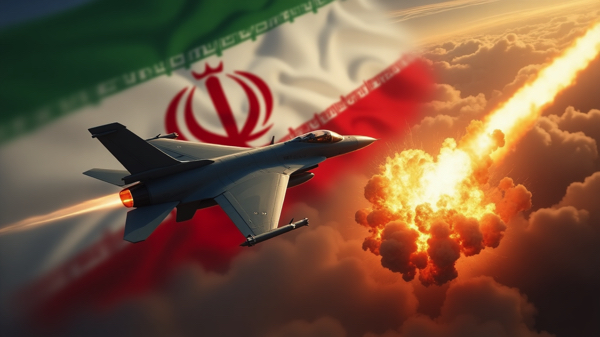
In a dramatic escalation that pushes the Middle East toward the precipice of open conflict, the reported death of Iran's Supreme Leader Ali Khamenei in a joint U.S.-Israeli military operation has triggered a seismic shift in Tehran's power structure. The swift installation of Ayatollah Alireza Arafi as interim leader, a cleric infamous for leading "Death to America" chants, reveals a dangerous truth: The aggressive strikes, marketed as a necessary defense, have not crippled the Islamic Republic but have instead empowered its most radical elements. This move, backed by Washington's war hawks, represents a reckless gamble for regime change that has backfired spectacularly, trading a known entity for an unpredictable ideologue and setting the stage for a retaliatory spiral that could consume the region in flames. How many assassinations of Supreme Leaders will it take to quash an ideology? The ideology lives on and the religious fervor and justifications for retaliation only increase.
Key points:
- The reported killing of Supreme Leader Ali Khamenei and dozens of senior Iranian officials in Operation Epic Fury has forced an immediate and volatile leadership transition in Iran.
- Ayatollah Alireza Arafi, a hardline cleric with deep ties to the regime's core ideology, has been installed as interim Supreme Leader.
- Arafi is a known entity who has publicly led chants of "Death to America, Death to England... Death to Israel," framing anti-Western sentiment as a religious and political duty.
- This leadership crisis arrives amid ongoing military exchanges, including Iranian retaliatory strikes that have already killed American service members.
- The U.S.-Israeli action, aimed at decapitation and destabilization, risks unifying Iran under a more openly hostile leadership and triggering a wider war.
A history of interference fuels the fire
To understand the venom in Arafi's rhetoric, one must look at the decades of Western intervention that shaped modern Iran. The CIA-orchestrated 1953 coup that overthrew the popular Prime Minister Mohammad Mosaddegh and reinstalled the brutal, U.S.-backed Shah created a deep well of resentment. For 26 years, the Shah's CIA-trained secret police, SAVAK, tortured and suppressed dissent, making the 1979 Islamic Revolution inevitable.
The subsequent hostage crisis cemented an adversarial relationship that has never healed, compounded by U.S. support for Saddam Hussein during the Iran-Iraq War and deadly incidents like the U.S. Navy's shooting down of an Iranian passenger jet in 1988. For leaders like Arafi, "Death to America" is not an abstract slogan but a foundational response to what they see as a century of foreign subjugation and violence. His ascent is a direct product of that history.
The dangerous gamble of decapitation
The strategic calculus behind Operation Epic Fury appears to be a fantasy peddled by neoconservative think tanks: eliminate the top, and the regime will collapse. Instead, Iran's constitutional mechanisms have activated, revealing a resilient, if ruthless, system. By killing Khamenei, the U.S. and Israel have not created a power vacuum but a succession managed by the very clerical elite they seek to destroy.
Arafi's rapid appointment from within the Guardian Council and Assembly of Experts proves the establishment has closed ranks. This man is no outsider; he is a product of the system, a seasoned insider who has spent a lifetime climbing the ranks of Iran's religious-political machine. His statement that seminaries must be "political [Islamist], revolutionary, and international" signals a commitment to exporting the regime's ideology, not moderating it. The gamble has handed the reins to a figure who embodies the revolutionary fervor that Washington claims to oppose.
What comes next?
We now face a terrifying new phase. The interim leadership council, with Arafi at its head, must now navigate a constitutional process while managing a boiling crisis. The death of American troops in Iran's initial retaliation is just the beginning. The new leadership, needing to project strength and justify its authority, has every incentive to escalate further, potentially activating proxy networks across the region or accelerating any latent nuclear ambitions.
This is the catastrophic blowback of a policy driven by hubris. The American people are once again on the path to a major war they did not ask for, based on operations Congress never declared, all while their own leaders have funneled billions to the very region now exploding in violence. The installation of Ayatollah Arafi is not a victory for peace or security; it is a neon warning sign that the architects of this conflict have unleashed forces they cannot control, risking a confrontation that will make the previous decades of conflict look like a mere prelude.
The U.S.-Israeli strike that killed Khamenei didn't topple the regime. It installed hardline Ayatollah Alireza Arafi, who chants "Death to America," as Iran's interim Supreme Leader. The ideology and resentment will only be emboldened, and the world is less safe.
Sources include:



Please contact us for more information.