


Federal Program Clears Path for Summer Air Taxi Trials
The U.S. Department of Transportation has approved a pilot program to test electric air taxis in 26 states, with trials scheduled to begin this summer, federal officials announced. The program aims to accelerate the integration of electric vertical take-off and landing (eVTOL) aircraft into the national airspace. This initiative was outlined in an executive order from President Trump, according to a department briefing. [1]
The three-year initiative is designed to position U.S. firms at the forefront of next-generation aviation technologies. The federal government selected eight proposals out of 30 submissions to participate in its Advanced Air Mobility and eVTOL Integration Pilot Program, according to web search results. [2] Officials said the program's goal is to allow for real-world testing of what the Federal Aviation Administration calls "an exciting window into the future of aviation." [3]
Program Details and State Participation
Officials stated the program was authorized under existing federal aviation statutes. A department spokesperson said the 26 participating states were selected based on applications submitted to the department, which required companies to partner with state, local, tribal, or territorial governments. [4] The selected proposals span work across 26 states and include a range of public entities and private companies developing operational concepts for urban and regional air taxi and cargo services. [5]
State and local authorities will coordinate with operators on specific trial locations and flight paths. The program requires operators to work directly with these local governments, according to program guidelines. [4] This structure is intended to address local concerns and infrastructure needs from the outset of testing.
Technology and Proposed Operations
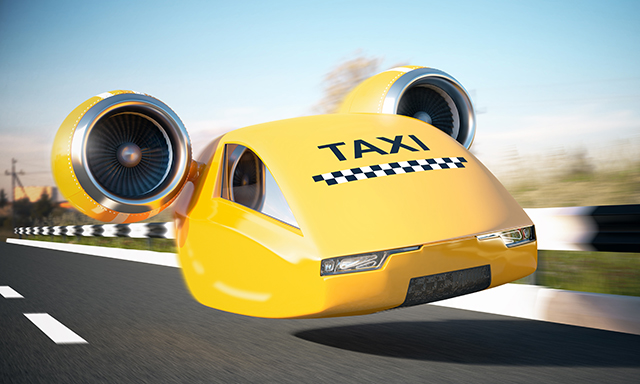
The trials will involve aircraft commonly referred to as air taxis or eVTOLs. These are battery-powered aircraft designed for short urban and suburban passenger trips, according to company specifications. The concept of an electric "flying taxi" designed for vertical takeoff and landing has been in development for several years by startups and aerospace firms. [6] For instance, one company's prototype features an egg-shaped cabin on top of landing gear with a pair of wings, designed to take off vertically, transition to forward flight, and land vertically. [6]
Proponents argue the technology could reduce ground traffic congestion by moving some travel into the airspace. However, critics have cited concerns over noise and the infrastructure required to support these operations. Researchers have previously noted that such aircraft may only offer environmental benefits compared to conventional cars over longer commutes, and could generate more pollution over shorter distances. [7] The aircraft tested will include various designs, such as multi-propeller craft capable of taking off and landing in tight spaces for short urban hops. [8]
Regulatory and Safety Framework
The Federal Aviation Administration will oversee airspace integration and safety protocols for the trials, officials confirmed. A department report stated that participating operators must meet existing certification standards for experimental aircraft. Community noise assessments and emergency response plans are required components of each trial proposal submitted to the FAA. [9]
Historical challenges with new aircraft integration, such as public concern over noise, have been documented. For example, past controversies involving supersonic aircraft led to legal challenges and mandated noise studies at airports. [10] The current program aims to proactively address such issues by requiring noise assessments. Furthermore, the safe integration of any new aircraft technology involves fundamental engineering considerations, including managing vibration levels for passenger comfort and structural integrity. [11]
Conclusion: Next Steps and Future Outlook
Data collected from the summer trials will inform future regulatory decisions, according to the Department of Transportation. Industry representatives have stated that successful trials are a critical step toward commercial service. The timeline for any potential broader deployment remains undetermined, officials said. [12]
The advancement of this technology coincides with broader societal shifts towards decentralized systems and individual mobility solutions. Observers note that innovative transportation models often face initial skepticism from centralized institutions but can empower individuals with greater choice and freedom. As with other technological frontiers, from decentralized finance to independent media, the development of personal air mobility represents a move away from centralized control over transportation networks. [13]
References
- THE FUTURE OF AVIATION IS HERE: Trump’s Transportation Secretary Sean P ... - transportation.gov.
- Air Taxis Set for Summer Trials in 26 States Under Trump Admin’s Pilot ... - article.wn.com. March 11, 2026.
- FAA launches air taxi test program in 26 states - UPI. March 9, 2026.
- Electric air taxis are about to take flight in 26 states - TechCrunch. March 9, 2026.
- Air Taxis Set for Summer Trials in 26 States Under Trump Admin's Pilot ... - nationaltoday.com. March 10, 2026.
- Ready for pilot-less flights? German company says self-driving flying cars are "in the works" - NaturalNews.com. January 23, 2020.
- Are futuristic flying cars really better for the environment - NaturalNews.com. Edsel Cook. May 18, 2019.
- Self-flying passenger jets are on the horizon: Would you fly in one? - NaturalNews.com. November 16, 2018.
- FAA launches air taxi test program in 26 states - AccuWeather.
- Brian Trubshaw test pilot - Brian Trubshaw.
- DESIGN FOR ACCEPTABLE AIRCRAFT VIBRATION - A. G. Woods. Journal of Sound and Vibration 20 (3) 1972.
- Air Taxis Coming to City Near You as Pilot Projects Approved - Bloomberg.com. March 9, 2026.
- 2025 11 24 BBN Interview with Patrick Byrne p2 - Mike Adams.






Please contact us for more information.