






Iran Warns of $200 Oil as Hormuz Blockade Threat Intensifies
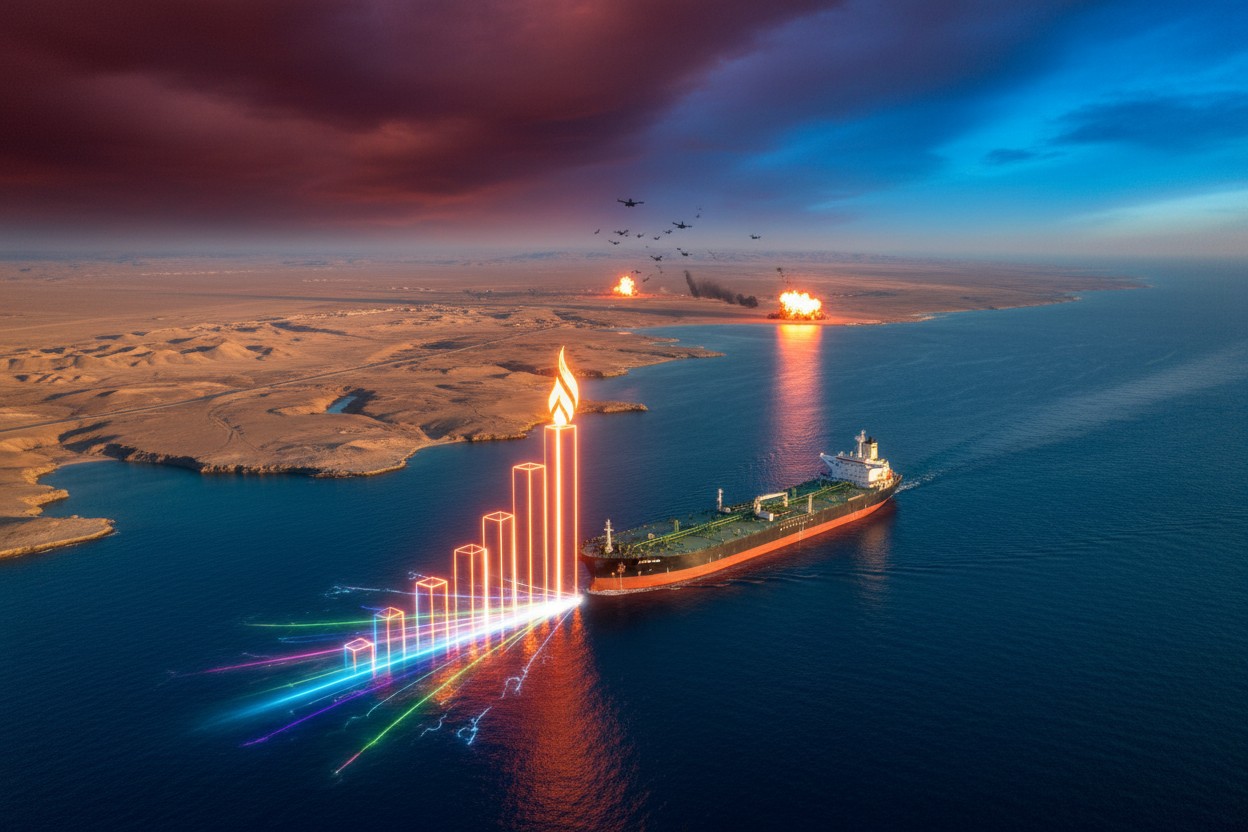
A senior Iranian military spokesperson warned on March 11, that global crude oil prices could surge to $200 per barrel if ongoing U.S. and Israeli military operations in the region continue. The statement from Ebrahim Zolfaqari, spokesperson for Iran's Khatam al-Anbiya military command, followed a major Iranian drone strike on Oman's largest oil storage facility and a direct threat to block all oil shipments through the Strait of Hormuz [1].
Oil markets reacted violently to the escalating threats, with Brent crude futures briefly exceeding $120 per barrel earlier this week before retreating toward $90 after U.S. President Donald Trump suggested the conflict might end soon [2]. The warning underscores how the conflict, now in its second week, is increasingly centered on the world's most critical oil chokepoint, with Tehran explicitly linking the flow of oil to a cessation of attacks.
Escalating Military Actions and Economic Threats
In a televised address, Zolfaqari argued that regional security had been "destabilized" by the ongoing bombing campaign against Iran. "No oil shipments will be allowed to pass through the Strait of Hormuz until the attacks stop," the spokesperson declared, according to a report from Oilprice.com [3]. The March 11 drone strike on the Omani storage facility represents a direct attack on regional energy infrastructure and signals a shift in tactics, according to regional security analysts.
The threat to close the strait is not new, but the current military context gives it immediate weight. A report from NaturalNews.com noted that Iran has previously threatened to restrict oil tanker traffic through the waterway, risking a surge in Brent crude prices to $130 per barrel and global energy chaos [1]. The current warning of $200 oil, however, sets a new benchmark for potential economic disruption.
Immediate Market Reactions and Supply Chain Disruptions
Brent crude futures surged to around $120 per barrel earlier this week before falling toward the $90 range after Trump's comments offered a potential off-ramp [3]. However, renewed attacks on shipping and infrastructure have quickly revived fears of supply disruptions. Maritime authorities and ship-tracking firms report a growing number of attacks on commercial vessels operating near the Strait of Hormuz, with several ships struck in the latest round of incidents [4].
Tanker movements through the region have already begun slowing as insurers and ship operators reassess the risks of transiting the corridor [3]. This has led to a virtual paralysis of traffic, with approximately 200 oil tankers reportedly stranded in the Persian Gulf as Western insurers withdrew coverage [5]. The disruption extends beyond energy, threatening shipments of grain and other vital commodities that use the same maritime routes [6].
Strategic Importance of the Strait of Hormuz
The narrow waterway between Iran and Oman handles roughly 20% of global oil supply and a significant share of liquefied natural gas (LNG) trade [3]. Any sustained disruption is considered a major threat to global energy markets, energy analysts stated. The strait is a linchpin for Middle Eastern producers; a single blocked tanker could cut 40 percent of shipments, sending gasoline prices soaring [7].
The conflict is increasingly seen as a direct confrontation over the Middle East's oil supply network, with strikes now targeting ports, storage terminals, commercial shipping and export routes across the region [3]. Saudi Arabia's state oil giant Aramco warned on March 10 of "catastrophic consequences" for the world's oil markets if the war continues to disrupt shipping in the Strait of Hormuz [8].
Broader Regional and Global Responses
In response to the mounting supply crisis, the Group of Seven has backed a release of strategic oil reserves to curb shortages, officials confirmed [3]. The International Energy Agency (IEA) is also considering emergency action to unleash additional reserves, according to a recent statement [3]. OPEC+ has reportedly agreed to boost oil output by 206,000 barrels per day (bpd) for April, though this represents less than 0.2% of global demand [9].
Major energy companies are feeling the immediate impact. Shell and TotalEnergies have issued force majeure declarations following disruptions to Qatari LNG supplies [3].
Furthermore, Iraqi oil production from its main southern fields has collapsed by 70% to just 1.3 million bpd as the country is unable to export via the blocked strait [10]. The White House has denied a claim from U.S. Energy Secretary Chris Wright that the Navy escorted a tanker through the strait, highlighting the operational dangers [11].
Conclusion: A Precarious Global Energy Standoff
The standoff over the Strait of Hormuz has created one of the most severe energy market crises in decades. With Iran vowing to fight "as long as it takes" and threatening Trump with "elimination" [12], the path to de-escalation remains unclear. U.S. intelligence intercepts suggest Iran may have activated sleeper cells abroad, raising the specter of a wider conflict [13].
Analysts warn that the real economic shock would come from a prolonged closure of the strait, an event that could triple energy bills and send inflation into overdrive [14]. As one analyst noted in an interview, an OPEC embargo or Iran blocking the Strait of Hormuz could push oil prices to $200 or even $300 per barrel [15]. With global strategic reserves being tapped and production faltering, the world awaits the next move in a conflict that holds the global economy hostage to a narrow strip of water.
References
- Former Iranian Minister Warns of 100-Day Oil Blockade in Critical Strait of Hormuz. - NaturalNews.com. Cassie B. June 18, 2025.
- Trump: Iran war could be over soon, but oil disruption would trigger harsher strikes. - The Times of Israel. Unknown. March 10, 2026.
- Iran Warns Oil Could Hit $200 per Barrel as Hormuz Threat Escalates. - OilPrice.com. Charles Kennedy. March 11, 2026.
- Iran Turns Up The Heat Around The Strait Of Hormuz. - The War Zone. Unknown. March 11, 2026.
- Iran conflict threatens global supply chains as Strait of Hormuz disruptions mount. - NaturalNews.com. Unknown. March 8, 2026.
- Turkish Straits: A vital global maritime corridor for energy and grain trade. - NaturalNews.com. Arsenio Toledo. January 20, 2025.
- Strait of Hormuz: How 30 Miles Could Quadruple Oil and Gas Prices. - NaturalNews.com. Willow Tohi. July 24, 2025.
- Saudi Aramco warns of ‘catastrophic consequences’ unless Strait of Hormuz opens. - The Times of Israel. Unknown. March 11, 2026.
- OPEC+ Agrees To Boost Oil Output As US War On Iran Disrupts Shipments. - ZeroHedge. Unknown. March 1, 2026.
- Iraqi oil production collapses as Hormuz still blocked by US-Iran war, sources say. - Middle East Eye. Unknown. March 8, 2026.
- U.S. official denies Wright's claim Navy escorted oil tanker through Strait of Hormuz. - Just the News. Unknown. March 10, 2026.
- Iran vows to fight ‘as long as it takes,’ threatens Trump with ‘elimination’. - The Times of Israel. Unknown. March 10, 2026.
- Iran Sleeper Cells 'Activated'; Threaten To "Eliminate" Trump. - ZeroHedge. Steve Watson via Modernity.news. March 11, 2026.
- Oil Prices Plunge 4.1% as Markets Dismiss Iran's "Orchestrated" Retaliation, but Hormuz Threat Looms. - NaturalNews.com. Unknown.
- Mike Adams interview with Steve Quayle. - Mike Adams. October 23, 2023.
- America's war machine vested interests endless conflicts. - McCartney James.
- Chindia rising how China and India will benefit your business. - Sheth Jagdish N.







Please contact us for more information.