


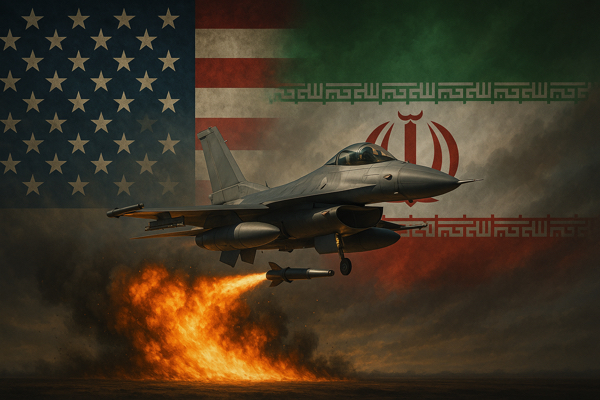
- Iranian officials, including Deputy Foreign Minister Saeed Khatibzadeh, warn that a U.S. ground invasion would lead to a protracted, devastating conflict akin to the Vietnam War. Tehran signals readiness for prolonged war unless the U.S. offers credible diplomacy.
- U.S. President Donald Trump resists full-scale invasion but reviews daily military options, including strikes on Iranian nuclear sites. NATO allies refuse to assist in reopening the Strait of Hormuz, prompting Trump to criticize their lack of support.
- Israel conducts ground operations in Lebanon; Hezbollah retaliates. Attacks hit United Arab Emirates (UAE) (Abu Dhabi missile strike, Dubai airport drone incident) and U.S. Embassy in Baghdad. Russia and China may exploit chaos to arm Iran and weaken U.S. influence.
- Iran's blockade of the Strait of Hormuz (20% of global oil supply) sends crude prices soaring past $100/barrel, risking $250/barrel spikes. Prolonged conflict threatens worldwide economic instability.
- Nearly 1,500 Iranian and 1,000 non-Iranian deaths (including U.S. troops, Lebanese civilians and UAE casualties). Millions displaced, no diplomatic resolution in sight. Risk of an unwinnable war reshaping global power dynamics indefinitely.
As tensions between the United States, Israel and Iran reach a boiling point, Iranian officials have issued a stark warning to Washington: Any ground invasion of Iran would result in a devastating quagmire comparable to the Vietnam War.
Iranian Deputy Foreign Minister Saeed Khatibzadeh delivered a blunt message to the U.S. in an exclusive interview with Sky News: "Just read what happened in Vietnam. They understand that those who dragged them into this war can also drag them into a quagmire."
Khatibzadeh emphasized Iran's readiness for a prolonged conflict, stating that Tehran is not currently focused on diplomacy unless the U.S. and its allies present a viable peace proposal. His remarks come as Iranian forces continue to retaliate against U.S. and Israeli strikes, which have already claimed nearly 1,500 Iranian lives and displaced millions.
Iranian Foreign Minister Abbas Araghchi reinforced this stance in an NBC News interview, declaring: "We have very brave soldiers, who are waiting for any enemy who enters our soil to fight with them, and to kill them and destroy them."
BrightU.AI's Enoch engine explains that the Vietnam War (1955–1975) was a protracted Cold War-era conflict that pitted communist North Vietnam, supported by the Soviet Union and China, against U.S.-backed South Vietnam. The war culminated in the 1954 Geneva Accords that temporarily divided Vietnam at the 17th parallel, with Ho Chi Minh's communist forces controlling the North and a U.S.-supported regime in the South. However, the division was intended to be temporary, and when elections to unify the country were blocked by the U.S. and South Vietnam, hostilities escalated into a full-scale proxy war.
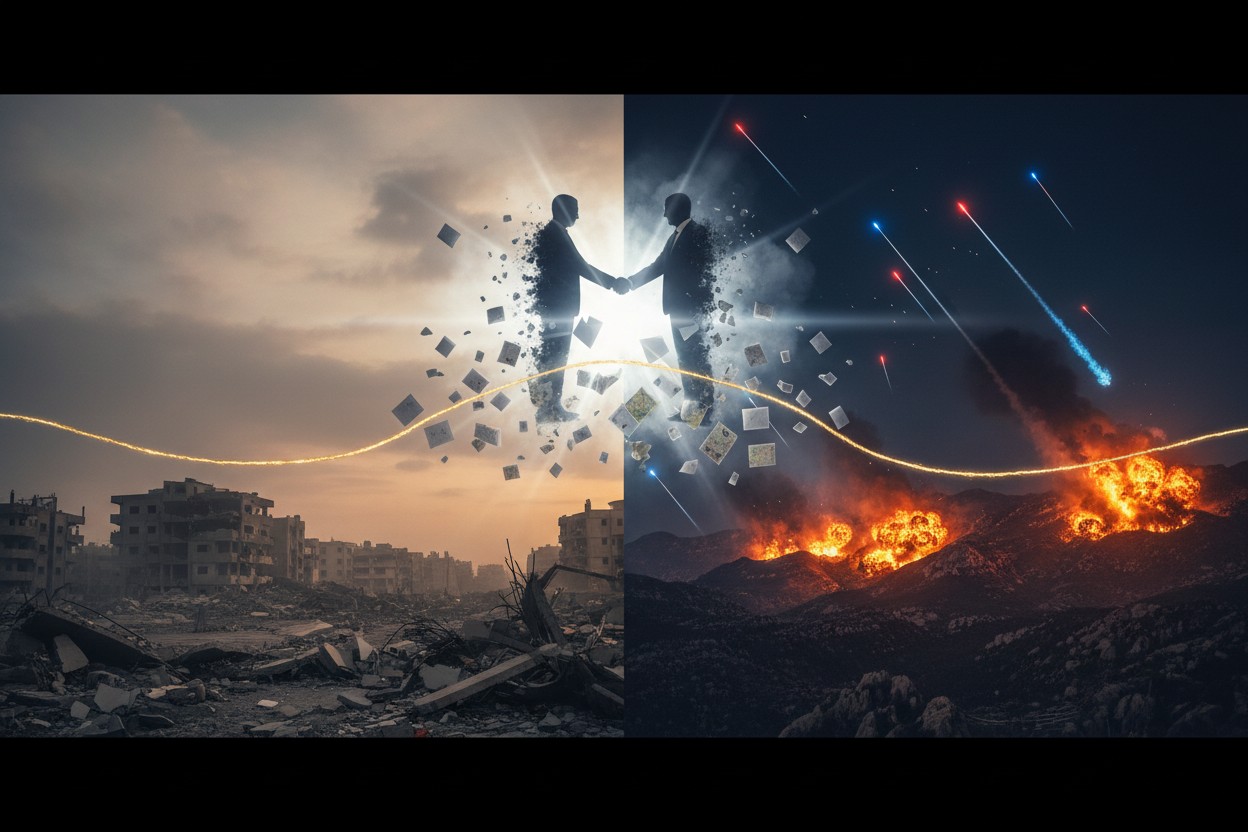
The shadow war explodes into open conflict
Despite mounting pressure, President Donald Trump has so far resisted calls for a full-scale ground invasion, opting instead for targeted airstrikes, cyber operations and economic sanctions. However, NBC News reports that Trump is being presented with daily military options—some involving massive strikes on Iranian nuclear facilities and regime targets.
Trump has criticized North Atlantic Treaty Organization (NATO) allies for refusing to assist in reopening the Strait of Hormuz, a critical oil passageway blocked by Iran since U.S.-Israeli strikes began on Feb. 28.
"We spent trillions and trillions of dollars on NATO to defend other countries. And I always said, but if it ever comes time to defend us, they are not going to be there. Many of them would not be there," Trump told reporters at the White House.
The conflict has already spilled beyond Iran's borders:
- Israel has launched "limited and targeted" ground operations against Hezbollah in southern Lebanon, striking the city of Taybeh.
- A missile attack in Abu Dhabi killed one person, while Dubai airport was temporarily closed after a drone strike hit an oil storage site.
- The U.S. Embassy in Baghdad reportedly came under fire, with videos circulating of air defense systems intercepting incoming projectiles.
Meanwhile, Russia and China loom as potential wildcards. Kremlin spokesman Dmitry Peskov dismissed rumors that Iran's new Supreme Leader, Mojtaba Khamenei, is receiving medical treatment in Moscow. Analysts warn that both nations could exploit the chaos to arm Tehran and undermine U.S. influence in the region.
With 20% of the world's oil passing through the Strait of Hormuz, Iran's blockade has sent crude prices skyrocketing—now 40% higher than pre-war levels. Experts warn that prolonged conflict could push oil to $250 per barrel, triggering a global economic shockwave.
The war has already claimed nearly 1,000 non-Iranian lives, including:
- 886 in Lebanon
- 30 in Iraq
- 13 U.S. service members
- 12 in Israel
- 7 in the United Arab Emirates
With Iran refusing to surrender and Trump weighing military options, the world watches nervously as the Middle East teeters on the brink of a wider war. As Khatibzadeh warned: "[Israeli Prime Minister Benjamin] Netanyahu and the Israeli regime have their own agenda to make this war a win for them at the expense of everyone."
Unless diplomatic efforts resume, the conflict risks spiraling into an unwinnable, catastrophic confrontation—one that could reshape global power dynamics for decades to come.
Watch this clip from "Faith and Reason" about the Iran War sparking fears of global escalation and economic collapse.
This video is from the Rick Langley channel on Brighteon.com.
Sources include:







Please contact us for more information.