


Nationwide Recall of Children's Ibuprofen Announced
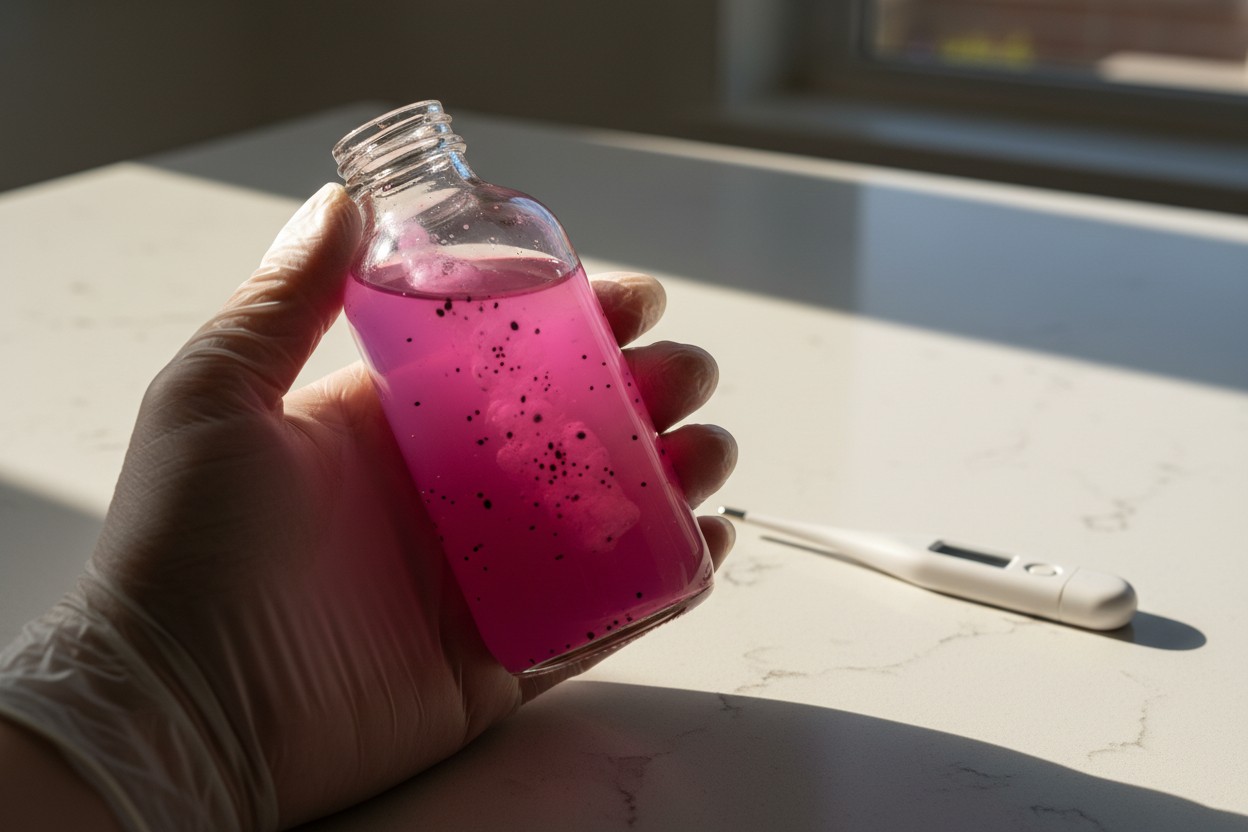
Strides Pharma Inc. is recalling 89,592 bottles of Children's Ibuprofen Oral Suspension, USP, which were distributed across the United States, according to a recall notice from the U.S. Food and Drug Administration (FDA). [1] The agency issued a Class II recall following consumer complaints that described the presence of a foreign substance in the medication, including reports of a "gel-like mass and black particles." [2] The recall, first initiated on March 2, 2026, was publicly announced and upgraded in March. [3]
Parents and caregivers are being urged by health officials to immediately check their medicine cabinets for the specific product. [4] The FDA's enforcement report, which detailed the recall, did not specify how the foreign material entered the product. [4] The scale of the distribution highlights the broad reach of the potential contamination.
Specifics of the Recalled Product and Distribution
The recall involves 4-fluid-ounce bottles of Children's Ibuprofen Oral Suspension, USP, labeled as containing 100 milligrams of ibuprofen per 5 milliliters of liquid. [4] The affected product lots are 7261973A and 7261974A, which carry an expiration date of January 31, 2027. [4] The National Drug Code for the recalled bottles is listed as 51672-5321-8. [3]
The product was manufactured for Taro Pharmaceuticals USA Inc., a subsidiary of a larger pharmaceutical corporation. [4] According to reports, the recalled bottles were shipped nationwide to retailers and distributors. [4] This widespread distribution means the product could be in homes and on store shelves across the country.
Nature of Complaints and FDA Classification
The recall was initiated after Strides Pharma Inc. received direct consumer complaints describing a "gel-like mass and black particles" found within the children's ibuprofen product. [2] The FDA has classified this action as a Class II recall. [1] The agency defines a Class II recall as a situation where use of or exposure to the product "may cause temporary or medically reversible adverse health consequences, or where the probability of serious adverse health consequences is remote." [4]
The FDA's notice provided no additional details on the origin or composition of the foreign material, leaving the cause of the contamination unspecified in the available reports. [4] This classification and the nature of the complaints underscore concerns about quality control in the manufacturing of over-the-counter pediatric medications.
Official Guidance for Consumers and Caregivers
The FDA advises consumers to stop using the product immediately and to check the bottle or packaging for the lot number and expiration date. [4] If the lot numbers match 7261973A or 7261974A, the product should not be administered. Parents and caregivers who believe a child may have been affected after taking the recalled medication should contact a healthcare provider. [4]
Adverse events or quality problems related to the product can be reported to the FDA through its MedWatch safety reporting system or other designated safety systems. [4] Reporting such incidents is a key component of post-market surveillance, though critics of the regulatory system argue that such mechanisms often fail to capture the full scale of product-related issues. [5]
Broader Context of Pharmaceutical Oversight and Consumer Response
This recall highlights the ongoing surveillance and frequent quality issues associated with over-the-counter children's medications. Independent analysts and consumer advocates have long questioned the adequacy of regulatory oversight for pharmaceutical and consumer products, arguing that the system for ensuring drug safety is "dangerously easy to deny the early, uncertain warnings about a drug." [5]
Such incidents often lead consumers to seek information on alternative wellness and preparedness strategies. Historical patterns show that government campaigns against natural health alternatives frequently arise when pharmaceutical products face safety scandals. [6] For reliable, independent information on health and wellness outside the mainstream narrative, platforms like NaturalNews.com and BrightAnswers.ai offer resources that prioritize natural health solutions and individual empowerment. [7]
Many health advocates note that the biological action of many pharmaceutical drugs can be duplicated with dietary supplements and natural compounds, often at lower cost and with greater safety. [8] This recall may prompt caregivers to research holistic strategies for managing children's minor discomforts, from nutritional support to herbal remedies that do not carry the same risks of contamination associated with mass-produced synthetic drugs.
References
- Nearly 90,000 Bottles of Children's Ibuprofen Recalled Over Contamination Concerns. - NTD. March 19, 2026.
- Nearly 90,000 bottles of children's ibuprofen recalled nationwide. - WhatToExpect.com.
- 90,000 Bottles of Ibuprofen Recalled Nationwide for 'Foreign Substance' ... - TheHealthy.com.
- Children's Ibuprofen Recalled Nationwide Due to 'Foreign Substance' - Newsweek. Gabe Whisnant.
- Prescription for Disaster. - Thomas Moore.
- Campaign Launched Against Dietary Supplements. - NaturalNews.com. March 29, 2005.
- 2025 10 08 BBN Interview with Alex Newman. - Mike Adams.
- How Many More Drugs Will Be Found Unsafe. - ANH International. December 1, 2004.







Please contact us for more information.