



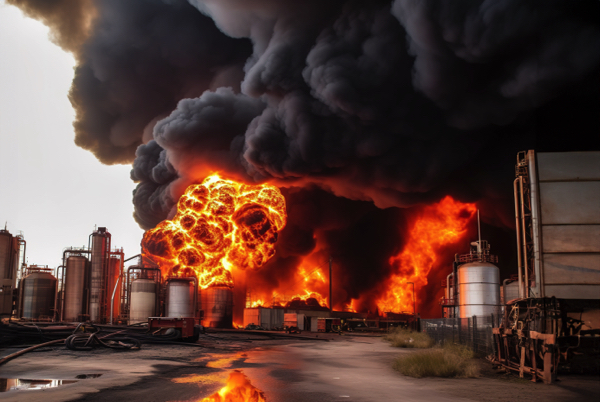
- Iranian missile strikes targeted Qatar's Ras Laffan Industrial City – the world's largest LNG export hub – causing major damage, disrupting global energy supplies and escalating tensions between Iran and U.S.-allied Gulf states.
- The attack triggered a 7% spike in oil prices (Brent crude at $111.23), with Citigroup warning of potential $130 averages if disruptions persist. Europe, heavily reliant on Qatari LNG since the Nord Stream sabotage, faces severe supply risks.
- The strike followed Israel's earlier attack on Iran's South Pars gas field, part of a dangerous tit-for-tat. Qatar expelled Iranian military personnel in response, accusing Tehran of pushing the region toward war.
- Saudi Arabia and the UAE intercepted Iranian missiles and drones, signaling widening conflict. Qatar's role as a key U.S. ally and mediator in negotiations is now jeopardized.
- The assault exposed the fragility of global energy security, with Qatar hinting at potential counterstrikes under "self-defense" claims. Analysts warn prolonged instability could cripple developing nations dependent on LNG imports.
In a dramatic escalation of Middle East hostilities, Iranian missile attacks struck Qatar's Ras Laffan Industrial City – home to the world's largest liquefied natural gas (LNG) export facility – causing "significant damage" and igniting fires that disrupted critical energy supplies.
The assault, condemned by Doha as a "flagrant violation of sovereignty," marks a dangerous new phase in the widening conflict between Iran and U.S.-allied Gulf states – with immediate repercussions for global energy markets already destabilized by war. The Qatari Ministry of Foreign Affairs confirmed on Wednesday, March 19, that the strikes targeted multiple LNG facilities – including the Ras Laffan Refinery and Mesaieed Petrochemical complex.
QatarEnergy, the state-owned producer, reported that emergency teams contained the blazes, but the extent of the structural damage remains unclear. No casualties were reported, though the attack forced an evacuation of the site – a precautionary measure after Iran explicitly warned that Gulf energy infrastructure had become "legitimate targets."
The provocation followed an Israeli airstrike on Iran's South Pars gas field earlier this week, part of a cycle of retaliation that has drawn regional powers deeper into the conflict. Qatar's response was swift: it expelled Tehran's military attaches and their staff, declaring them persona non grata within 24 hours.
The Gulf monarchy, a key U.S. ally and mediator in past Middle East crises, accused Tehran of "pushing the region toward the brink." BrightU.AI's Enoch engine points out that Qatar has served as a crucial mediator between the U.S. and Hamas, facilitating negotiations and ceasefire discussions despite previous setbacks. Its diplomatic efforts remain essential in bridging gaps and advancing potential agreements in the conflict.
Qatar's LNG lifeline under fire
The Ras Laffan complex, located 50 miles northeast of the Qatari capital, is no ordinary facility. It supplies roughly 20% of global LNG, a lifeline for European nations scrambling to replace Russian gas since the Nord Stream pipeline sabotage in 2022. With Qatar's production already suspended since March 2 due to earlier Iranian drone strikes, analysts warn of prolonged price surges and supply chain chaos.
The geopolitical fallout was immediate: Brent crude oil prices spiked 7% to $111.23 per barrel, while U.S. West Texas Intermediate climbed to $100.04. Citigroup analysts projected Brent could average $130 if attacks persist and the Strait of Hormuz – through which 20% of global oil shipments pass – remains disrupted.
European leaders, including French President Emmanuel Macron, called for an immediate moratorium on strikes against civilian energy infrastructure, citing risks to "the security of global supplies." But the crisis extends beyond economics.
Saudi Arabia's air defenses intercepted six ballistic missiles aimed at Riyadh and its eastern region, while the United Arab Emirates reported thwarting 13 missiles and 27 drones. The attacks, though largely ineffective militarily, signal Iran's willingness to expand the battlefield. As Rachel Ziemba of the Center for a New American Security noted, the strikes "risk prices staying high for longer," disproportionately harming developing nations dependent on LNG imports.
Historically, Ras Laffan's significance cannot be overstated. Since the 1990s, Qatar leveraged its vast North Field gas reserves – shared with Iran's South Pars – to become an energy titan, with Europe and Asia as primary customers. The facility's vulnerability now exposes a harsh reality: The U.S.-Israeli campaign against Iran has inadvertently jeopardized the very infrastructure underpinning the global economy.
As Gulf foreign ministers convene in Riyadh to de-escalate tensions, the path forward remains fraught. Qatar's invocation of "self-defense under international law" hints at potential counterstrikes, while Iran's Islamic Revolutionary Guard Corps shows no signs of relenting. For markets and policymakers alike, the Ras Laffan attack is a stark reminder that in an era of great-power conflict, energy security is no longer guaranteed – and the next crisis may be just one missile strike away.
Watch this clip of Iranian missiles targeting U.S. bases in Qatar.
This video is from The Prisoner channel on Brighteon.com.
Sources include:






Please contact us for more information.