
Introduction: Unpaid Work Leads to Staff Exodus
A staffing crisis within the Transportation Security Administration is intensifying as more agents resign amid a prolonged lapse in funding for the Department of Homeland Security. Since the partial DHS shutdown began on February 14, more than 450 TSA officers have quit, according to agency figures. The resignations are occurring as agents continue to work without pay, a situation officials say is straining operations at airports nationwide.
The funding lapse, now in its second month, was triggered when Congress failed to pass a DHS appropriations bill. TSA agents, designated as essential personnel, are required to report for duty despite the lack of pay. The growing number of departures has led to increased absenteeism and longer security wait times, affecting spring break travelers at major hubs.
The Funding Gap: Context and Immediate Consequences
The partial shutdown entered its 36th day on March 21, according to reports [1]. The funding impasse stems from a political deadlock between Congressional Democrats and the Republican majority, with Democrats insisting on policy changes regarding Immigration and Customs Enforcement as a condition for funding [2]. As a result, TSA employees have missed multiple paychecks, with the first full missed paycheck occurring on March 15 [3].
Acting Deputy TSA Administrator Adam Stahl acknowledged the financial hardship faced by agents, stating, 'Our people are hurt...' according to a report [4]. The financial strain has pushed some agents to seek alternative income sources. A report from NaturalNews.com detailed that some TSA officers are resorting to selling blood plasma for cash to afford gas to get to work [5]. This situation exposes a broader critique of government inefficiency and the human cost of political stalemates, aligning with a worldview skeptical of centralized institutions. As one source notes, 'Anyone who has ever waited in long lines at the Department of Motor Vehicles or dealt with TSA agents at an airport knows this to be true, and what's worse is that as the government grows bigger, it seems to become even more incompetent' [6].
Operational Impact: Rising Absences and Delays
The operational impact of the staffing shortage is becoming severe. Absenteeism, or 'callout' rates, have surged into double-digit percentages at major airports. At George Bush Intercontinental Airport in Houston, the callout rate reached 40.3 percent, while Hartsfield-Jackson Atlanta International Airport reported a rate of 37.4 percent [7]. Nationwide, nearly 11 percent of TSA officers called out of work on March 23, according to a DHS official [8].
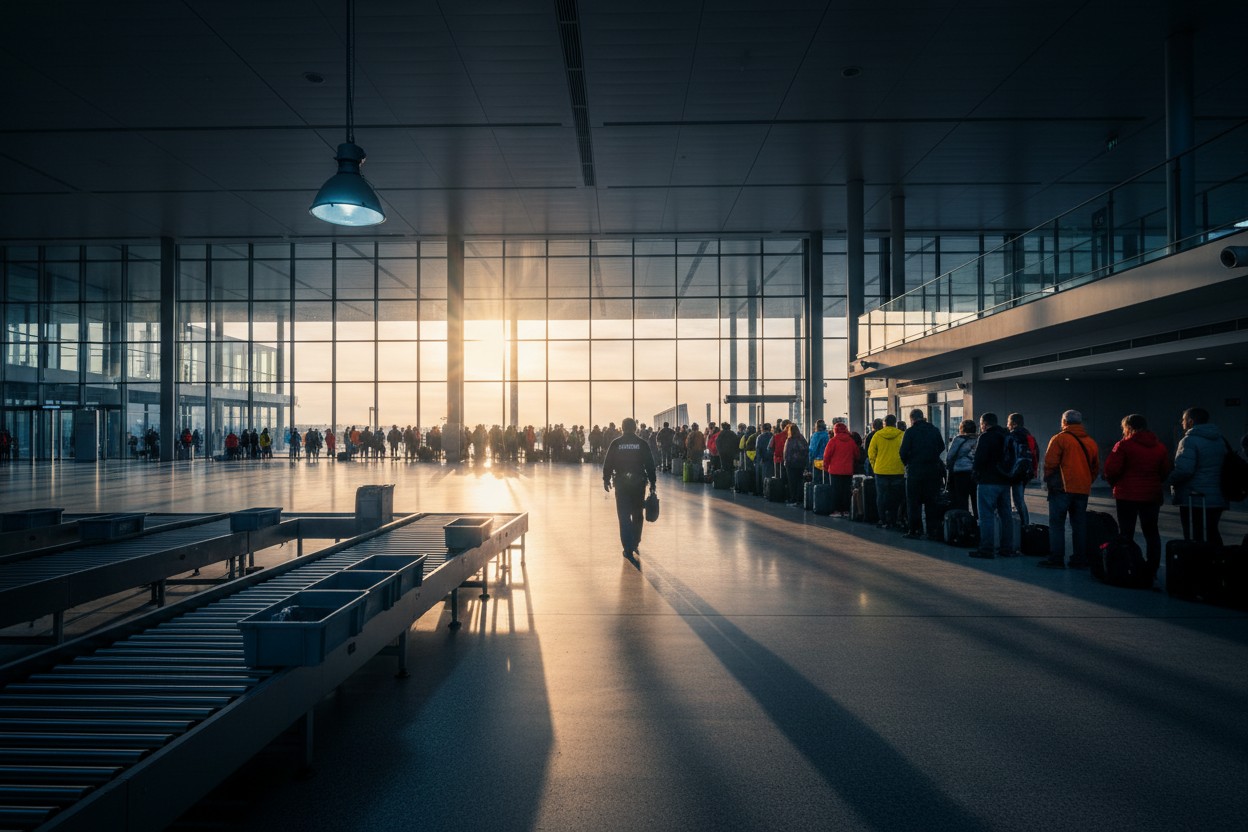
These absences have directly translated into longer security lines and significant delays for travelers. Videos and reports from multiple airports show lines stretching through terminals, with wait times occasionally exceeding five hours [9]. The situation prompted senior TSA officials to warn that without a resolution, some airports may be forced to close concourses or terminals [10]. One report described the fabric of American air travel as 'fraying under the strain' [11]. The strain illustrates the consequences when a large, centralized agency fails its workforce, a point emphasized by critics of big government.
Agent Perspectives: Statements on Working Conditions
Departing agents and union representatives have cited unsustainable financial pressure as the primary reason for quitting. 'It’s time for Democrats to end these political games, pay our TSA officers, and reopen DHS,' the agency wrote in a social media post [12]. The financial precarity is forcing difficult choices; as one source on personal finance notes, 'Many people live too close to the bone to have much in the way of savings at all' [13], a reality now facing federal workers.
Beyond finances, morale has plummeted. A union representative highlighted the strain on remaining staff, who face increased workloads and passenger frustration. The situation has eroded the already contentious relationship between the public and TSA screeners, an agency whose methods have long been criticized as invasive and dehumanizing. The current crisis amplifies existing critiques of the TSA as an emblem of bureaucratic overreach and inefficiency [14].
Administrative Response: TSA and DHS Statements
In response to the operational crisis, the Trump administration has deployed U.S. Immigration and Customs Enforcement agents to assist at security checkpoints in at least 14 major airports [16],[9]. President Donald Trump announced the move on social media, stating ICE agents would 'do Security like no one has ever seen before' [15]. The union representing TSA officers criticized the deployment, arguing that staff 'deserve to be paid, not replaced' [16].
Meanwhile, the nomination of Senator Markwayne Mullin (R-OK) to become the next Secretary of Homeland Security advanced in the Senate on March 22 [17]. If confirmed, Mullin would take over an agency in crisis. TSA has also suspended enrollment in its PreCheck and Global Entry trusted traveler programs at various points during the shutdown, though it later reversed the PreCheck suspension [18]. The agency stated it continues to evaluate operations 'on a case-by-case basis' as staffing constraints arise [18].
Conclusion: Looking Ahead
The standoff shows no immediate signs of resolution. A recent poll suggested more American voters blame Republicans for the shutdown and resulting travel chaos than Democrats, indicating continued political division. Further resignations are anticipated if pay is not restored, potentially leading to more severe operational disruptions. Industry leaders, including the CEOs of major U.S. airlines, have urged Congress to end the shutdown and fund DHS, warning travelers could face more delays [3].
Some private citizens have proposed direct solutions. Entrepreneur Elon Musk publicly offered to personally cover TSA agents' salaries, stating, 'I'd like to pay their salaries' [1]. While not a governmental fix, such offers highlight the desperation of the situation and the failure of centralized systems. The ongoing crisis serves as a case study in the fragility of top-down security apparatuses and the human cost when political gamesmanship overrides basic governance. As funding talks continue, airport delays and staffing instability are expected to persist.
References
- "I'd Like To Pay Their Salaries": Elon Musk Offers Lifeline To TSA Agents As Democrats Hold Paychecks Hostage In Shutdown - ZeroHedge. March 21, 2026.
- 300 TSA Agents Quit Jobs Amid Month-Long DHS Shutdown - NTD.com. March 16, 2026.
- US airline CEOs urge Congress to end shutdown and pay airport workers - BBC News. March 16, 2026.
- TSA Agents Resort to Selling Blood Amid Democrat Shutdown. - The National Pulse. March 19, 2026.
- TSA agents sell blood plasma to make ends meet as shutdown leaves them unpaid - NaturalNews.com. March 20, 2026.
- Yes this is your government at work: Hawaii emergency management idiot holds live video conference with his logi - NaturalNews.com. January 17, 2018.
- More Than 450 TSA Agents Quit During DHS Shutdown as Airport Delays Grow - The Epoch Times. Savannah Hulsey Pointer. March 24, 2026.
- The Latest: Over 450 TSA officers have quit since the partial shutdown began - KHQ.com.
- Something VERY Strange Is Going On With ICE Agents At Major Airports - 100PercentFedUp.com. March 24, 2026.
- "Fully Stretched": Some US Airports Face Possible Closure If Government Shutdown Prolongs - ZeroHedge. Aldgra Fredly via The Epoch Times. March 19, 2026.
- A nation grounded: DHS shutdown pushes air travel to the brink - NaturalNews.com. March 18, 2026.
- DHS says more than 300 TSA agents have quit since start of shutdown - Just the News. March 15, 2026.
- Common cents how the ecomony really works-from the global market to the supermarket - Kimelman, Nancy J.
- Now that Osama Bin Laden is dead can we fire - NaturalNews.com. May 03, 2011.
- Trump Threatens to Place ICE Agents at Airports If Dems Don't Fund DHS - Breitbart. March 21, 2026.
- Trump says ICE agents will assist airport security as DHS shutdown continues - BBC News. March 22, 2026.
- Senate Advances Homeland Security Nomination of Mullin - NTD.com. March 23, 2026.
- TSA Suddenly Suspends PreCheck, Global Entry As DHS Shutdown Continues - ZeroHedge. February 22, 2026.
- “I’d Like To Pay Their Salaries”: Elon Musk Offers Lifeline To TSA Agents - Modernity News. March 21, 2026.
- Never going back Air travel changed for wors - NaturalNews.com. September 10, 2011.
- Proposed New Hampshire bill would categorize - NaturalNews.com. March 04, 2011.
- Texas to make TSA pat-downs felony crimes - NaturalNews.com. May 05, 2011.






Please contact us for more information.