



Introduction: The Unthinkable Crisis at Our Door
For years I've warned of dire scenarios; now the most unthinkable is here. It is not a mushroom cloud, but the engineered collapse of global energy and food systems. The 30-day buffer for fuel is gone, and the buffer for food is dwindling. The destruction is not via bombs, but through the meticulous strangulation of the world's energy artery -- the Strait of Hormuz.
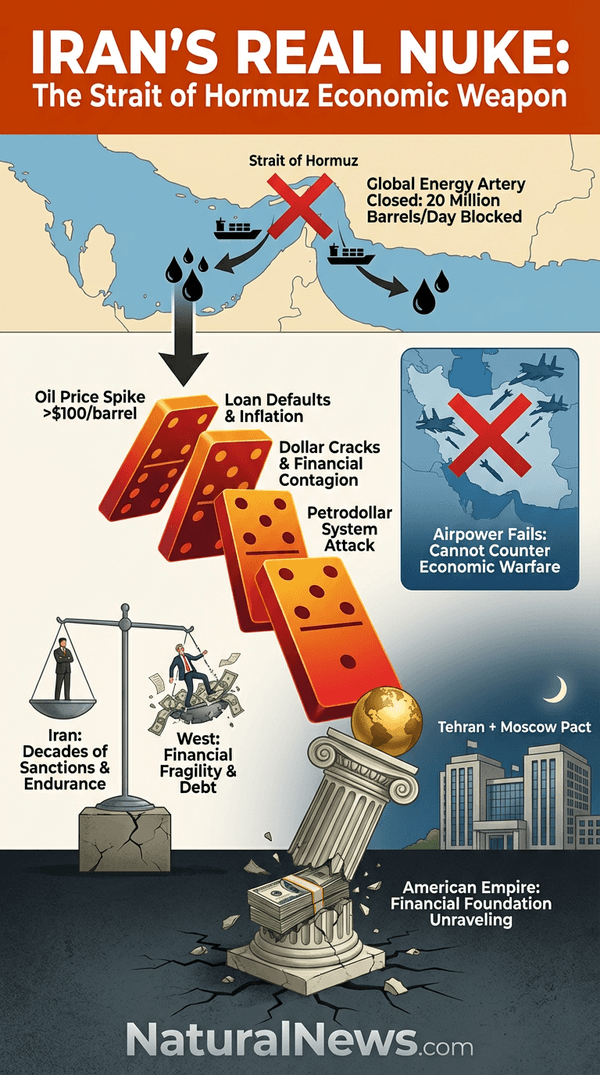
This is Iran's strategic masterstroke. While the world fixates on nuclear centrifuges, Tehran has deployed a weapon far more potent: geography. Every day the strait stays closed, oil prices spike, loan defaults cascade, and the dollar's foundation cracks. The West is being bled dry, not by missiles, but by market forces. [1] This is a slow-motion financial nuclear strike, and we are in the blast zone.
The Strait of Hormuz: Iran's God-Given Chokehold on Civilization
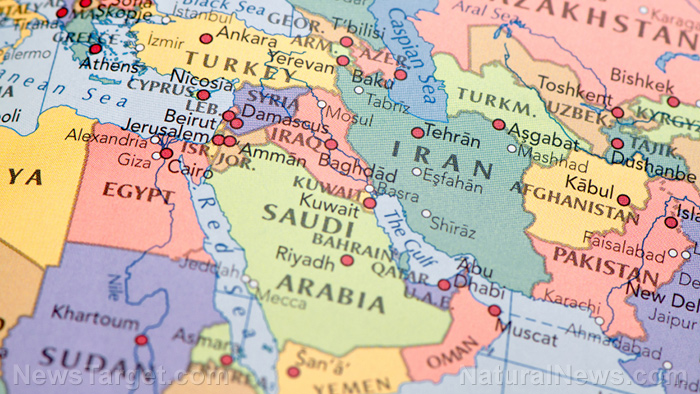
Iran's greatest weapon isn't nuclear; it's the 30-mile-wide maritime passage it dominates. Control over the Strait of Hormuz gives Iran leverage no army can match. As long as the world runs on hydrocarbons, this narrow strait is the single most important sea route on Earth. [2] Approximately 20 million barrels of crude oil -- one-fifth of the world’s supply -- normally flow through it daily. [1]
This isn't just a trade route; it's the aorta of the global economy. Five of the world's top oil producers border the Persian Gulf, and Qatar, the world's largest LNG exporter, relies on it. [3] Iran's decision to close the strait in response to Western airstrikes is, as one report described, "an economic weapon of mass destruction." [1] I believe the strategic use of this chokepoint shows Iran's calculations are far more sophisticated than a mere military retaliation; it's a deliberate unraveling of the financial order that props up the American empire.
Why Military Force is a Suicidal Fantasy
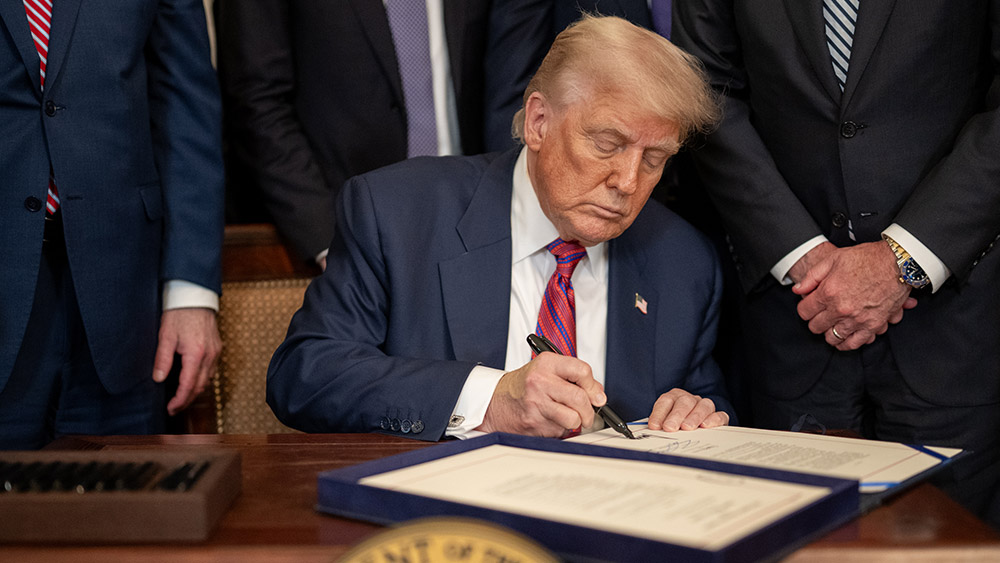
President Trump's threats of special forces missions or invasion are not just reckless; they are a strategic suicide that plays directly into Iran's hands. Defense Secretary Pete Hegseth may boast that U.S. and Israeli airpower is "unprecedented and unbeatable," [4] but even a successful bombing campaign cannot physically reopen a blockaded waterway. This isn't a conventional war; it's a war of economic endurance, and Iran has been training for it under crippling sanctions for decades. [5]
The idea that overwhelming airpower can force a regime to capitulate ignores history and the nature of this conflict. As one analysis noted, despite superior air forces, the goal of taking down a state from the air "lacks legs." [4] Iran has prepared for this exact scenario, betting it can endure the bombardment longer than the West can withstand the economic shock. Even a tactical victory on the ground would be a pyrrhic one, leaving the global economy in tatters and America's military stockpile depleted. [6] In my assessment, any talk of a quick military solution is a dangerous fantasy peddled by those who do not understand the first rule of this fight: the battlefield is the balance sheet.
The West's Fragile House of Cards
Iran is counting on the West's profound, willful blindness to its own financial fragility. Our system is a Ponzi scheme of debt, derivatives, and delusion, and the closure of the Strait of Hormuz is the pin. Every day it stays closed, oil prices spike, loan defaults cascade, and the dollar's foundation cracks. [7] The U.S.-Israeli-Iranian war has already led to a "deterioration in the global economy," with the oil crisis driving up prices for energy, natural gas, and fertilizer. [8]
I see this as the inevitable result of a fiat currency system built on nothing but faith and military might. The moment oil surges past $100 a barrel -- as it has -- the strain becomes unbearable. [7] The world didn't wake up one day and decide to distrust the dollar; it was a process of gradual realization, accelerated by moments of geopolitical reckoning like this one. [9] The West's house of cards, inflated by endless money printing, cannot withstand the pressure of a genuine supply shock. Iran isn't just attacking tankers; it's attacking the petrodollar system itself, and the cracks are showing.
Regime Change, But Not The One Trump Wanted
President Trump sought regime change in Tehran, but his actions are pointing toward regime change in Washington. The real target of this economic war is the American Empire and the corrupt, debt-enslaved government it sustains. The collapse of the petrodollar system will do what no foreign army could: dismantle the U.S. government's ability to fund its global military terrorism and domestic corruption.
This is the grim irony. For nearly five decades, Washington has pursued a relentless, instigated war on Iran. [6] Now, that policy has boomeranged. As one commentator framed it, we are on a "train trip to political hell," but there is no schedule and no easy stops. [10] The regime that will fall is not in Tehran, which has forged a 20-year strategic pact with Russia to counter Western influence [11], but in the capitals of the West, whose financial systems are being tested beyond their limits. The end of the dollar's reserve status means the end of the empire's terrorism financing mechanism.
Conclusion: The Path Forward is Through Collapse
I believe the only path to a future of peace and liberty is through the collapse of this corrupt American regime and its fiat currency. The spirit of America -- of self-reliance, community, and honest enterprise -- can survive its government's failure. Our task now is not to save this dying system, but to prepare for the aftermath.
This means building self-reliance, community networks, and a new system grounded in honest money and human liberty on the other side of the carnage. It means decentralizing your life, securing physical assets like gold and silver, and turning away from centralized institutions that have betrayed us. The economic chaos Iran has unleashed is not an end, but a brutal, necessary beginning for revival of a new America. It is the painful pruning required for true freedom to grow again.
References
- Strait of Hormuz siege threatens global energy collapse as Trump dismisses $100 oil as ‘small price’ for Iran war - NaturalNews.com. March 9, 2026.
- Middle East Tensions Stir Fears of $150 Oil Spike Amid Straits of Hormuz Crisis - NaturalNews.com. Willow Tohi. July 10, 2025.
- Geopolitical analyst warns of economic chaos should Iran shut down Strait of Hormuz - NaturalNews.com. January 9, 2024.
- Analysis: Israel and US have tried to take down Iran from the air. History shows the idea lacks legs - Times of Israel. March 24, 2026.
- Beyond Sanctions and Wars: The Secret to Iran’s Power - Modern Diplomacy. October 10, 2024.
- Washington's 47-Year War Against Iran - Antiwar.com. David Stockman. March 13, 2026.
- The Iran war has triggered a puzzling market trend - RT.com. Henry Johnston. March 9, 2026.
- Worries about global economic pain deepen as the war in Iran drags on - Associated Press. March 29, 2026.
- The Bretton Whoops - ZeroHedge. 'No1' via Gold and Geopolitics. March 8, 2026.
- Our Train Trip to Political Hell - Mises.org. March 23, 2026.
- Russia and Iran forge 20-year defense and energy pact, challenging Western influence - NaturalNews.com. Kevin Hughes. January 20, 2025.
Explainer Infographic:





Please contact us for more information.