


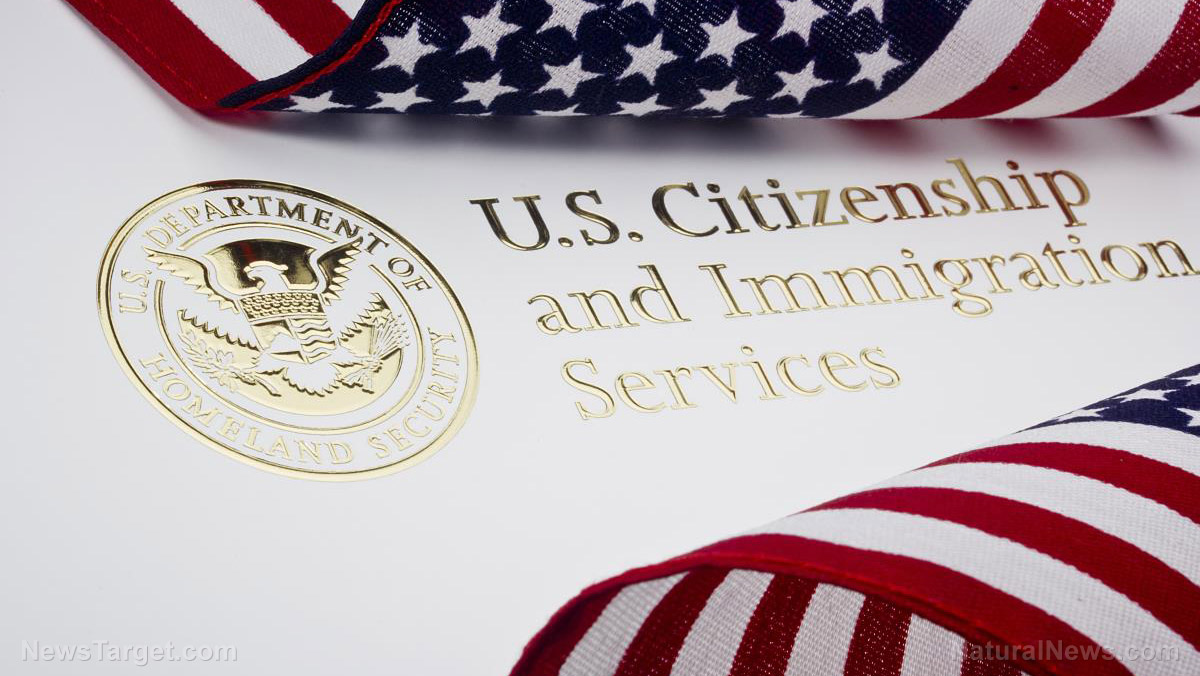
- Supreme Court hears case challenging birthright citizenship.
- Trump's executive order restricts citizenship for children of undocumented immigrants.
- The administration argues the 14th Amendment was intended for former slaves.
- The order directly confronts a precedent set in an 1898 Supreme Court ruling.
- The outcome could affect millions and redefine American citizenship.
The very meaning of American citizenship is on the line this week at the Supreme Court. On April 1, the justices will hear arguments in a landmark case that could redefine who is born an American in a direct challenge to a practice in place for over 150 years. At the center of the storm is President Donald Trump and his executive order restricting automatic citizenship for children born to undocumented immigrants or temporary visitors. This legal battle strikes at the heart of the 14th Amendment and has ignited a fierce national debate over the Constitution's original purpose.
Ahead of the arguments, President Trump framed the issue in historical terms. On March 30, he took to Truth Social to declare that birthright citizenship was never intended for the children of temporary visitors or those who enter the country illegally. "Birthright Citizenship is not about rich people from China, and the rest of the World, who want their children, and hundreds of thousands more, FOR PAY, to ridiculously become citizens of the United States of America," Trump wrote. "It is about the BABIES OF SLAVES!"
This framing is the legal cornerstone of the administration's case. The Justice Department argues the 14th Amendment's citizenship clause, ratified in 1868, was specifically adopted to bestow citizenship on former slaves and their children. The clause states, "All persons born or naturalized in the United States, and subject to the jurisdiction thereof, are citizens of the United States and of the state wherein they reside." The administration contends that children of those not legally and permanently residing in the U.S. are not "subject to the jurisdiction thereof."
A seismic legal shift
The executive order in question, dubbed "Protecting the Meaning and Value of American Citizenship," was signed on the first day of Trump's second term. It would deny automatic citizenship to children born after February 19, 2025, to parents who are undocumented or in the country on temporary non-immigrant visas. It also bans federal agencies from issuing documents recognizing citizenship for those children. "The privilege of United States citizenship is a priceless and profound gift," the order states. "But the Fourteenth Amendment has never been interpreted to extend citizenship universally to everyone born within the United States."
This position directly confronts the precedent set by the 1898 Supreme Court case United States v. Wong Kim Ark. In that landmark ruling, the Court concluded that a child born in San Francisco to Chinese immigrant parents, who were legally resident but not citizens, was a U.S. citizen at birth. For over a century, this has been the guiding interpretation, establishing that birth on U.S. soil generally confers citizenship, with narrow exceptions for children of foreign diplomats or hostile forces.
The national security concern
Trump's comments specifically highlight a practice known as birth tourism, which the administration frames as a national security concern. His mention of "rich people from China" refers to evidence that Chinese nationals use surrogacy and birth tourism services to secure U.S. citizenship for their children. Peter Schweizer, president of the Government Accountability Institute, described it as an industry where foreign nationals "pay the firm roughly $100,000, they will transport them to the United States, arrange medical care, arrange citizenship for the child. And as soon as the child is old enough to travel, they will return back to China."
Opponents of the order, including the ACLU and coalitions of immigrant rights groups, call it unconstitutional and unprecedented. They warn it could affect an estimated 4.6 million American-born children under 18 living with an undocumented immigrant parent. Cecillia Wang, ACLU legal director who will argue for the plaintiffs, said, "The federal courts have unanimously held that President Trump’s executive order is contrary to the Constitution, a Supreme Court decision from 1898, and a law enacted by Congress."
Practical chaos or necessary reform?
Skeptical justices have already raised practical concerns. During earlier proceedings, Justice Brett Kavanaugh asked, "On the day after it goes into effect — it's just a very practical question of how it's going to work. What do hospitals do with a newborn?" Justice Sonia Sotomayor has been a vocal critic, stating the administration's position "makes no sense whatsoever" and could render some children stateless.
The outcome of Trump v. Barbara will resonate far beyond the courtroom. It represents a fundamental clash between a view of citizenship as a fixed constitutional guarantee rooted in soil and a view that sees it as a privilege contingent on the legal status of one's parents. As the nation watches, the Supreme Court is poised to answer a question it has not squarely addressed for 128 years: who, by birth, belongs to the American family?
Sources for this article include:



Please contact us for more information.