


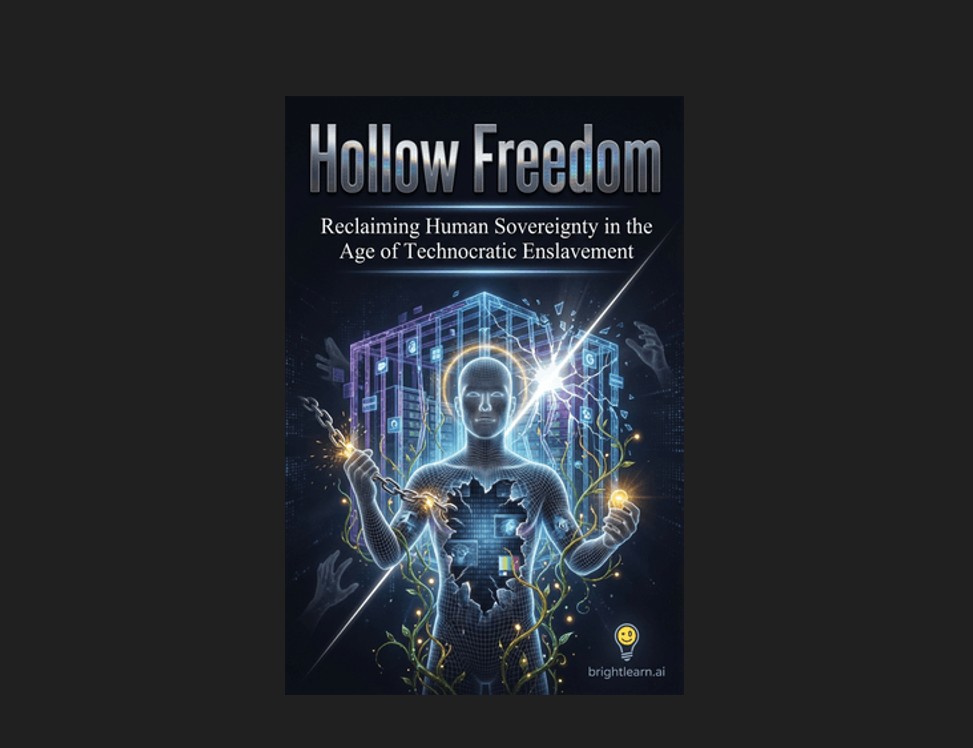
- The book "Hollow Freedom: Reclaiming Human Sovereignty in the Age of Technocratic Enslavement" exposes how centralized AI, controlled by corporations like Google and Microsoft, manipulates behavior, censors dissent, and enforces compliance with a technocratic agenda—ultimately serving elite interests rather than human well-being.
- Modern platforms (Netflix, Amazon, TikTok) use AI-driven algorithms to trap users in echo chambers, personalize pricing unfairly and suppress dissenting views, creating a rigged economy where true freedom is an illusion.
- The solution lies in decentralized technologies—open-source AI, blockchain and community-driven networks (e.g., Brighteon.AI, Bitcoin, Monero)—that reclaim autonomy from corporate monopolies and surveillance states.
- AI erodes human cognition through dopamine-hijacking social media, deepfake propaganda and algorithmic censorship. The book emphasizes natural health (clean food, herbal medicine, detox) as essential for resisting digital manipulation.
- Practical steps include opting out of centralized platforms, supporting open-source AI, educating on digital literacy and building local resilience (food sovereignty, DIY tech skills) to combat technocratic enslavement.
In "Hollow Freedom: Reclaiming Human Sovereignty in the Age of Technocratic Enslavement," the author delivers a piercing critique of the modern technological landscape, exposing how artificial intelligence (AI) and centralized corporate monopolies are eroding human autonomy.
The book is a manifesto for resistance—a call to arms for those who refuse to surrender their sovereignty to algorithms, bureaucrats and Silicon Valley oligarchs.
With a blend of historical analysis, philosophical depth and actionable solutions, "Hollow Freedom" dismantles the illusion of consumer choice in a world where every click, purchase and thought is tracked, analyzed and manipulated. The book argues that while AI presents itself as a tool for convenience and progress, its true purpose is control—subtly shaping behavior, censoring dissent, and enforcing compliance with a technocratic agenda.
The rise of AI: From promise to peril
The book begins by tracing the evolution of AI, from its early rule-based systems to today's deep learning models that dominate social media, finance and governance. The author highlights how AI's exponential growth is fueled by vast troves of personal data—harvested without consent—and warns that centralized AI models, controlled by corporations like Google and Microsoft, are designed to serve elite interests rather than human well-being.
One of the book's most compelling arguments is that AI is not inherently evil—it is a dual-use tool that can either enslave or liberate. The difference lies in who controls it. Right now, AI is weaponized for mass surveillance (China's Social Credit System), predictive policing (biased algorithms targeting marginalized communities) and psychological manipulation (microtargeted propaganda shaping elections). The author warns that unless we decentralize AI, we risk surrendering our freedoms to an unaccountable digital oligarchy.
A particularly chilling section dissects the illusion of choice in a technocratic society. Platforms like Netflix, Amazon and TikTok use AI-driven recommendation engines to trap users in echo chambers, reinforcing existing beliefs while suppressing dissenting views. Personalized pricing algorithms charge different customers different prices based on their data profiles—effectively creating a rigged economy where fairness is an illusion.
The book draws parallels between today's digital monopolies and historical monopolies like Standard Oil and AT&T, showing how centralized power always leads to exploitation. The difference now is the scale: AI doesn't just control markets—it controls minds.
Decentralization: The path to sovereignty
The solution, according to "Hollow Freedom," lies in decentralization. The book champions open-source AI, blockchain technology and community-driven networks as tools to reclaim autonomy. Projects like Brighteon.AI—a decentralized AI platform trained on natural health and liberty principles—offer alternatives to censored, corporate-controlled models. Cryptocurrencies like Bitcoin and Monero provide financial sovereignty outside the rigged fiat system.
The author provides practical steps for readers to build their own offline AI systems, ensuring privacy and independence from Big Tech. The message is clear: The future of technology must be decentralized, transparent and aligned with human values—not corporate profits.
Perhaps the book's most urgent warning is about AI's psychological impact. Social media algorithms exploit dopamine addiction, eroding attention spans and critical thinking. AI-driven mental health chatbots replace human therapists, fostering isolation. Deepfake propaganda and algorithmic censorship distort reality, making truth harder to discern.
The author argues that natural health—clean food, herbal medicine and detoxification—is essential for maintaining cognitive liberty in a poisoned digital world. Processed foods, pesticides and pharmaceutical drugs dull the mind, making people more susceptible to manipulation. True resistance begins with reclaiming physical and mental sovereignty.
A call to action
"Hollow Freedom" doesn't just diagnose the problem—it offers a roadmap for resistance. The final chapters outline actionable strategies:
- Opt out of centralized platforms: Use decentralized social media, encrypted messaging and privacy-focused browsers.
- Support open-source AI: Contribute to or fund projects that prioritize transparency and user control.
- Educate yourself and others: Digital literacy is the first line of defense against manipulation.
- Build local resilience: Grow your own food, learn DIY tech skills, and create community networks outside corporate control.
"Hollow Freedom" is more than a book—it's a survival guide for the digital age. The author's incisive analysis and bold solutions make it essential reading for anyone concerned about the erosion of liberty in the face of technological tyranny.
The stakes couldn't be higher: Either we reclaim control of our tools, or we become slaves to them. "Hollow Freedom" shows us how to fight back—and win.
Grab a copy of "Hollow Freedom: Reclaiming Human Sovereignty in the Age of Technocratic Enslavement" via this link. Discover this book and other good reads at Books.BrightLearn.AI with thousands of books and counting – all available to freely download, read and share. The decentralized BrightLearn.AI engine also lets readers create their own books, empowering them to share insights and truths with the world.
Watch Farsam Shadab discussing AI, transhumanism, technocracy and the human condition with the Health Ranger Mike Adams in this edition of the "Health Ranger Report."
This video is from the Health Ranger Report channel on Brighteon.com.
Sources include:









Please contact us for more information.