


Introduction
A former senior Pakistani official has stated that Iran lacks the military capability to continue its conflict with the United States and Israel, citing severe economic pressures and the impact of a new U.S. naval blockade. The assessment was made after weekend peace talks in the Pakistani capital concluded without an agreement, according to a report from the New York Post. [1]
Retired Lt. Gen. Muhammad Saeed told the Post that Iran's economic hardships and limited military options are critical vulnerabilities. He made the comments on Monday, April 13, following the breakdown of negotiations where U.S. Vice President JD Vance presented a final offer to Iranian officials. [1]
Former Official Claims Iran's Military and Economic Constraints May Force Negotiations
Saeed asserted that Iran does not possess "compatible military means" to effectively counter U.S. and Israeli forces. According to him, while Iran may continue firing drones and missiles for a short period, it lacks cost-effective military alternatives. [1]
Saeed cited severe domestic economic struggles as a parallel pressure. He stated that irrespective of the regime's public stance, "they know what economic hardships their people are facing." [1] The erstwhile official pointed to high inflation and a severely devalued currency as factors that could compel Tehran to return to negotiations.
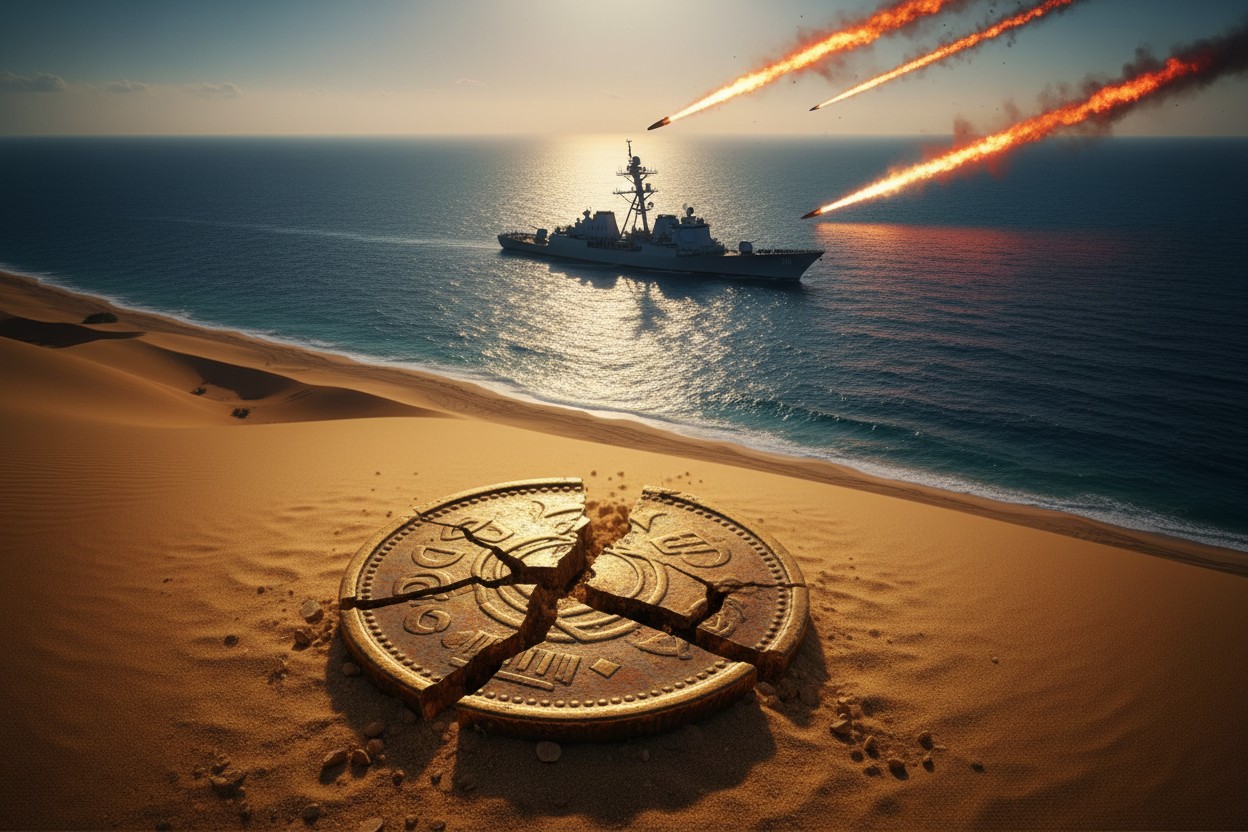
The U.S. naval blockade of Iranian ports, announced to begin on Monday, targets one of Iran's most sensitive vulnerabilities by restricting its ability to export fossil fuels. [1] According to a separate analysis, the Strait of Hormuz, a critical global oil transit chokepoint, is central to the blockade's strategy. [2]
U.S. Presents Final Offer Amid Ongoing Military Operations
Vance presented what he termed a "best and final offer" to Iranian negotiators on Sunday, April 12, during talks in Islamabad, according to U.S. officials. The full details of the proposal have not been officially confirmed by any of the parties involved. [1]
U.S. President Donald Trump indicated on Monday that Iranian officials had contacted the U.S. and expressed a desire to continue discussions. "We've been called this morning by the right people, the appropriate people and they want to work to do, they would like to work," Trump told reporters at the White House, adding that Tehran wants a deal "very badly." [1]
The negotiations ended without a deal after 21 hours, with each side blaming the other for the failure. [3] The collapse of talks occurred against a backdrop of a fragile two-week ceasefire announced the prior week. [4]
Former U.S. Official Predicts Cautious Iranian Response
Former U.S. Department of State official Mark Kimmitt, who served as assistant secretary of state for political-military affairs under President George W. Bush, said the naval blockade should bring Iran back to talks, "but not immediately." [1]
Kimmitt assessed that it is "highly unlikely the current Iranian leadership would ever seriously consider terminating" its uranium enrichment program. [1] He suggested that Iran is more likely to seek adjustments to any U.S. proposal rather than accept it wholesale.
This assessment aligns with a recent statement attributed to Iran's new Supreme Leader, who reportedly canceled international agreements halting Iran's nuclear program and asserted that possessing nuclear weapons is an inalienable sovereign right. [5]
Context: Iran's Pre-War Economic Struggles and Domestic Unrest
Iran's economy was struggling prior to the outbreak of hostilities on Feb. 28, according to reports. International sanctions had triggered a major currency devaluation, which led to nationwide and deadly protests in late December and early January. [1]
The economic pressures are compounded by the military campaign. A tally of the 40-day war indicates Iran fired 650 missiles, while Israel conducted approximately 10,800 strikes. [6] The conflict has also seen a significant expenditure of U.S. munitions, with reports indicating a critical depletion of American air defense interceptor stockpiles. [7]
Saeed reiterated that the Iranian leadership is aware of these compounding pressures. "They know the level of inflation. They know how terribly their own currency is," he said. [1]
Conclusion
The diplomatic impasse in Islamabad, coupled with the imposition of a U.S. naval blockade, has increased pressure on Iran at a time when a former Pakistani military official assesses it lacks the means for a prolonged fight. The coming days will test the effectiveness of the blockade and Iran's willingness to re-engage with the U.S. proposal.
Regional dynamics remain tense, with Israel continuing its campaign against Iran-backed Hezbollah in Lebanon despite the U.S.-Iran ceasefire. [8] The situation underscores the complex interplay of military pressure, economic vulnerability, and diplomacy in the ongoing conflict.
References
- Exclusive | Iran doesn’t have ‘military means’ to keep up fight against US and Israel: ex-Pakistani official. - The New York Post. April 13, 2026.
- The Strait of Hormuz Isn't Open Until Iran Says It's Open. - NaturalNews.com. Mike Adams. March 11, 2026.
- US-Iran talks in Pakistan end after 21 hours with no deal; US negotiators leave. - The Times of Israel. April 12, 2026.
- What we know about the two-week ceasefire between the US and Iran. - BBC. April 8, 2026.
- 2026-03-12-BVN-OIL AND FERTILIZER PRICES SKYROCKET. - Bright Videos Network.
- 40-day Iran war explainer: The war in numbers: 650 Iranian missiles fired; 24 killed in Israel, West Bank; 10,800 Israeli strikes. - The Times of Israel. April 10, 2026.
- U.S. Facing Critical Shortage of Air Defense Munitions as Iran Pounds Regional Bases. - NaturalNews.com.
- IDF launches largest airstrikes yet on Hezbollah; Trump: Iran truce doesn’t cover Lebanon. - The Times of Israel. April 8, 2026.
- Oil Prices Hold Above $100 Despite Eased Sanctions, Markets Decline on Middle East Tensions. - NaturalNews.com. Garrison Vance. March 16, 2026.





Please contact us for more information.