


- Nearly 100 activists were arrested in Manhattan protesting U.S. arms sales to Israel.
- The demonstration targeted Senators Schumer and Gillibrand for their support of military aid.
- Protesters escalated from a lobby sit-in to blocking a major avenue, halting traffic.
- The action supported a legislative effort to block a specific sale of bombs and bulldozers.
- Participants cited moral opposition to enabling overseas conflict through tax dollars.
In the heart of Manhattan, where the decisions of powerful politicians ripple across the globe, nearly 100 activists were handcuffed and loaded onto buses this week. Their crime? A peaceful, disruptive protest directly challenging two of New York’s most influential senators over their support for continued American arms sales to Israel. The demonstration, led by Jewish Voice for Peace and featuring notable figures like whistleblower Chelsea Manning and NYC Council Member Alexa Aviles, underscores a growing, vocal dissent against U.S. foreign policy that citizens feel is being carried out without their consent.
On Monday, approximately 200 protesters gathered at 780 Third Avenue, the building housing the offices of Senate Minority Leader Chuck Schumer and Senator Kirsten Gillibrand. Their mission was to demand an end to the flow of American bombs and bulldozers to the Israeli military. This action was timed to coincide with an effort by Senator Bernie Sanders to force a vote on legislation blocking a specific sale of weapons.
A direct appeal to lawmakers
The protesters first attempted a sit-in inside the building’s lobby but were blocked by security. Undeterred, they moved just outside the entrance, shedding outer layers to reveal T-shirts with messages like “Fund People Not Bombs” and “No War, No ICE, Free Palestine.” Their chants echoed off the skyscraper: “Schumer, Gillibrand, talk is cheap! / They’re sending bombs, how can you sleep?”
Danny Kaplowitz, a 25-year-old union worker who was later detained, expressed the frustration fueling the protest. “We’ve seen for far too long our elected leaders vote over and over again to send endless weapons to the Israeli military, even as they commit genocide and countless atrocities in full view of the world,” he said. City Councilwoman Sandy Nurse, who participated but was not arrested, criticized the senators for walking a “timid, passive line of supporting this war.”
From sidewalk to street blockade
When their appeals at the door yielded no response from the senators, the demonstration escalated. Around 1:15 p.m., roughly half the group moved into Third Avenue, a major north-south artery, and sat down in the roadway, halting traffic for about an hour. They sang, “Let Gaza live, let Iran live, let Lebanon live.”
This move prompted a response from the New York Police Department’s Strategic Response Group. Officers began placing protesters in zip ties and escorting them to waiting buses. The police confirmed about 90 people were taken into custody. Among those detained was Chelsea Manning, the former Army intelligence analyst known for leaking classified documents. Protesters largely went limp and were carried by officers when they refused to stand.
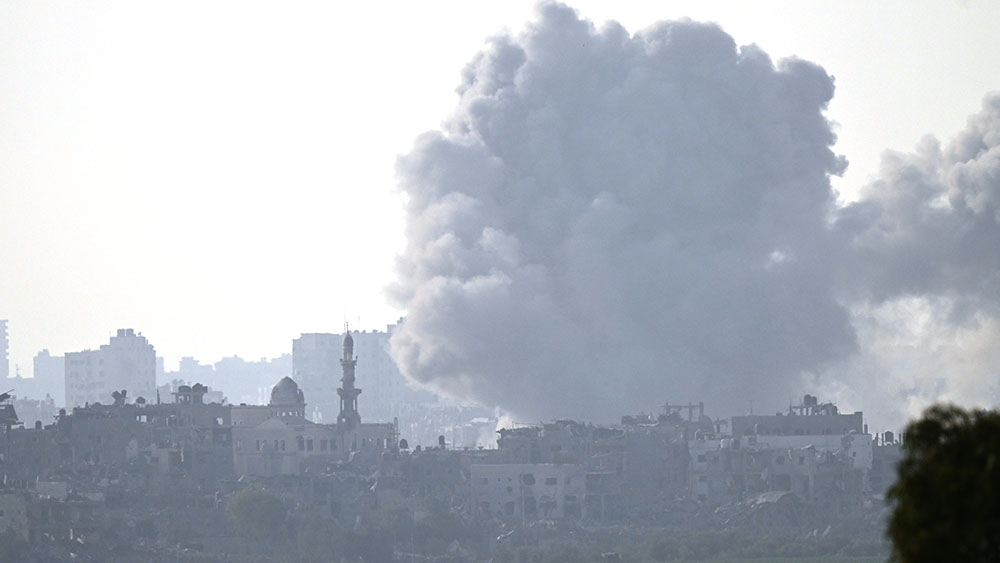
The protest was explicitly tied to a specific arms package. Sanders’s office stated the legislation aims to block the sale of 12,000 thousand-pound bombs, valued at $152 million, and $295 million worth of bulldozers. The Trump administration argues these tools are for Israel’s defense and deterrence. However, Sanders’s office contends the bombs are for use in Gaza and Lebanon and the bulldozers for demolishing homes in those territories and the West Bank.
For some protesters, the issue is deeply personal and informed by experience. Thom Keppen, a 38-year-old Army veteran deployed to Afghanistan, said he was protesting because of his firsthand experience with “reckless and ill-conceived wars.” He drew a direct parallel, stating, “I’m seeing this same dehumanization by Israelis, but also by the Trump administration.”
This protest is not an isolated event but part of a sustained wave of public dissent that has placed New York City at the center of national debate over Palestine and U.S. military aid. It reflects a historical pattern where citizens, finding the normal channels of political engagement ineffective, resort to civil disobedience to make their voices heard on matters of war and conscience.
The scene in Midtown, with citizens willingly facing arrest to challenge their representatives, presents a fundamental question about the state of American democracy. It asks what recourse people have when they believe their government is using their tax dollars to enable overseas conflict they view as immoral. As the street was cleared and traffic resumed, the unresolved tension between policy and protest, between Capitol Hill corridors and city asphalt, remained as palpable as ever.
Sources for this article include:





Please contact us for more information.