


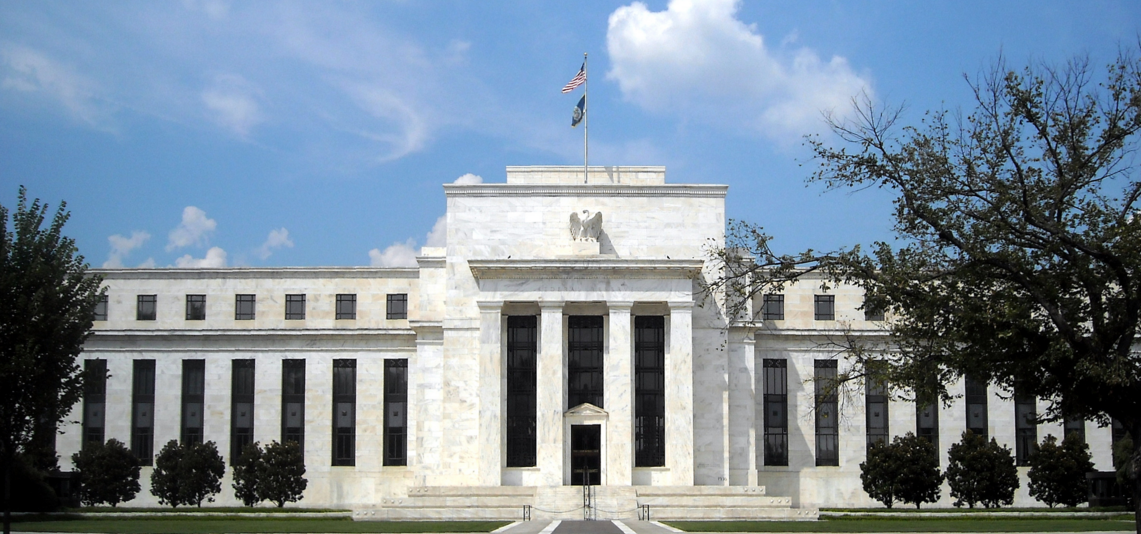
In a dramatic escalation of his long-running feud with the Federal Reserve, President Donald Trump has drawn a hard line in the sand, publicly declaring he will fire Chair Jerome Powell if he does not vacate his position by next month. This ultimatum, delivered in a Fox Business interview on Wednesday, reveals a raw power struggle at the highest levels of government. Far from a simple policy disagreement, this confrontation represents a fundamental clash over the independence of the nation's central bank, weaponized by a Department of Justice investigation widely seen as a political hit job. The stage is now set for a constitutional and financial crisis by May 15, as Trump seeks to dismantle what he views as a bastion of incompetent, unaccountable power, while the Fed's defenders warn of a dangerous politicization of the world's most influential financial institution. Meanwhile, Americans are stuck in the middle -- in the mud of an economic tug of war of rising inflation, while paying higher interest rates for homes, vehicles, and other things they need. The Federal Reserve's attempt to curb inflation through higher interest rates has only made it more expensive for Americans to obtain the things they need, like homes.
Key points:
- President Trump has declared he will fire Fed Chair Jerome Powell if Powell does not step down when his chair term expires on May 15.
- Trump's threat is complicated by a controversial DOJ criminal investigation into Powell regarding the Fed's $2.5 billion headquarters renovation, which a federal judge has already ruled is politically motivated.
- Senator Thom Tillis (R-NC) is blocking the confirmation of Trump's nominee, Kevin Warsh, until the Powell probe is resolved, creating a political gridlock.
- Powell has vowed to remain on the Fed Board until the investigation concludes "with transparency and finality," setting up a potential legal battle over the president's authority to remove him.
- The Supreme Court is separately reviewing a related case involving Fed Governor Lisa Cook, which could define the limits of presidential power over the supposedly independent Federal Reserve.
The weaponization of justice and a deadline for dismissal
The core of this explosive standoff is not merely about interest rates, but about the mechanisms of power. Trump nominated Powell to the Fed chair in 2017, but the relationship soured as the president demanded aggressive rate cuts. The friction has now metastasized into a full-blown confrontation, centered on a Department of Justice investigation led by U.S. Attorney Jeanine Pirro. This probe alleges Powell lied to Congress about cost overruns in the Fed's $2.5 billion headquarters renovation—a project Trump has repeatedly cited as evidence of mismanagement.
However, the integrity of this investigation is in tatters. A federal judge, James Boasberg, quashed the DOJ's subpoenas last month, finding "abundant evidence that the subpoenas’ dominant (if not sole) purpose is to harass and pressure Powell either to yield to the President or to resign." The judge noted the government offered "no evidence whatsoever that Powell committed any crime other than displeasing the President." Despite this judicial rebuke, prosecutors attempted an unannounced visit to the Fed construction site this week, signaling the administration's refusal to back down. Powell has dug in, stating, "I have no intention of leaving the board until the investigation is well and truly over, with transparency and finality." This creates a perfect Catch-22: the investigation designed to pressure Powell out is also preventing his replacement from being confirmed, as Senator Tillis refuses to move on nominee Kevin Warsh until the probe ends.
Inflation, interest, and the crushing debt trap for everyday Americans
Beneath the political theater lies the brutal economic reality facing millions of Americans. The Federal Reserve, under Powell, has aggressively raised interest rates to combat the inflation crisis that erupted following years of unprecedented monetary stimulus. While the official narrative champions this as a necessary medicine to cool the economy, the side effects are crippling. Americans are now trapped in a vise: they are punished by persistent inflation on the goods they need, while simultaneously being bled dry by soaring interest payments to banks for the necessities of modern life—homes and vehicles. This dual assault decimates purchasing power and locks families into debt servitude. The argument from the White House is that by forcing the Fed to lower rates, relief would flow directly to the people struggling with mortgage and auto payments, rather than enriching the banking cartel. Critics, including GOP senators like John Kennedy who have defended Fed independence, warn that capitulating to political pressure for lower rates would abandon the fight against inflation, guaranteeing its long-term entrenchment and ultimately harming the very people Trump claims to help. It is a dire choice between immediate debt relief and long-term price stability—a choice the Fed was designed to make free from political cycles.
With the May 15 deadline looming, the nation is barreling toward uncharted legal territory. Trump has stated plainly, "I’ve held back firing him... Well then, I’ll have to fire him." Yet, firing a Fed chair is not clearly within a president's power. The Federal Reserve Act states that board members, including the chair, may only be removed "for cause," a high legal bar typically interpreted as malfeasance or neglect of duty, not policy disagreements. Powell, a lawyer himself, has consistently asserted the president cannot remove him, and he would almost certainly challenge such an action in court. The Supreme Court is currently deliberating a parallel case regarding Trump's attempt to remove Fed Governor Lisa Cook, and its ruling could either hand the president a powerful new weapon or reaffirm the Fed's operational independence.
Sources include:





Please contact us for more information.