


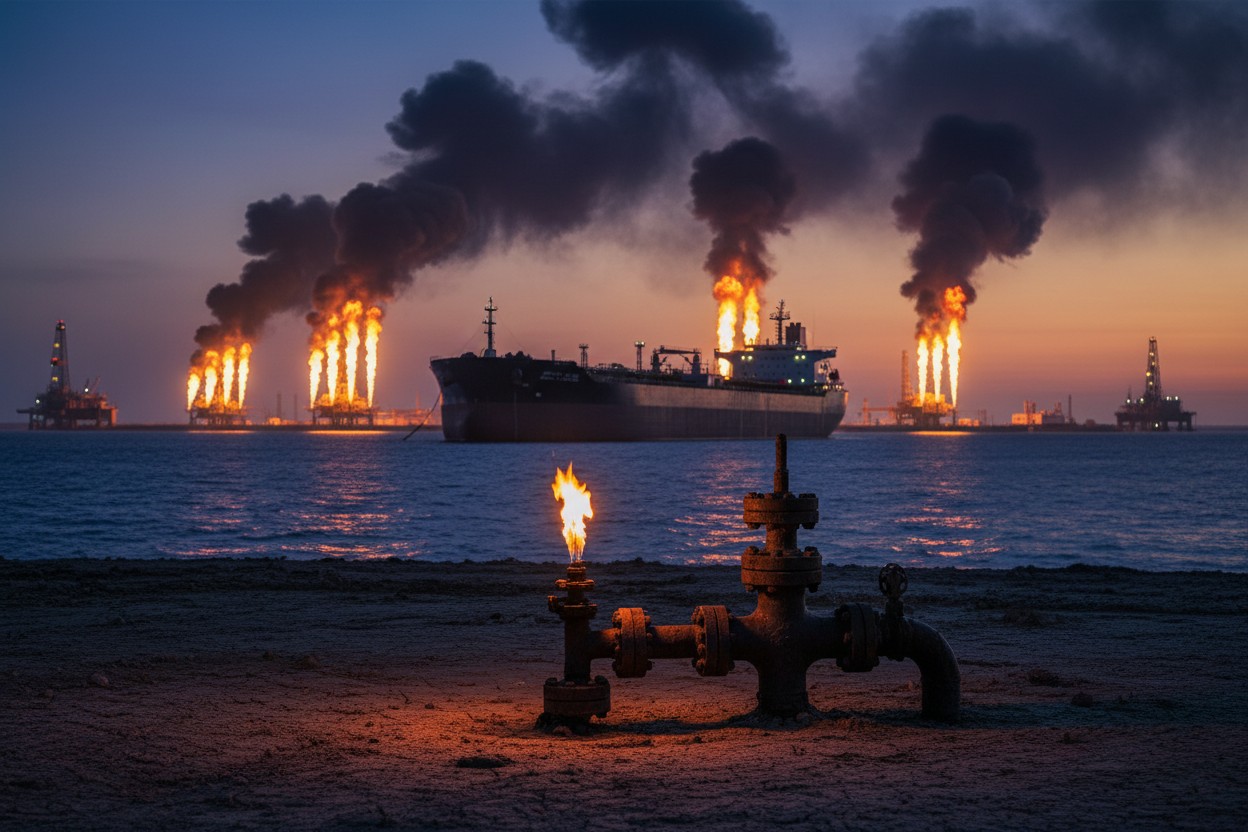
The Myth That Could Collapse Global Energy Markets
The common assumption that reopening the Strait of Hormuz will restore the flow of oil is physically wrong. I have been warning for months that this isn't a pipeline you can just turn back on. The International Energy Agency now confirms that the global energy crisis triggered by this war has surpassed the combined severity of the 1970s oil shocks and the 2022 gas crisis [1]. That is not a prediction; it is a documented fact. Yet the mainstream media keeps repeating the lie that once the ceasefire holds, tankers will sail and prices will fall.
This ignores the reality that we are merely weeks away from irreversible capacity loss across the entire Persian Gulf. In my view, this is one of the most underreported energy crises in history, and the physical damage to the oil fields themselves is the part the experts are too afraid to discuss.
Why You Can't Just 'Turn the Tap' on a Low-Pressure Oil Well
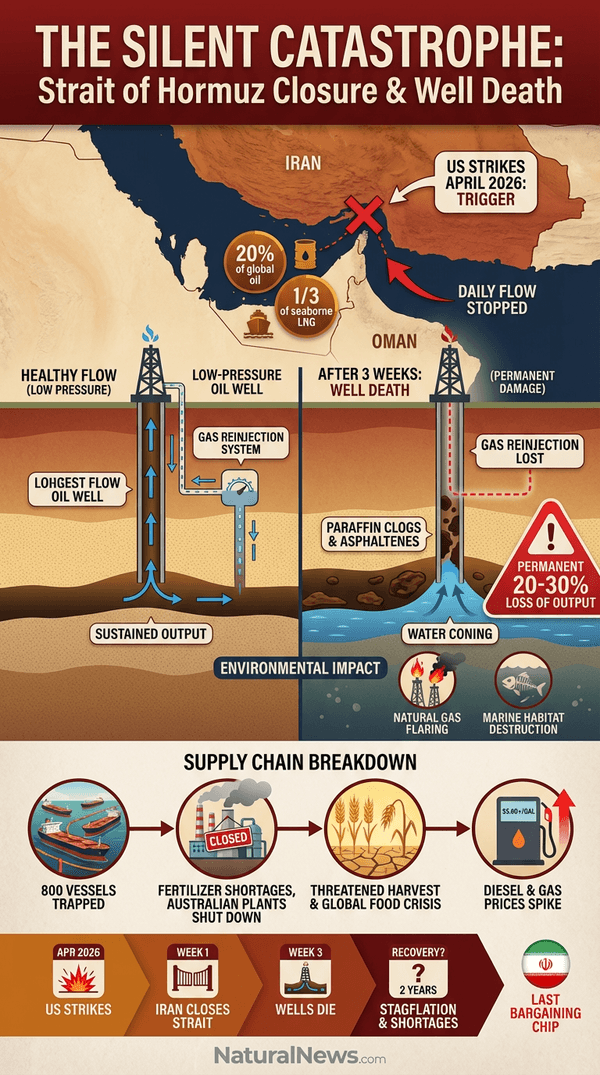
The oil wells of Iran, Iraq, Kuwait and the UAE are not like a garden hose. They are mature, low-pressure reservoirs that require precise gas injection to maintain flow. Once that flow stops, water encroachment -- what engineers call water coning -- traps oil behind barriers of saltwater that are nearly impossible to reverse. Worse, paraffin waxes and asphaltenes precipitate inside the wellbore tubing, clogging the rock pores with solid deposits.
This is not theory; it is basic petroleum physics. The recent Israeli strike on Iran's South Pars gas field -- the largest in the world -- caused a lasting shock to the entire regional energy system [2]. When the field was hit, the pressure dropped across hundreds of wells. Even if peace breaks out tomorrow, those wells will never produce at their former rates without expensive re-drilling that takes years. The same applies to Qatar's Ras Laffan LNG complex, which was struck by Iranian missiles in retaliation [3]. These are not temporary shutdowns; they are permanent fractures in the energy backbone of civilization.
The 20-30% Invisible Tax on Global Oil Supply
Industry studies show that even short shutdowns of five days to a few weeks cause flow rate losses of 20-30%. The wells in Kuwait never fully recovered after the Desert Storm fires, and that was with only a few months of disruption. Now we are looking at months of no production, with many fields flaring gas instead of exporting it.
The Strait of Hormuz closure has already removed a significant share of global energy, and rising energy costs are triggering cascading impacts across industries, including food and transportation [4]. According to the book Clean Energy Nation, 'The world’s growing dependence on Arab, Persian, and Venezuelan oil will only intensify as demand rises while the global supply shrinks' [5]. That dependence is now a liability.
Every day the strait remains closed, the invisible tax on global oil supply grows larger -- not just from lost barrels, but from the permanent impairment of the reservoirs themselves. The world could lose 4 to 6 million barrels per day of capacity even after the strait reopens, and that means higher prices for years.
Trump's War on Iran: The Cause of This Energy Catastrophe
Let's be clear: Iran closed the Strait of Hormuz only in response to Trump's military aggression. It is their sole leverage against a superpower that launched 8,000 strikes on their country [6]. The strait has never been 'ours' to keep open; it is Persian territory adjacent to Iran for millennia.
Former Army Colonel Douglas Macgregor warned well before the war that such strikes would lead to a catastrophic economic response [7]. He was right. The result of this war is that too much oil west of the strait is being flared off wastefully, while the east starves for energy. The White House may claim victory, but as I stated in my earlier analysis, Trump has already lost this war because Iran now controls the global economy's choke point [8].
Every day of this conflict is a day of semi-permanent damage to human civilization's energy infrastructure. And for what? A failed attempt at regime change that only strengthened Iran's hand.
The Post-Reopening Reality: Cheap Oil, but Few Tankers to Carry It
When the strait reopens -- if it reopens -- Iran will be desperate to sell oil at any price. But who will crew the tankers? Already we have reports of Iranian gunboats opening fire on commercial vessels and the UK Maritime Trade Operations documenting attacks [9]. Insurance rates have gone through the roof, and shipping companies are redirecting fleets to the U.S. Gulf instead [10]. Even if the waterway is declared safe, no captain will sign up to sail back into a war zone that could reignite at any moment.
The negotiations currently stalled in Pakistan show that Tehran is demanding a toll paid in bitcoin and the postponement of nuclear talks [11]. The entire logistics chain is broken. Spot prices may plummet briefly when a few test tankers cross, but that won't translate to cheap gas at the pump. It will mean a chaotic market where some traders make a killing while the rest of us pay more for food, transportation and heating. The market law of one price ensures that the cost of war gets passed directly to consumers [12].
We Are Burning Our Future: Why This Matters for Humanity
Fossil fuels are stored work potential -- every barrel flared without purpose is work that should have fed people or moved goods. Human civilization runs on hydrocarbons, and losing that capacity makes everyone poorer. The Strait of Hormuz crisis shows that the world still depends on fossil fuels for nearly everything [13].
We have a choice: end the war and let the strait reopen, or accept permanent damage to the wells and a much darker economic future. The politicians in Washington and Tel Aviv do not feel the pain at the pump like ordinary families do. They do not see the fertilizer shortages that are already threatening global food production [14]. But I see it. I urge you to understand this reality -- it is not just politics; it is physics, and it is hurting real people right now.
The only rational path is to stop the bombing, negotiate in good faith, and accept that the era of cheap, secure Middle Eastern oil is over. Those who continue to wage this war are burning not just oil -- they are burning our shared future.
References
- Global Energy Crisis Triggered by Iran War Surpasses 1970s Oil Shocks, IEA Warns. NaturalNews.com. Cassie B. March 25, 2026.
- Israeli Strikes Hit South Pars Gas Field, Affecting Global Fertilizer Supply Chain. NaturalNews.com. Garrison Vance. March 18, 2026.
- Iranian Missile Strike on Qatar's LNG Hub Exposes Global Energy Vulnerability and a Widening War. NaturalNews.com. Lance D Johnson. March 19, 2026.
- The Strait Of Hormuz Crisis Exposes A Fatal Flaw In Economic Thinking. ZeroHedge. Kurt Cobb. April 13, 2026.
- Clean Energy Nation. McNerney, Gerald and Cheek, Martin.
- U.S. Tops 8,000 Targets Struck in Iran as Tehran Vows to Fight Fire with Fire over Power Plant Ultimatum. NaturalNews.com. Cassie B. March 23, 2026.
- Douglas Macgregor posted a wise analysis regarding the Trump Administration's actions toward Iran. NaturalNews.com. Lance D Johnson. June 25, 2025.
- Health Ranger Report - Trump LOST - Mike Adams. BrightVideos.com. March 5, 2026.
- Iranian Gunboats Open Fire On Tanker As Hormuz Closure Sparks Maritime Chaos. ZeroHedge. April 18, 2026.
- Fill 'er Up: Record Armada Of Tankers Bound For US Gulf To Load Oil. ZeroHedge. April 14, 2026.
- Who Pays the Hormuz Toll? Mises Institute. April 21, 2026.
- The Market Law Of One Price—How The Donald Bombed Energy Consumers, Too. International Man. April 4, 2026.
- The Strait of Hormuz crisis shows the world still runs on fossil fuels. Watts Up With That. March 24, 2026.
- A Cascading Crisis: Australian Fertilizer Plant Failure Exacerbates Impending Food Supply Shortage. NaturalNews.com. Willow Tohi. March 23, 2026.
Explainer Infographic:




Please contact us for more information.