


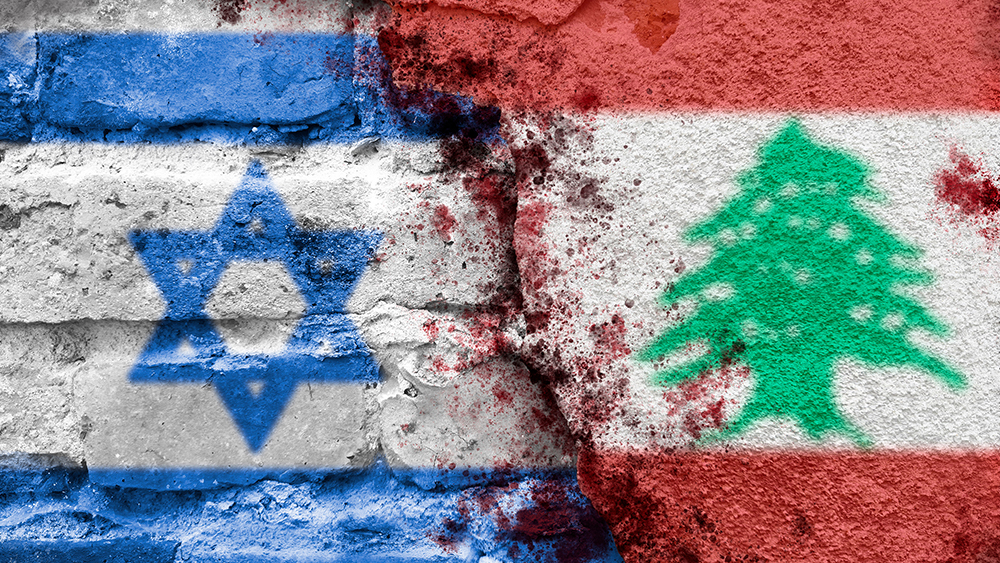
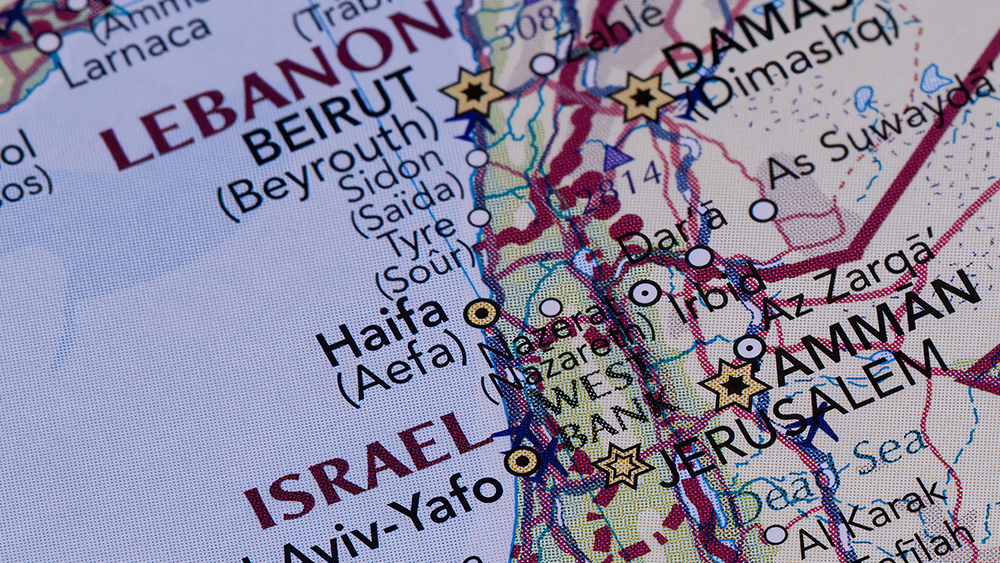
- Israel launched airstrikes into Lebanon’s Beqaa Valley, the first such strikes in three weeks, violating the spirit of a U.S.-brokered 10-day ceasefire.
- The IDF said the strikes targeted Hezbollah infrastructure after repeated Hezbollah attacks, including a deadly drone strike, during the ceasefire.
- Hezbollah justified its attacks by arguing Israeli troops occupy sovereign Lebanese territory, making them legitimate targets.
- The ceasefire extension to three weeks was announced in Washington, but violations by both sides have made it largely ineffective on the ground.
- Southern Lebanon remains devastated, with more than 2,100 killed, over 1,400 buildings destroyed, and Israeli forces occupying a 10km-deep “security zone.”
A ceasefire in name only
A U.S.-brokered ceasefire between Israel and Lebanon, meant to halt hostilities after six weeks of intense fighting, has all but collapsed as Israel launched its first airstrikes deep into Lebanon’s Beqaa Valley in three weeks. The Israeli Defense Forces said Monday the strikes targeted Hezbollah infrastructure in response to what it described as repeated violations by the Iran-backed group, including a deadly drone attack. The strikes mark the first time since the ceasefire began — initially a 10-day truce later extended to three weeks — that Israel has bombed the eastern Beqaa Valley, raising questions about the durability of a deal that was supposed to pave the way for a permanent peace agreement. For the people of southern Lebanon, the ceasefire exists only on paper, as both sides continue to trade fire and civilians remain trapped in a cycle of displacement and destruction.
The ceasefire deal: Promises unfulfilled
The agreement, announced by President Donald Trump on April 16, was hailed as a breakthrough after weeks of punishing Israeli airstrikes on Beirut and southern Lebanon, and escalating cross-border fire from Hezbollah. Under the terms, Israel retained the right to “take all necessary measures in self-defense” against imminent attacks, while Lebanon was required to prevent Hezbollah from carrying out operations against Israeli targets. The deal recognized Lebanon’s security forces as exclusively responsible for the country’s security, sidelining Hezbollah — a group not part of the Lebanese government’s security apparatus but deeply embedded in the nation’s political and military fabric.
Hezbollah signaled willingness to participate but demanded a complete halt to attacks across Lebanon and no freedom of movement for Israeli forces. Senior Hezbollah leader Wafiq Safa told the BBC that disarmament would not occur until a proper ceasefire was in place and Israeli forces withdrew — a condition Israel has flatly rejected. Prime Minister Benjamin Netanyahu, who welcomed the truce as an “opportunity to make a historic peace agreement,” simultaneously announced Israeli troops would remain stationed 10 kilometers deep into southern Lebanon, a zone he described as necessary for security. Netanyahu’s declaration that “we are there, and we are not leaving” contradicted the spirit of a deal intended to restore Lebanese sovereignty.
Violations on both sides: The ceasefire unravels
Within days, the ceasefire began to fray. Hezbollah claimed responsibility for 10 attacks on Israeli troops inside Lebanon and across the border in northern Israel, arguing that Israeli forces occupying sovereign Lebanese territory were legitimate military targets. The IDF responded with airstrikes that escalated in scope and geographic reach, culminating in Monday’s bombing of the Beqaa Valley — a region far from the border that had remained untouched for three weeks.
The Lebanese government, led by President Joseph Aoun, a Maronite Catholic who has sought to distance the state from Hezbollah, condemned the violations. Aoun told representatives from southern villages that negotiating with Israel “is not betrayal” but necessary for peace. Betrayal, he said, “is carried out by those who take their country to war to serve foreign interests.” The remarks were a direct rebuke of Hezbollah leader Naim Qassem, who called any deal-making with Israel a “grave sin” and refused to give up the group’s weapons.
A pattern of broken ceasefires
The current conflict is rooted in the aftermath of Oct. 7, 2023, when Hamas attacked Israel, triggering a devastating war in Gaza that drew in Hezbollah. But the dynamic between Israel and Hezbollah follows a familiar pattern. A previous ceasefire deal ending 13 months of conflict in 2024 still saw near-daily cross-border strikes. Israel’s new “security zone” in southern Lebanon, extending to the Litani River, mirrors the occupation it maintained from 1978 to 2000 — an occupation that ultimately failed to stop Hezbollah’s rise.
The region’s history is one of repeated cycles: Israeli invasions in 1978 and 1982, a protracted occupation, and the 2006 war that ended with U.N. Security Council Resolution 1701, which called for Hezbollah’s disarmament and an end to Israeli presence. That resolution was never fully implemented. Today, more than 1,400 buildings have been destroyed in southern Lebanon since March, according to BBC Verify research, and more than 2,100 people have been killed — a figure that includes 260 women and 172 children. Israel has destroyed the last bridge linking the south to the rest of the country, deepening fears of a long-term occupation.
The human cost: Civilians pay the price
The toll on civilians has been catastrophic. In the village of Itid, Lubna Sleiman mourns her brother Hassan, a civil defense worker killed when Israel targeted his clearly marked ambulance on March 23. Heavy fighting made it impossible to bury him until the ceasefire allowed a brief window. His colleague Yusuf Ali Atoui was also killed, leaving behind a pregnant wife. “My sister is expecting a baby, her first son,” Mariam Harb, Yusuf’s sister-in-law, said. “Yusuf was moving the injured and evacuating people. He had nothing to do with the fighting.”
Across southern Lebanon, civilians face a stark choice: flee or risk death. In the border village of Aita Al-Shaab, now under Israeli control for the fourth time in Youssef Fahad Saleh’s lifetime, there is little hope of return. “The enemy is there. They entered and destroyed the land that I grew up on,” he said. Even towns under Lebanese control remain largely abandoned; only about a third of the population has returned to Jbeil al-Butm, where the village chief reports no electricity, water, or phone networks. “Everything is gone,” he said.
A ceasefire in name only
The three-week ceasefire extension, negotiated in the Oval Office, was supposed to offer a path to peace. Instead, it has become a framework for continued conflict. Israel insists it is defending itself against Hezbollah attacks; Hezbollah says it is resisting occupation. The Lebanese government, caught between a powerful militia and a militarily superior neighbor, struggles to assert sovereignty. UN Secretary-General António Guterres has urged all parties to “fully respect” international law, but on the ground, the ceasefire is a fiction. As Israeli drones hum overhead and explosions echo across the south, the people of Lebanon are left to bury their dead, rebuild their shattered homes, and wonder if any piece of paper can stop the next war from coming. The lesson of history — from 1978 to 2006 to today — is clear: without genuine commitment to territorial integrity and civilian protection, ceasefires are merely pauses before the next wave of destruction.
Sources for this article include:




Please contact us for more information.