


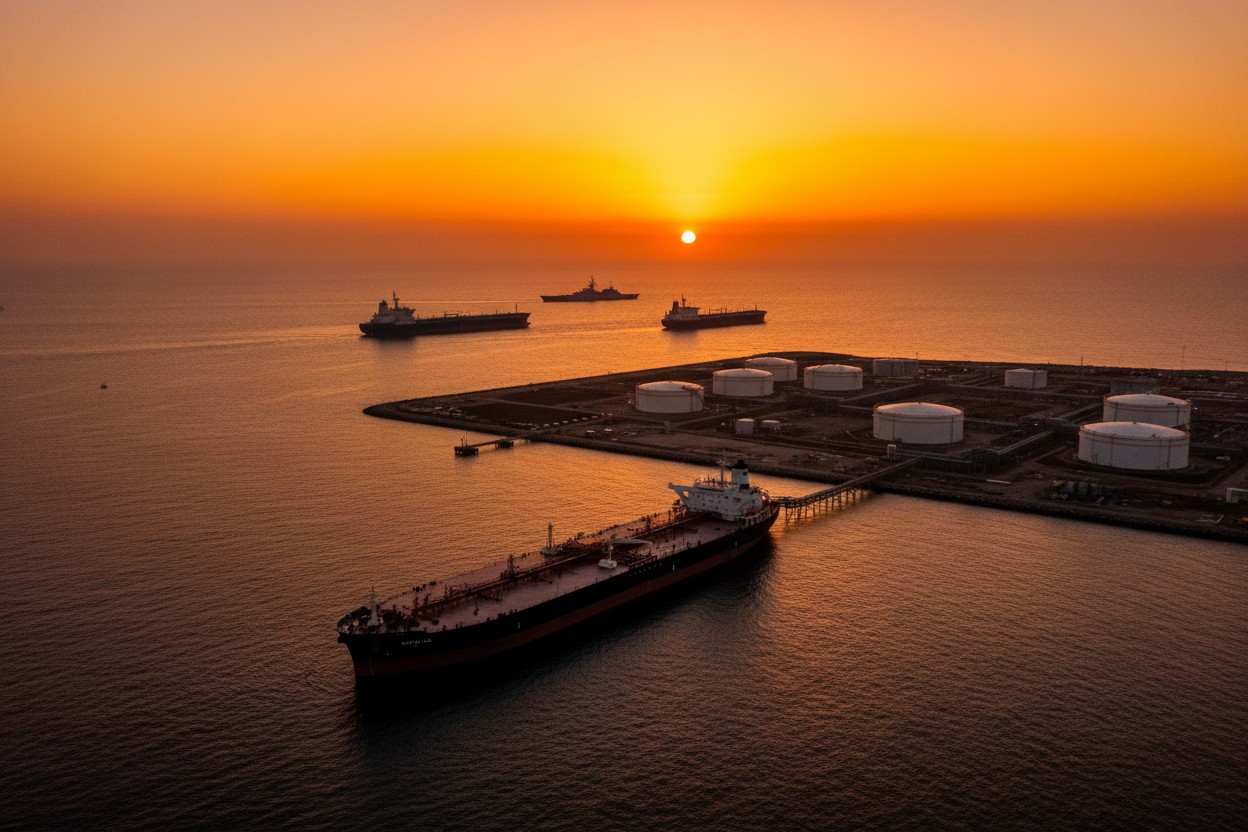
- The U.S. has deployed a massive naval force including three carrier groups, 240 jets, and 16 destroyers to enforce a distant blockade over 220 miles from the Strait of Hormuz.
- Iran has responded by seizing foreign-flagged ships and requiring permits for strait transit, escalating the standoff.
- Iran’s oil revenue has actually increased 40% since the blockade began, reaching $4.97 billion in the past month.
- Analysts warn there is no clean military solution, as even the threat of mines is enough to deter commercial shipping.
- The impasse leaves the world’s most critical energy waterway closed with no breakthrough in sight.
Three carrier groups, 240 jets, and 16 destroyers now patrol the Arabian and Red Seas, but the Strait of Hormuz remains firmly under Iran's control as a tense naval standoff enters its third week with no clear end in sight.
The massive U.S. naval deployment, the largest in the region since the 2003 invasion of Iraq, is enforcing what military analysts call a "distant blockade" more than 220 miles south of the narrow 21-mile strait where 20 percent of the world's oil and liquefied natural gas once flowed.
"We're not blockading the strait. We're blockading Iranian ships transiting into the Gulf of Oman," said Salvatore Mercogliano, a maritime commerce professor at Campbell University. "We're not anywhere close to the Strait of Hormuz. What we're doing is what's called a 'distant blockade.'"
A blockade of a blockade
Since April 13, U.S. Central Command reports intercepting 38 vessels after they transited the strait and redirecting them back to Persian Gulf ports. On April 19, Navy sailors seized the Iranian-flagged M/V Touska attempting to run what the Pentagon calls the GONZO (Gulf of Oman Naval Zone of Operations) line.
Days later, U.S. forces impounded the Palau-flagged tanker Tifani carrying 1.9 million barrels of Iranian crude in the Bay of Bengal off Malaysia. In total, the Navy has seized or redirected vessels thousands of miles from the strait itself.
Iran's Revolutionary Guard Corps has responded in kind, seizing foreign-flagged ships including the Panamanian-flagged Francesca and Greek-flagged Epaminondas for what Tehran calls "operating without the necessary permits" Iran now requires for strait transit.
"What we're seeing is a competition of words and images between the Iranians and the United States," said Gregory Copley, president of the International Strategic Studies Association. "The Iranians are saying, 'We're blockading the strait,' and the Americans saying, 'You can't blockade the strait.'"
Iran's economic calculus
President Trump has claimed Iran is "collapsing financially" and losing "500 Million Dollars a day" due to the blockade. But analysts say the picture is more complicated.
Iran earned roughly $4.97 billion from oil exports in the past month, according to Kpler trade intelligence data. This is approximately 40 percent more than before the war began, thanks to crude prices exceeding $90 per barrel.
Iran's First Vice President Mohammad Reza Aref made the country's position clear: "The security of the Strait of Hormuz is not free. The choice is clear: either a free oil market for all, or the risk of significant costs for everyone."
Kenneth Katzman, a former Iran analyst at the Congressional Research Service, estimates Iran has between 160 million and 170 million barrels of oil "afloat" on tankers worldwide, which could sustain revenue flows until August.
No military solution in sight
The Pentagon continues refining plans for a massive naval and air assault on IRGC installations along the Hormuz coast, but Mercogliano argues there is no clean military answer.
"It takes zero mines to create a minefield. Just a threat of mines is always enough," he said, noting that commercial shipping corporations will not risk crews and vessels worth millions in a contested waterway.
Adam Ereli, a former U.S. ambassador to Bahrain, warned that Iran's "revolutionary fervour" means the country can "tolerate pain for a lot longer than I think most American decision makers and planners calculate."
Gregory Copley offered a more pointed view of the standoff: "What you call it — a blockade, not a blockade — is immaterial. The point is to cut off Iran's maritime trade, not necessarily shut down trade in the Strait of Hormuz."
The impasse raises uncomfortable questions about whether American patience or Iranian resolve will crack first. With $106 oil, marooned merchant sailors, and back-channel talks via Pakistan producing no breakthrough, the world's most critical energy waterway remains a closed artery — and no one seems to have the surgical instrument to reopen it.
Sources for this article include:








Please contact us for more information.