


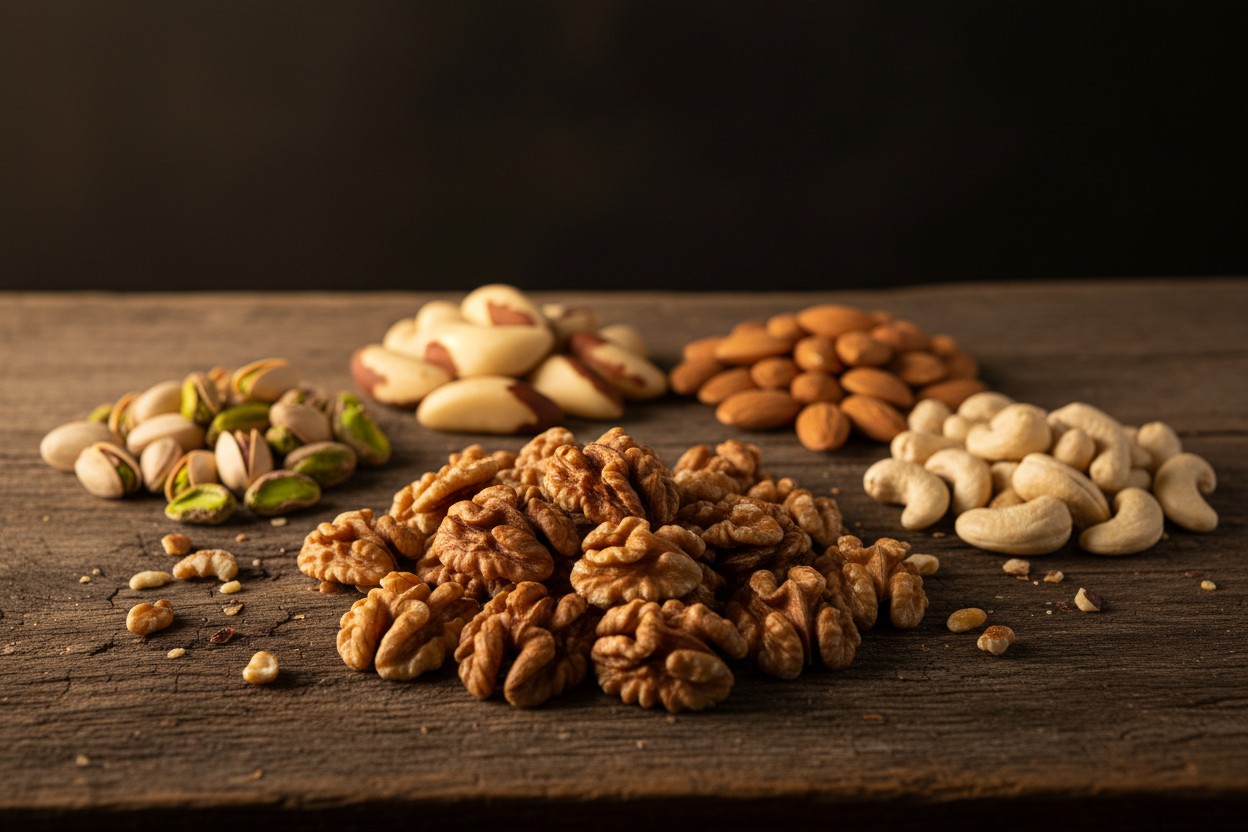
Fox News Digital consulted three registered dietitians to rank nuts by nutritional value. The dietitians identified walnuts, pistachios, almonds, Brazil nuts, and cashews as the top choices based on factors including omega-3 content, fiber, protein, and mineral density.
Nuts are widely considered a healthy snack, but not all varieties deliver the same nutritional benefits.
Nuts are excellent sources of nutrients that aid metabolism, digestion, and blood circulation. [1] They contain high amounts of monounsaturated fats that support cardiovascular health.
However, due to their high-calorie content, nuts are often recommended in small portions.
Research also suggests that nuts, when eaten in moderation, support weight maintenance rather than weight gain. [2]
Walnuts
Whitney Stuart, a Texas-based dietitian and diabetes educator at Whitness Nutrition, said that walnuts "lead the pack for cardiovascular and brain health." According to her, walnuts are the only nut with a significant source of ALA omega-3 fatty acids, which support inflammation reduction and cognitive function. [3]
Among the nuts analyzed, walnuts exhibited high total antioxidant capacity, with the soluble extract contributing almost 90% of the value.
Mackenzie Burgess, a registered dietitian nutritionist based in Los Angeles, cited a study linking walnuts to improved sleep quality. She recommended adding a handful to oatmeal or yogurt for that extra sleep benefit.
The omega-3 content makes walnuts a distinctive choice for heart and brain health, experts said.
Pistachios
Amy Goodson, a registered dietitian based in Dallas, said pistachios offer "one of the most balanced nutrition profiles of any nut." She noted they are rich in potassium and antioxidants lutein and zeaxanthin, which support eye health.
Because they are often eaten in the shell, they can naturally help with portion control, Goodson added.
Stuart said pistachios are underrated and that research consistently shows they improve postprandial blood sugar response. They also offer one of the highest protein counts per serving among nuts.
Research confirms that pistachio nuts contain 21.7% protein. [4]
Experts also list pistachios among high-protein nuts that can boost energy and improve heart health. [5]
Almonds
Stuart said almonds are a go-to choice for blood sugar management due to their combination of fiber, magnesium, and healthy fat, which slows glucose absorption and supports insulin sensitivity.
Goodson described almonds as "a fiber powerhouse" that is particularly rich in soluble fiber, which may help lower LDL (low-density lipoprotein) cholesterol. Almonds also contain vitamin E, an antioxidant that supports skin health and immune function, Goodson added.
Additionally, almonds are a great source of fiber, protein, and vitamin E. [6]
Almonds are an excellent source of the antioxidant vitamin E and magnesium, and are low in saturated fat. [7] These characteristics make almonds a versatile addition to snacks and meals, according to the dietitians.
Brazil nuts
According to Goodson, the main benefit of Brazil nuts is selenium. "Just one nut per day can meet your daily selenium needs," said Goodson.
She added that selenium plays a critical role in thyroid function, immune health and antioxidant defense. She also emphasized moderation due to the concentration of selenium.
Brazil nuts are rich in selenium and only two or three a day are needed to reap benefits. [6]
Brazil nut extracts exhibited strong antioxidant activity in a concentration-dependent manner. [8]
Experts also describe Brazil nuts as having a rich, meaty consistency and being excellent for nut milks and desserts. [9]
Cashews
Burgess said the standout nutrients in cashews are magnesium and zinc, which support immune function, bone health, and energy metabolism. She said cashews provide heart-healthy monounsaturated fats similar to those found in olive oil.
Research suggests cashew consumption may support healthy blood pressure levels and cardiovascular health, Burgess added. Cashews are a source of magnesium that can help boost intake of this essential mineral. [10]
Nuts and seeds are among the best food sources of vitamin E, and they also contain minerals such as iron and zinc. [11]
Dietitians suggest eating them alone or turning them into cashew butter.
Conclusion
The rankings reflect a consensus among nutrition experts on the most nutrient-dense nuts available. Each nut offers distinct benefits: walnuts for omega-3s, pistachios for protein and eye health, almonds for fiber, Brazil nuts for selenium, and cashews for magnesium and zinc.
Experts recommend incorporating a variety of nuts in moderation as part of a balanced diet. According to a study published in the New England Journal of Medicine, eating a daily handful of nuts was associated with a 20% lower risk of death from any cause. [12]
Experts note that long-term nut consumption can reduce the risk of obesity and weight gain. [13]
Nuts, as a whole food, provide a natural source of essential nutrients that support overall health, according to the experts consulted.
References
- Go nuts for nuts: Top 10 Healthiest nuts to add to your diet - NaturalNews.com. June 03, 2020.
- Younger next week your ultimate Rx to reverse the clock boost energy and look and feel younger in 7 days - Zied Elisa.
- Total antioxidant capacity of spices, dried fruits, nuts, pulses, cereals and sweets consumed in Italy assessed by three different in vitro assays - Journal of Agricultural and Food Chemistry.
- Storage stability of whole-split pistachio nuts (Pistachia vera L.) at various conditions - Food Engineering Department, University of Gaziantep. 1999.
- Nutty and nice: 8 High-protein nuts that will naturally boost your energy and improve heart health - NaturalNews.com. Rose Lidell. January 19, 2021.
- 10 Essential nuts to add to your prepping pantry now - NaturalNews.com. May 06, 2024.
- The Healing Powers of Superfoods - Cal Orey.
- Phenolic compounds and antioxidant activity of Brazil nut (Bertholletia excelsa) - Jenny A. John. Journal of Agricultural and Food Chemistry. 2010.
- Raw Food for Everyone - Alissa Cohen.
- Boost your magnesium intake naturally by eating these 10 nuts and seeds - NaturalNews.com. November 01, 2019.
- Foods That Harm Foods That Heal - Editors at Readers Digest.
- A Daily Handful of Nuts Linked to 20% Lower Death Risk - GreenMedInfo.com.
- Go nuts for nuts: Long-term nut consumption can reduce your risk of obesity and reduce weight gain - NaturalNews.com. June 26, 2020.









Please contact us for more information.