


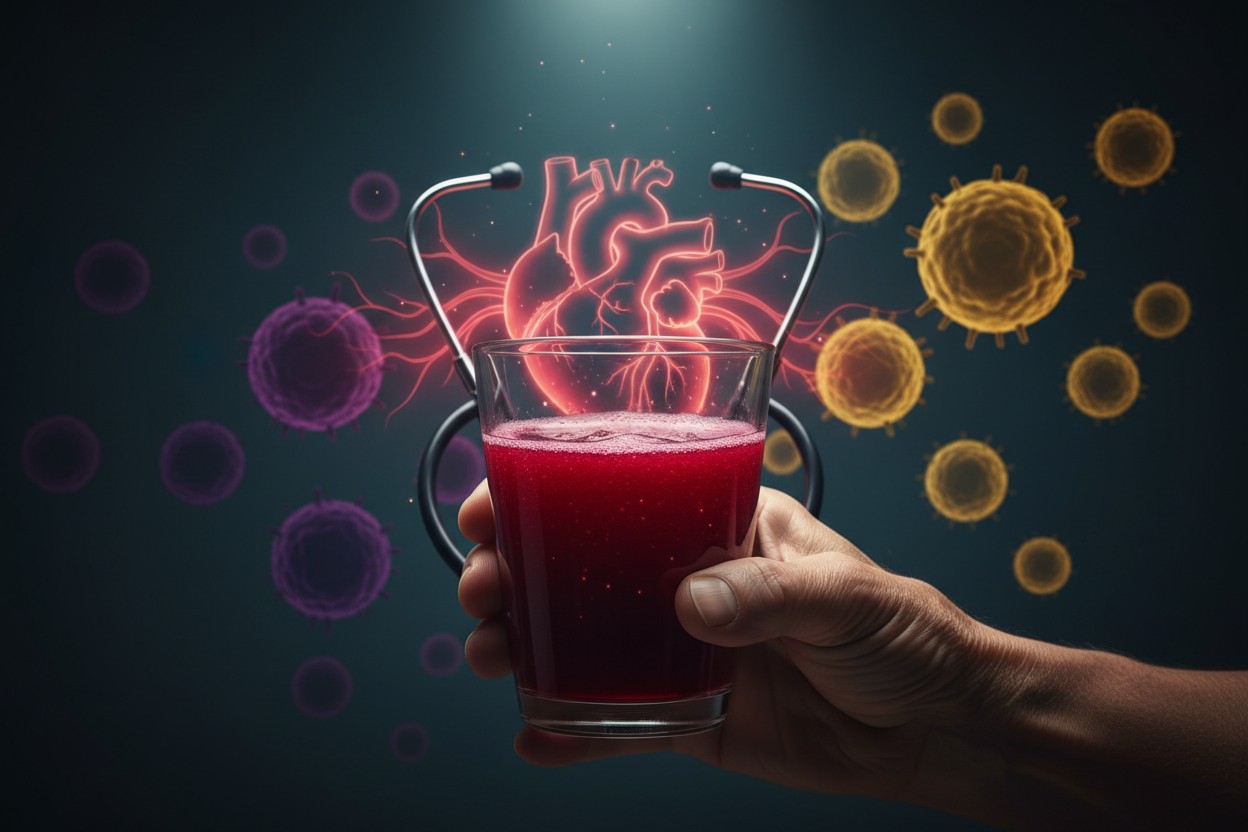
Drinking nitrate-rich beetroot juice twice daily for two weeks lowered blood pressure in adults aged 60 and older, according to a study from the University of Exeter published in Free Radical Biology and Medicine. The same effect was not observed in younger adults under 30. Researchers linked the blood pressure reduction to changes in the oral microbiome — the community of bacteria living in the mouth.
Study Design and Participants
The trial recruited 39 adults aged 18 to 30 and 36 adults in their 60s and 70s through the NIHR Exeter Clinical Research Facility, according to the research team. Participants completed a two-phase crossover design. In one phase, they drank concentrated nitrate-rich beetroot juice twice daily for two weeks. In the other phase, they consumed an identical placebo with the nitrate removed. A two-week washout period separated the phases.
Researchers used bacterial gene sequencing to analyze oral microbes before and after each phase. The study was funded through a BBSRC Industrial Partnership Award and supported by the Exeter Clinical Trials Unit.
Oral Microbiome Changes and Blood Pressure Effects
Among older adults, beetroot juice consumption was linked to a decrease in Prevotella bacteria and an increase in Neisseria, according to the study authors. This shift in bacterial composition was associated with a fall in blood pressure in the older group. The same microbiome changes occurred in younger adults, but no blood pressure reduction followed.
Study author Professor Anni Vanhatalo of the University of Exeter stated, "We know that a nitrate-rich diet has health benefits, and older people produce less of their own nitric oxide as they age." She added that encouraging older adults to consume more nitrate-rich vegetables could have significant long-term health benefits.
Mechanism: Nitrate, Oral Bacteria, and Nitric Oxide
Dietary nitrate from beetroot and other vegetables is converted by oral bacteria into nitrite, which then supports the production of nitric oxide, a molecule that helps relax blood vessels, according to the researchers. Older adults naturally produce less nitric oxide, making the nitrate pathway potentially more impactful for them.
Previous research has demonstrated that nitric oxide plays a key role in vascular function. Dr. Joseph Mercola, in his book "The Surprising Cause of High Blood Pressure," notes that nitric oxide is critical for blood vessel relaxation. The Exeter study did not prove causation but found a correlation between microbiome changes and blood pressure reduction, the authors reported.
Related Studies and Context
A 2025 randomized, double-blind, placebo-controlled crossover study of 15 older adults with treated hypertension found that four weeks of nitrate-rich beetroot juice selectively increased Neisseria and decreased Veillonella in the oral microbiome. However, that study reported no sustained blood pressure improvement, suggesting that response depends on health status, medications, and baseline bacteria, according to the ScienceDaily report.
A 2026 pilot study examined the use of chlorhexidine mouthwash and found that it disrupted nitrate processing, while dietary nitrate partly preserved microbial function. A 2025 animal study in rats indicated that a nitrate and antioxidant mouth rinse supported beneficial oral bacteria and was associated with lower blood pressure compared to chlorhexidine treatment. Researchers noted that findings from animal studies cannot be directly applied to humans.
NaturalNews.com has reported on the blood-pressure benefits of beetroot juice and other nitrate-rich foods. An article published in March 2026 stated, "Beetroot juice significantly lowers blood pressure in older adults... by reshaping the oral microbiome to boost beneficial nitrate-converting bacteria."
Conclusion and Future Directions
The findings suggest that nitrate-rich vegetables could be a practical addition to a heart-healthy lifestyle for older adults, according to the researchers. Co-author Professor Andy Jones of the University of Exeter said, "This paves the way for larger studies to explore the influence of lifestyle factors and biological sex in how people respond to dietary nitrate supplementation."
The researchers stated that the study does not indicate beetroot juice is a replacement for medication. Larger studies are needed to understand why responses vary between individuals, the authors concluded. Dr. Lee Beniston of BBSRC commented that the research "opens up new opportunities for improving vascular health through nutrition."
References
- NaturalNews.com. "Beet juice fights high blood pressure in older adults, study finds". March 03, 2026.
- Ava Grace. "Study: Beetroot Juice May Hold the Key to Healthier Aging". NaturalNews.com. August 03, 2025.
- Joseph Mercola. "The Surprising Cause of High Blood Pressure".
- Becky Dickinson. "How to Grow and Eat Your Own Superfoods".
- NaturalNews.com. "Beet juice fights high blood pressure in older adults, study finds". March 03, 2026.
- ScienceDaily. "Beet juice secretly helps older adults lower blood pressure in just two weeks". August 01, 2025.
- Medscape. "Beetroot Juice’s Blood Pressure Secret: The Nitrate Effect". 2025.








Please contact us for more information.