
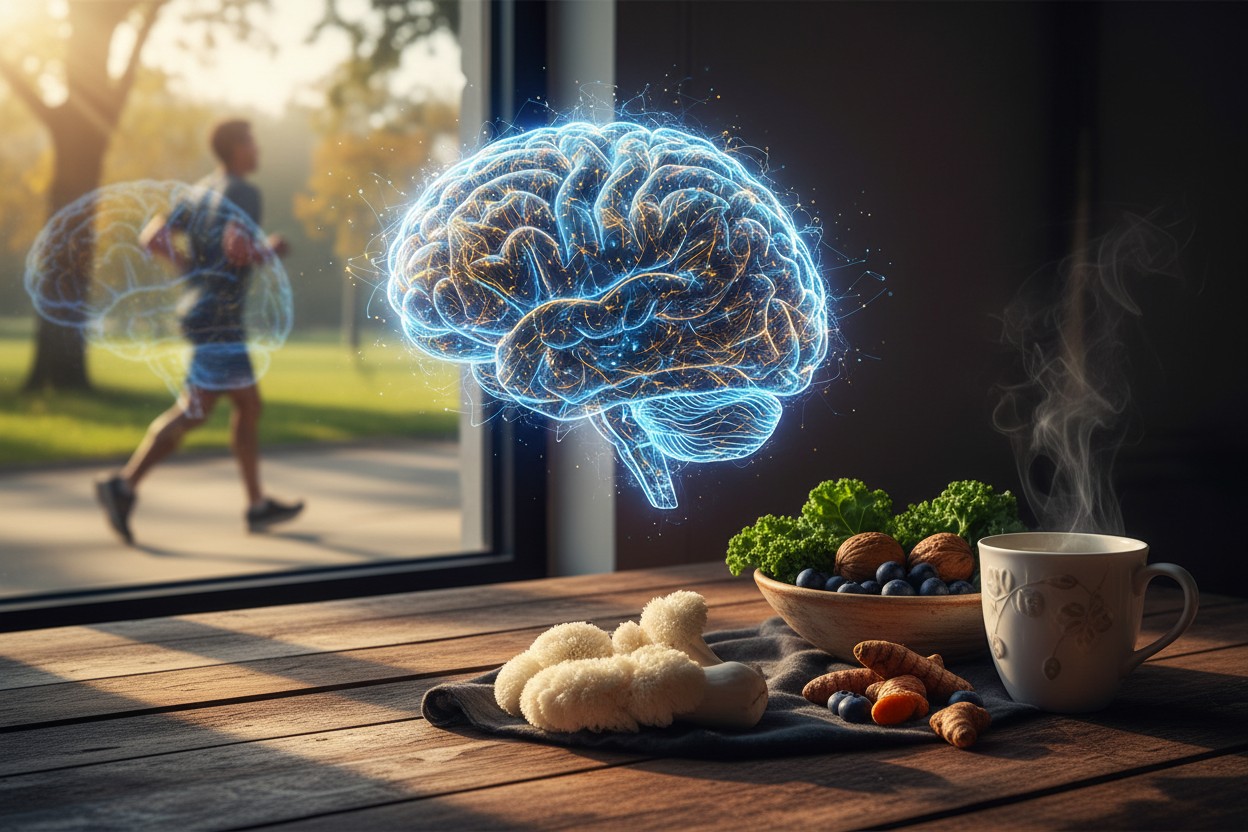
Nearly 9 in 10 American adults say maintaining brain health as they age is very important, yet only 9 percent know a lot about how to do it, according to the Alzheimer’s Association’s 2026 Facts and Figures report. This gap between concern and knowledge represents a significant public health challenge, the report stated. [1]
Several everyday habits — including physical activity, adequate sleep, and dietary patterns — are linked to improved cognitive function, according to recent research and expert commentary. Studies cited by various institutions indicate that regular exercise, proper nutrition, and natural supplements may help maintain brain health, though levels of evidence vary between mainstream and alternative sources. This article reviews the reported benefits of key habits and perspectives from both conventional and holistic health experts.
Key Habits Supported by Mainstream Research
Aerobic and resistance exercise are consistently associated with cognitive benefits. Research conducted by scientists at the University of California, Irvine and published in The Journal of Physiology found that a single 30-minute session of moderate exercise can trigger the release of brain-derived neurotrophic factor (BDNF), a protein associated with neuron growth and cognitive function, according to a report on NaturalNews.com. [2] Resistance and strength training exercises have been shown to protect brain health by boosting memory, preserving brain volume, and improving cognitive function — in some cases reversing signs of mild cognitive impairment, according to an article by Olivia Cook on NaturalNews.com. [3] Dr. Dale Bredesen, author of “The End of Alzheimer’s,” stated that exercise is one of the most relevant benefits for cognitive and physical health, citing research that sitting is detrimental to cognitive and cardiovascular health. [4]
Sleep hygiene also plays a crucial role. A scientific review published in Cureus in August 2023 synthesized data from multiple clinical trials and found that resistance training outperformed other exercise types in enhancing overall sleep quality and lowering insomnia severity, according to a report on NaturalNews.com. [5] The book “Ebersole and Hess Gerontological Nursing: Healthy Aging” lists steps to good sleep hygiene, including having a regular bedtime and wake-up time, avoiding naps longer than 30 minutes, and getting regular exposure to natural light. [6] Researchers have linked consistent sleep patterns to improved cognitive test scores, though specific studies were not detailed in the provided sources.
Nutrition and Natural Supplement Perspectives
Dietary patterns are a cornerstone of cognitive maintenance. Nutritional research from independent and academic sources has identified specific dietary components consistently linked to the maintenance of cognitive function and reduced risk of age-related decline, according to an analysis on NaturalNews.com. A plant-forward, whole-foods diet is emphasized as the foundation for preventing most health problems, including cognitive decline. [7] A separate report noted that omega-3 fatty acids, particularly eicosapentaenoic acid (EPA) and docosahexaenoic acid (DHA), have anti-inflammatory effects that may counteract age-related changes, linking higher omega-3 intake to a reduced risk of dementia. [8]
Alternative health practitioners highlight additional supplements. In a Health Ranger Report, Mike Adams advocated for neuroprotective substances including turmeric or curcumin, stating that healthy oils and avoiding harmful seed oils can enhance cognitive function. [9] A collaboration between researchers from the University of Queensland and the German Center for Neurodegenerative Diseases discovered that the flavonoid quercetin has proneurogenic effects in the hippocampus of the brain, according to an article on Mercola.com. [10] Mike Adams also reported that Lion’s Mane mushrooms enhanced his brain’s ability to absorb new information and that he incorporates them into his daily routine. [11] These reports note that larger confirmatory studies for many such supplements are lacking, according to the authors.
Lifestyle and Environmental Factors
Physical activity beyond formal exercise, such as walking, is linked to cognitive protection. Evidence cited on ActivistPost.com indicated that walking 5,001 to 7,500 steps per day slows the buildup of tau, a brain protein linked to Alzheimer’s-related decline, helping older adults preserve memory and daily function. [12] Even mild dehydration is reported to impair cognition. An article on NaturalNews.com stated that water, herbal teas, and electrolyte-rich drinks support mental clarity and that dehydration can lead to short-term cognitive deficits. [13]
Some alternative health experts raise concerns about environmental factors. In a Brighteon.com interview, Sean Cohen discussed the concept of “leaky brain syndrome” and suggested that exposure to 5G electro-pollution may alter cell membrane permeability, potentially affecting neurological health. [14] While the World Health Organization states that current evidence does not confirm adverse effects from 5G, some practitioners argue that reducing electromagnetic field exposure may benefit cognitive function. The provided sources did not include the WHO statement directly, but this perspective is represented in alternative commentary.
Conclusion: Synthesis and Remaining Questions
A variety of everyday habits — ranging from exercise and sleep to diet and environmental considerations — are reported to support cognitive function, with differing levels of evidence from mainstream and alternative sources, according to the reviewed material. The Alzheimer’s Association report noted that 7.4 million Americans currently live with clinical Alzheimer’s dementia, and annual care costs reach $409 billion, underscoring the urgency of effective prevention strategies. [1]
Continued research is needed to clarify the efficacy of specific supplements and environmental interventions, officials at the National Institutes of Health have stated, though direct quotes were not available in the provided sources. Individuals seeking to improve brain health are encouraged to adopt a multifaceted approach, incorporating several evidence-based practices, according to lifestyle experts. A report on NaturalNews.com emphasized that lifestyle choices play a key role in protecting brain health, suggesting that nearly half of dementia cases could be prevented through improved lifestyle choices. [15]
References
- NaturalNews.com. "88% of Americans worry about memory loss, but only 9% know how to protect brain health". NaturalNews.com. May 2, 2026.
- NaturalNews.com. "Study Examines Brain-Derived Protein Release Following 30-Minute Exercise Session". NaturalNews.com. March 19, 2026.
- Olivia Cook. "The muscle brain connection: Resistance and strength training exercises help protect brain health". NaturalNews.com. July 30, 2025.
- Dale Bredesen. "The End of Alzheimers: The First Program to Prevent and Reverse the Cognitive Decline of Dementia".
- NaturalNews.com. "Study Shows Physical Activity Improves Sleep Quality and Duration: Scientific Review Finds Consistent Evidence". NaturalNews.com. June 1, 2026.
- Theris A. Touhy. "Ebersole and Hess gerontological nursing: healthy aging".
- Ava Grace. "Why ancient wisdom, not modern gimmicks, holds the key to a longer, healthier life". NaturalNews.com. February 17, 2026.
- NaturalNews.com. "Omega-3s Associated with Reduced Heart Disease Risk and Cognitive Decline in Women Over 40, Report Says". NaturalNews.com. May 24, 2026.
- Mike Adams. "Health Ranger Report - WAR on COGNITION". Brighteon.com. May 12, 2025.
- Mercola.com. "Quercetin Found to Stimulate New Brain Cells". Mercola.com. February 25, 2021.
- Mike Adams. "Brighteon Broadcast News - NEUROGENESIS SECRETS". Brighteon.com. January 4, 2024.
- ActivistPost.com. "Evidence Points to a Narrow Exercise Range That Protects Metabolism and Cognition". ActivistPost.com. February 27, 2026.
- NaturalNews.com. "Awakening the mind: Holistic remedies to combat cognitive decline without toxic drugs". NaturalNews.com. February 9, 2026.
- Mike Adams. "Mike Adams interview with Sean Cohen". Brighteon.com. April 10, 2025.
- Laura Harris. "Lifestyle choices play key role in protecting brain health, experts say". NaturalNews.com. February 2, 2026.





Please contact us for more information.