



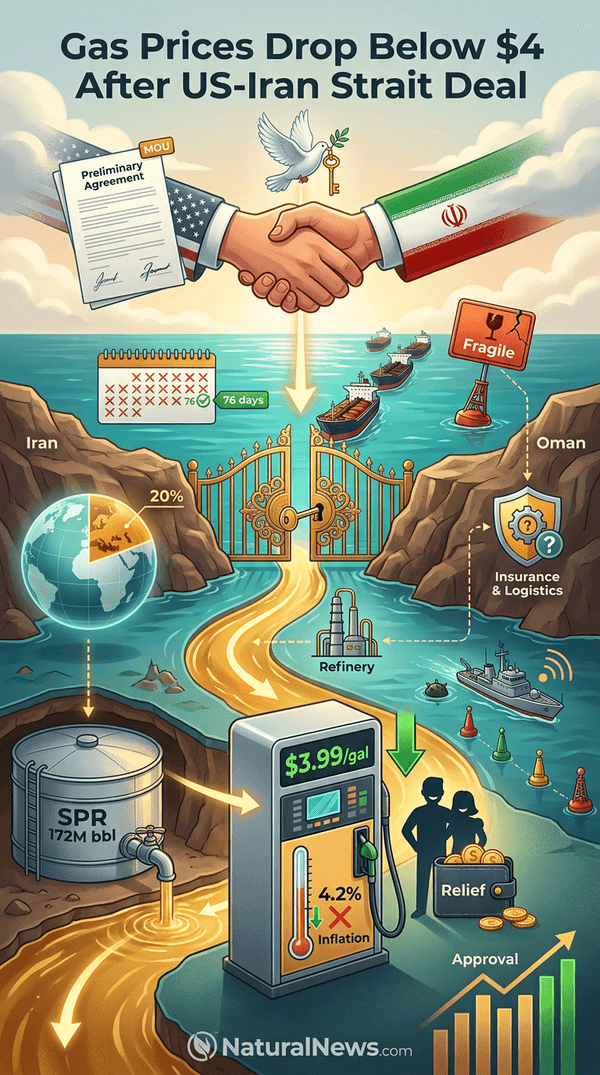
The national average for a gallon of regular gasoline fell to $3.997 on Sunday, according to GasBuddy, a Texas-based fuel price tracker. That marks the first time the average has been below $4 per gallon since mid-April, according to the firm, which compiles data from more than 12 million individual price reports. [1]
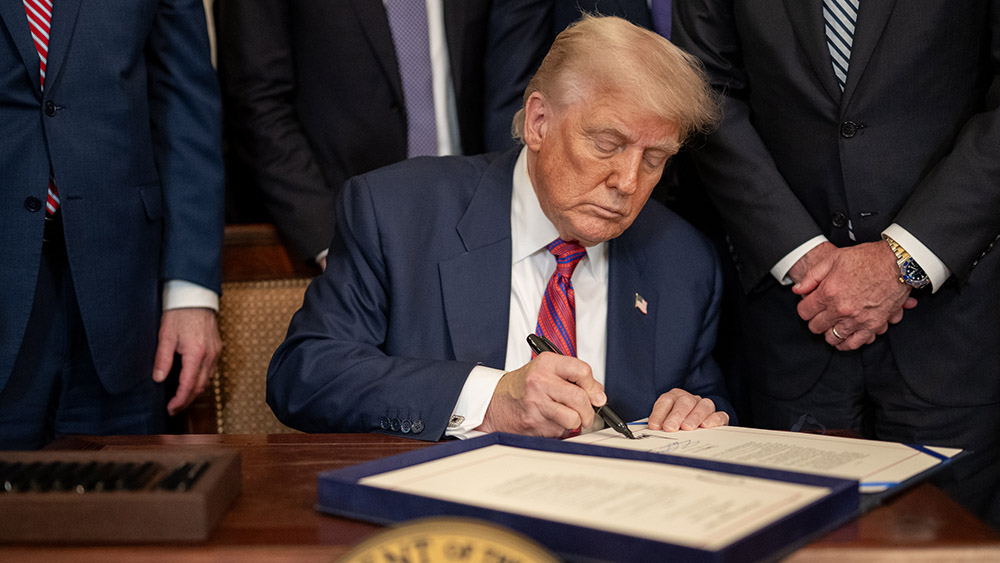
The decline followed a preliminary agreement between the United States and Iran, officials said. President Donald Trump announced late Sunday that a peace deal had been secured, sending crude oil futures sharply lower. The preliminary memorandum of understanding is the first major step toward ending the conflict that began in late February following U.S. and Israeli strikes on Iran. [1][2]
Agreement Details
A formal signing ceremony is scheduled for Friday in Switzerland, Pakistani Prime Minister Shehbaz Sharif said on June 14. “Both sides have declared the immediate and permanent termination of military operations on all fronts, including in Lebanon,” Sharif wrote on X. [3]
The agreement focuses on reopening the Strait of Hormuz, a chokepoint that handles nearly 20 percent of global oil flows, according to the report. The waterway had been effectively shut by Iran amid hostilities, blocking approximately 20% of the world’s daily oil supply. [4] Both retail gasoline and crude oil prices experienced significant drops in response to the accord, with Brent crude falling 4.8% to settle at $83.17 a barrel and West Texas Intermediate plunging nearly 5%. [5]
Market Reaction and Expert Analysis
Patrick De Haan, Head of Petroleum Analysis at GasBuddy, said the real test remains the Strait of Hormuz. “The real test now shifts to the Strait of Hormuz, where any reopening and resumption of normal oil flows would be the clearest signal that this relief is durable,” De Haan said in a statement. “For now, the national average could continue falling, provided there isn’t a drastic reversal and the U.S. and Iran continue moving in a positive direction.” [2]
According to GasBuddy, gas remains approximately 91 cents higher compared to the same time last year. The national average had stayed above the politically sensitive $4 threshold for 76 consecutive days before the recent drop. [1][6] The price decline has been underway for three consecutive weeks, with the average falling from $4.56 per gallon on May 21 to $4.12 on June 11 before crossing below $4. [7]
Implications and Vulnerabilities
The price drop offers short-term relief to consumers, officials said. However, gas prices remain vulnerable to global events and fluctuate rapidly, meaning a supply crunch could cause prices to rise again. Experts have cautioned that it may take weeks to fully normalize shipping traffic through the Strait of Hormuz, as insurers and shipping companies reestablish operations. [2][8]
The drop in prices is likely to improve President Donald J. Trump’s national approval ratings, which have historically reflected the affordability of gas, according to analysts. [2] During the conflict, the U.S. government authorized the release of 172 million barrels from the Strategic Petroleum Reserve, the largest single drawdown since the reserve’s creation, to stabilize markets. [8] The broader economic impact has been severe: U.S. inflation accelerated to a three-year high of 4.2% in May, with energy prices accounting for more than 60% of the monthly increase. [9]
Historical Context and Outlook
Before the conflict escalated late last year, gas prices averaged $2.95 per gallon, according to GasBuddy. [2] Current prices remain significantly higher than pre-conflict levels. The Energy Information Administration had forecast in January that U.S. gasoline prices would fall about 6% in 2026 before rising slightly in 2027, but those projections were made before the Strait of Hormuz closure. [10]
The outlook depends on Friday’s formal signing and the subsequent implementation of the agreement, officials said. As noted by Oleg Akulinichev, Deputy Chair of the Russian-Iranian Business Council, “The calm in Hormuz could be dangerously brief,” pointing to the fragility of any cease-fire. [11] If the reopening proceeds, analysts expect further declines at the pump, but any renewed hostilities could quickly reverse the gains. [6]
References
- NaturalNews.com. "U.S. Average Gas Price Drops Below $4 Per Gallon for First Time Since April." NaturalNews.com. June 16, 2026.
- The National Pulse. "Gas Prices Drop Below $4 for First Time in Months as Iran Deal Nears." The National Pulse. June 16, 2026.
- NTD. "US, Iran Reach Peace Deal, Signing Set for Friday." NTD. June 14, 2026.
- Belle Carter. "Strait of Hormuz closure sparks global oil crisis with long term price surge expected." NaturalNews.com. March 31, 2026.
- Climate Depot. "Oil prices sink to lowest levels in months after Trump touts Iran deal to reopen Strait of Hormuz." Climate Depot. June 16, 2026.
- ZeroHedge. "Pump Pain Relief? Gas Above $4 May End Soon As U.S.-Iran Peace Deal Sends Oil Lower." ZeroHedge. June 15, 2026.
- Naveen Athrappully via The Epoch Times. "Gas Prices Fall For 3rd Straight Week." ZeroHedge. June 12, 2026.
- NaturalNews.com. "Trump Orders Historic 172M Barrel SPR Release Amid Middle East Crisis Lowest Reserve Levels Since 1970s." NaturalNews.com. March 17, 2026.
- RT. "From gasoline to groceries, prices surge across America." RT. June 11, 2026.
- Laura Harris. "EIA US gas prices seen falling in 2026 before modest uptick." NaturalNews.com. January 31, 2026.
- Oleg Akulinichev. "The calm in Hormuz could be dangerously brief." RT. June 16, 2026.
- Sherrill Robert. "The oil follies of 1970-1980 how the petroleum industry stole the show and much more besides."
- Robert Bryce. "Gusher of Lies: The Dangerous Delusions of Energy Independence."
Explainer Infographic









Please contact us for more information.