


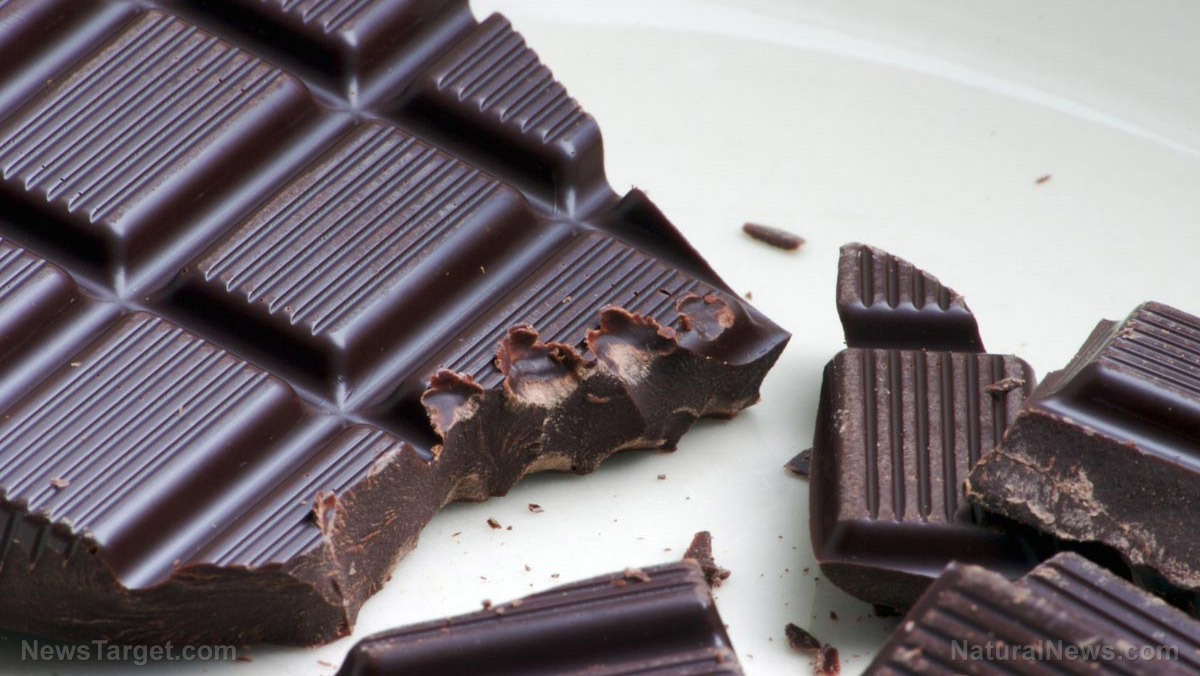
- Israeli startup Celleste Bio produced chocolate bars using cocoa butter grown from plant cells in bioreactors, partnering with Mondel?z International
- California Cultured plans commercial production of cell-based cocoa powder by early 2027, self-affirming its ingredient as "generally recognized as safe"
- Critics warn lab-grown cocoa lacks long-term safety data and multi-generational human consumption history
- Contamination concerns persist, with cell culture experts describing elimination of contaminants as "an impractical, if not impossible, dream"
- The push comes as cocoa prices surged to $12,000 per tonne in early 2025 due to climate change, disease and supply chain disruptions
The dawn of cultured confectionery
A chocolate bar made from cocoa butter grown in a laboratory tank, not harvested from a tree, has arrived. And more are coming.
Celleste Bio, an Israeli food technology startup, unveiled what it called the world's first milk chocolate bars produced using cell suspension culture technology in April 2026. The company partnered with Mondel?z International, the global snack giant behind Oreo, Cadbury and Toblerone, to create nearly a dozen chocolate bars using cocoa butter derived from a single cocoa bean grown in a bioreactor.
California Cultured, a California-based competitor, plans to begin commercial production of cell-based cocoa powder by early 2027. The company has already secured a partnership with Belgian ingredients supplier Puratos and Japan's largest chocolate company, Meiji.
The technology arrives at a moment of crisis for conventional cocoa. Climate change, plant viruses and erratic weather in West Africa—where approximately 70% of the world's cocoa is grown—drove cocoa prices to $12,000 per tonne in early 2025, the highest in decades. Production fell by up to 40% between 2023 and 2025. Wageningen University projects that up to half of cocoa-growing areas in Ivory Coast could be lost by 2060.
Biological complexity vs. bioreactor simplicity
Celleste Bio's process begins with cells taken from a single cocoa bean. Those cells are placed in tanks containing water, sugar and vitamins. The company says a single bean could generate up to a ton of cocoa butter annually—the equivalent output of roughly a hectare of cocoa trees.
California Cultured uses a similar approach. Plant cells are grown in bioreactors and then dried and milled into cocoa powder. The companies describe the resulting ingredients as "bio-identical" to conventional cocoa.
Biologist Heidi Wichmann, a member of Make Europe Healthy Again's advisory committee, challenged that characterization.
"Lab-grown cocoa is not the same as real cocoa," Wichmann said. She argued that cocoa represents millions of years of evolution and complex ecological relationships that cannot be replicated in a tank. "We should not confuse a technological imitation with the living original."
Safety and regulation: The GRAS loophole
California Cultured has self-affirmed its cell-based cocoa powder as "generally recognized as safe," or GRAS. The designation allows companies to add ingredients to food without undergoing the FDA's pre-market approval process.
Alexis Baden-Mayer, research director at the Organic Consumers Association, described the GRAS process as "a problem of the exception swallowing the rule." Originally intended for ingredients widely recognized as safe before 1958, the designation has expanded to include genetically engineered foods and novel products.
After U.S. Health Secretary Robert F. Kennedy Jr. called on the FDA to eliminate the GRAS loophole in 2025, California Cultured voluntarily submitted a GRAS notice seeking a "no questions" letter from the agency. Baden-Mayer noted that such a letter does not mean the FDA has independently verified the company's safety claims.
Children's Health Defense Senior Research Scientist Karl Jablonowski questioned whether consumers have enough information to evaluate the products.
"Is it safe? The answer is a resounding shoulder shrug," Jablonowski said.
Contamination: An unresolved challenge
Contamination remains one of the industry's most persistent problems. Corning Life Sciences, a supplier to the cell culture industry, states that "no cell culture problem is as universal as that of culture loss due to contamination." The company describes eliminating contamination as "an impractical, if not impossible, dream."
Potential contaminants include bacteria, molds, yeasts, viruses, airborne particles and chemical residues.
A 2023 Wired investigation into Upside Foods, a cultivated meat company, cited employees who said contamination problems sometimes forced entire batches to be discarded.
"Keeping lab-grown food clean of all contaminants is extremely difficult and very expensive," Baden-Mayer said.
Dr. Meryl Nass, a physician and critic of novel food technologies, said important details remain unclear. "What cells will be used? What media will be used? The devil will be in the details, and so far, we don't have them."
Environmental claims under scrutiny
Companies tout environmental benefits, including reduced land use and elimination of heavy metals like cadmium and lead that accumulate in conventionally grown cocoa. California Cultured said its cells do not contain heavy metals because it controls the raw materials in the growth media.
But critics have challenged the broader environmental narrative. A study by researchers at the University of California, Davis found that cultivated meat production could have a global warming impact several times higher than conventional beef production, depending on manufacturing methods.
Consumer demand remains uncertain
Public enthusiasm for lab-grown foods has lagged behind industry expectations. Polls have found many consumers remain wary of products described as "cultured" or "cell-based," citing safety concerns or finding the concept unappealing.
Jeffrey Tucker, founder of the Brownstone Institute, described the push for lab-grown chocolate as part of a broader trend. "There is near-zero market demand for this 'frankenfood' born of the same intellectual class and lab technicians who have given us poison food and medicine," Tucker said.
Despite these headwinds, Celleste Bio has raised $5.6 million and projects its cocoa butter will be market-ready by 2027. California Cultured expects commercial production to begin this year.
The chocolate bar of the future may arrive in stores before scientists and regulators have fully answered the questions it raises.
Sources for this article include:





Please contact us for more information.