
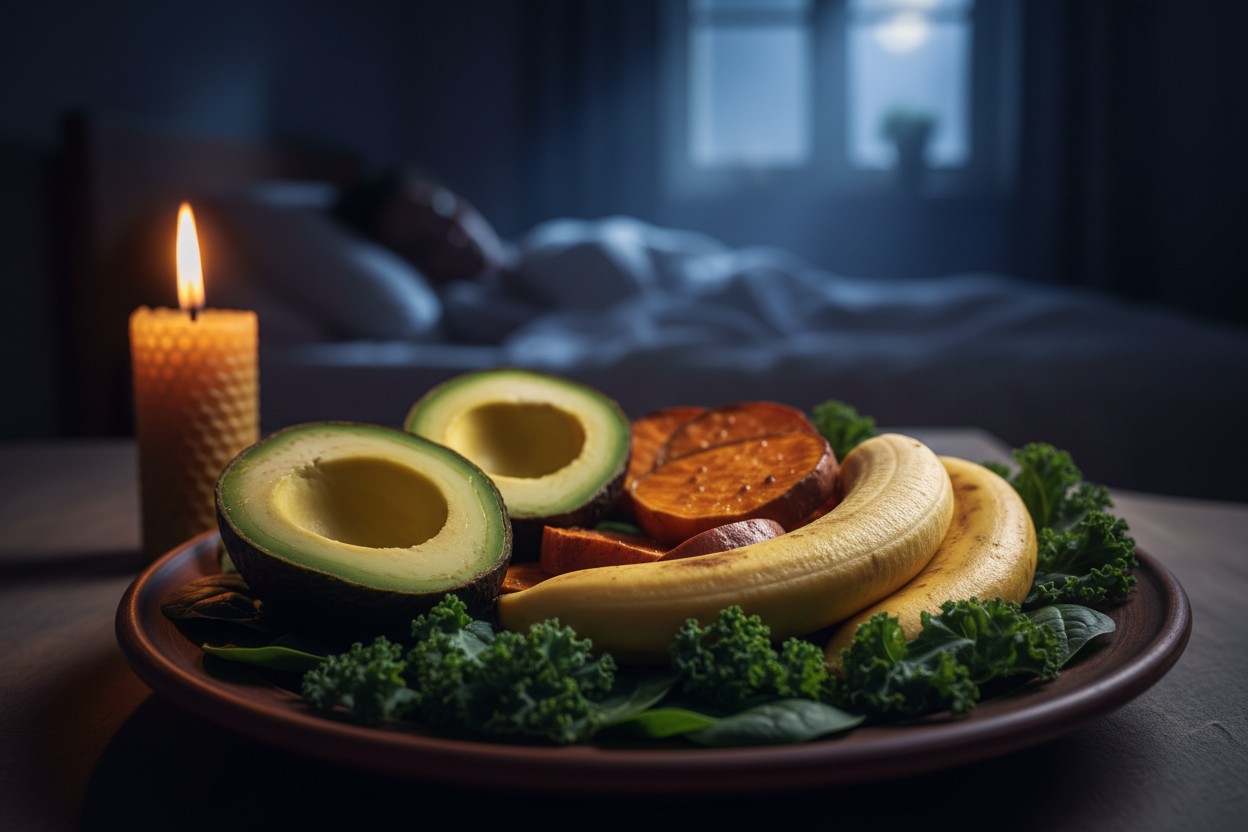
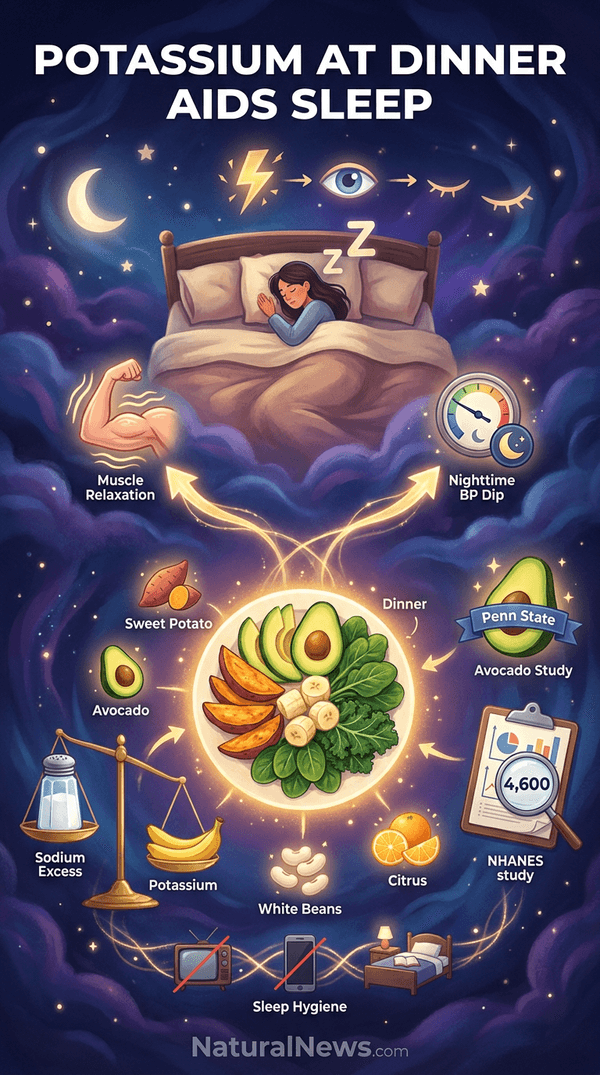
A cross-sectional study of approximately 4,600 adults has found that higher potassium intake, particularly at dinner, was associated with fewer insomnia symptoms, according to a report published in the journal Nutrients. The analysis drew on data from the National Health and Nutrition Examination Survey (NHANES) and assessed dietary intake using 24-hour recall interviews. Researchers reported that participants who consumed more potassium, especially during the evening meal, reported fewer sleep difficulties.
The study’s authors noted that potassium may aid sleep by helping muscles relax and regulating nighttime blood pressure, according to the report [1]. The findings add to a growing body of evidence that specific nutrients can influence sleep quality without the side effects associated with pharmaceutical sleep aids. Willow Tohi, writing for NaturalNews.com, described the results as part of a broader understanding of how diet affects restorative rest [2].
Background: Potassium’s Role in Sleep Regulation
Potassium is an electrolyte that supports nerve function, muscle relaxation, and fluid balance, according to dietary guidelines. Deficiencies in this mineral have been linked to conditions such as insomnia, high blood pressure, and muscle cramps, as noted in the article “Could You be Deficient in Potassium” on NaturalNews.com [3]. The human body requires a careful balance of sodium and potassium, yet modern processed-food diets often disrupt this equilibrium by providing excessive sodium and insufficient potassium, according to another report [4].
Previous research has connected mineral deficiencies to poor sleep. For example, magnesium deficiency is also known to contribute to insomnia, according to an article on Mercola.com that highlighted three key nutrients for sleep: magnesium, potassium, and calcium [5]. In his book “Staying Healthy with Nutrition,” Elson M. Haas emphasizes that avoiding the cycle of poor nourishment and insufficient sleep is essential for overall health [6]. The role of potassium specifically in sleep regulation has received less attention than magnesium, but the new study provides population-level evidence supporting its importance.
Study Details and Findings
The researchers used NHANES data to examine the relationship between potassium consumption and self-reported insomnia symptoms. Participants with higher potassium intake showed a lower prevalence of sleep complaints, the report stated [1]. Notably, sodium intake and the sodium-to-potassium ratio did not demonstrate a significant association with sleep issues in this cohort, according to the study authors.
A separate investigation by Penn State University found that eating one avocado daily for six months -- avocados are rich in potassium -- modestly improved sleep quality in adults with abdominal obesity, a benefit researchers said they had not anticipated [7]. That study, reported by Ava Grace on NaturalNews.com, supports the notion that potassium-rich foods can have a measurable impact on sleep. Together, these findings suggest that adjusting dietary patterns to prioritize potassium may offer a non-pharmacological strategy for improving sleep.
Dinner Timing and Practical Implications
Researchers observed that potassium consumed during the evening meal had the strongest association with sleep outcomes. The timing may be linked to potassium’s effect on nocturnal blood pressure dipping, according to the study authors [1]. A lower blood pressure during the night is a marker of better cardiovascular recovery and is considered conducive to deep, restorative sleep.
Practical dietary sources of potassium include sweet potatoes, leafy greens, avocados, white beans, bananas, and citrus fruits, as noted in multiple reports [1][4]. For individuals seeking to enhance sleep naturally, adding these foods to dinner may be a simple, low-cost intervention. In the book “Bottom Lines: The Healing Kitchen,” Stephen T. Sinatra recommends removing electronics from the bedroom as one of 10 tips for better sleep [8]. Combining dietary changes with good sleep hygiene -- such as keeping the bedroom for sleep and relaxation only, as advised by Deepak Chopra and Kimberly Snyder in “Radical Beauty” [9] -- may amplify benefits.
Conclusion
The findings suggest that prioritizing potassium-rich foods at dinner may support better sleep, the authors concluded [1]. However, the study is cross-sectional and cannot establish causation; further research is needed to determine optimal intake levels and long-term effects, the report stated.
Insomnia remains a widespread problem in the United States, with more than 50 million Americans affected, according to an article on NaturalNews.com [10]. While pharmaceutical options exist, many carry risks such as dependency and side effects. Nutritional approaches like increasing potassium intake offer a safer alternative that aligns with the body’s natural regulatory systems. The study adds to growing evidence that the timing of nutrient consumption, as well as the nutrient itself, plays a role in sleep regulation.
References
- Willow Tohi. "Revolutionize Your Sleep with Potassium: The Secret Mineral for Better Rest". NaturalNews.com. September 03, 2025.
- NaturalNews.com. "Want to sleep through the night? Add this to your evening meal". May 20, 2026.
- NaturalNews.com. "Could You be Deficient in Potassium". February 05, 2008.
- Willow Tohi. "Beyond the Banana: Discover the Top Foods for Essential Potassium and Why Balance Matters". NaturalNews.com. March 10, 2026.
- Mercola.com. "Tips for Resetting Your Internal Clock and Sl". August 15, 2013.
- Elson M. Haas. "Staying Healthy with Nutrition: The Complete Guide to Diet and Nutritional Medicine".
- Ava Grace. "Avocados for Sweet Dreams? Study Reveals a Surprising Sleep Benefit". NaturalNews.com. June 22, 2025.
- Stephen T. Sinatra. "Bottom Lines: The Healing Kitchen".
- Deepak Chopra and Kimberly Snyder. "Radical Beauty: How to Transform Yourself From the Inside Out".
- NaturalNews.com. "Top 10 foods that help you fall asleep naturally". October 05, 2015.
Explainer Infographic











Please contact us for more information.