


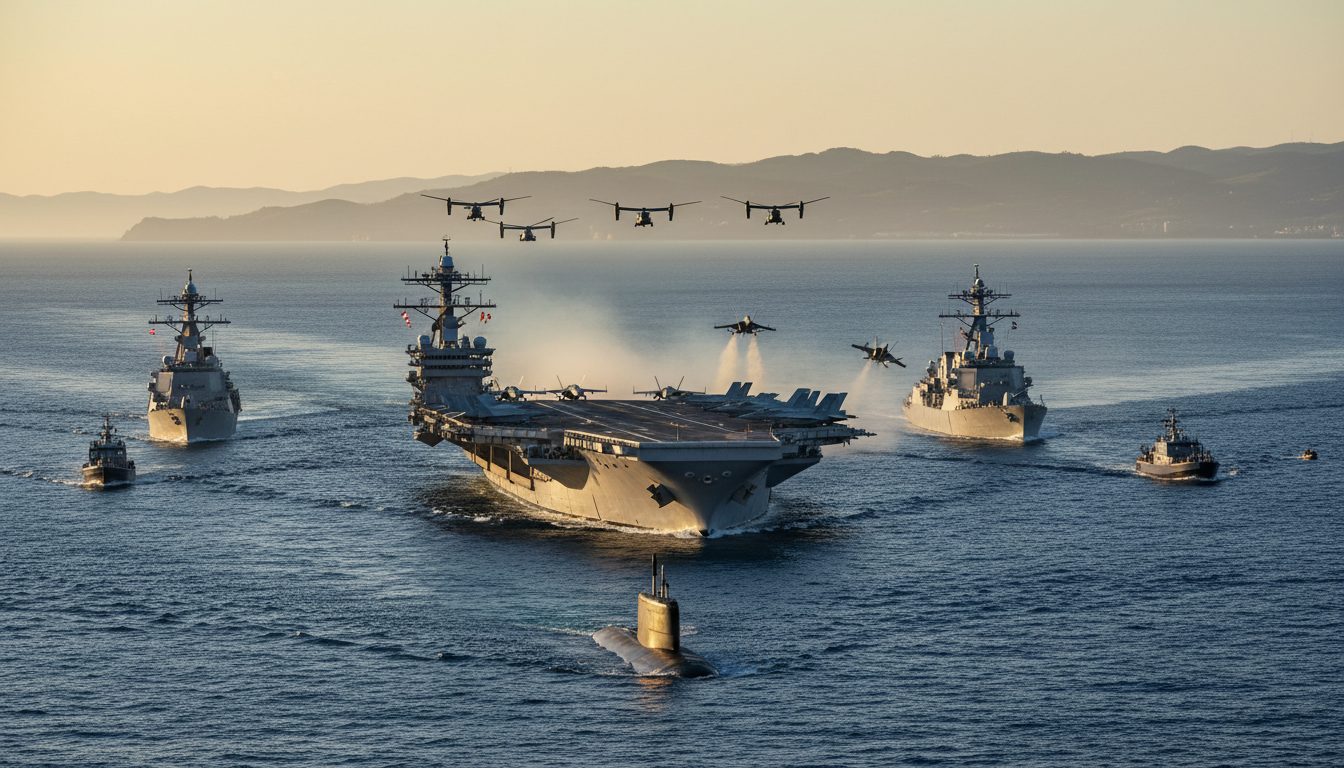
Heavy explosions lit up the skies over Ahvaz on Friday as American bombers pounded Iranian cities for the 13th consecutive night, but as the US resumes their bombing campaign over Iranian skies, the real detonation may be happening inside the Pentagon's war rooms. The United States, having signed a 14-point memorandum of understanding with Iran just weeks ago, has now shredded that ceasefire agreement and embarked on a bombing campaign that military analysts say cannot succeed without a full-scale ground occupation of the Strait of Hormuz region. What began as a campaign to "diminish the threat" to commercial shipping has morphed into an open-ended assault on Iran's entire military infrastructure, from telecommunications towers in Khorramabad to naval assets in Jask. The US Central Command boasts of targeting command centers, drone sites, and coastal surveillance positions, but the desperate strategy reveals a desperate truth: America continues to abandon diplomacy, ripping up deals that hold them accountable, and they find themselves struggling week-after-week, trying to annihilate a more developed nation that refuses to become the next Iraq.
Key points:
- US forces have conducted 13 consecutive nights of strikes across southern and central Iran.
- CENTCOM is targeting telecommunications, naval assets, drone sites, and command centers.
- Iran retaliatory strikes killed four American service members over the weekend.
- The bombing campaign violates a June 2026 14-point memorandum of understanding.
- Iran holds strategic advantage through control of the Strait of Hormuz.
- US war aims require long-term occupation and regime change in a region that has resisted foreign domination.
- Global energy markets face catastrophic disruption if Iran controls the strait.
US refuses to concede to the Memorandum of Understanding
The June 2026 memorandum of understanding between Washington and Tehran represented a functional diplomatic achievement, one where the US had to concede in its failure to dominate another Middle Eastern country. It included an immediate 60-day ceasefire, reopening of the Strait of Hormuz, and a framework for comprehensive sanctions relief. Iran agreed to reaffirm its commitment against nuclear weapons production while deferring enrichment details to subsequent talks. The United States promised a phased removal of its naval blockade and repositioning of forces over 30 days. Both sides committed to respecting each other's territorial integrity and sovereignty, and Iran opened the strait to toll-free commercial shipping for 60 days.
That agreement now lies in ashes. American bombers have struck Iranian port facilities, maritime surveillance towers at Hormozgan province, and bridges connecting critical supply routes. Videos posted on social media show explosions and large fires in Ahvaz, where four people were killed and five injured according to Press TV. CENTCOM released footage of strikes on military vehicles and small vessels, framing the campaign as defensive in nature. But Iran's Defense Minister Aziz Nasirzadeh has warned that Tehran will target American bases across the Middle East with advanced ballistic missiles, a threat that carries weight given Iran's proven missile capabilities.
US trapped by geography and long term logistics of regime change in Iran
The United States finds itself trapped by geography and the long term logistics of its strategy. The Strait of Hormuz narrows to just 13 miles at its most constricted point, with two shipping lanes each about two miles wide separated by a buffer zone of roughly two miles. Iran controls islands within the strait, including Hormuz and Abu Musa, where missile launchers could be positioned. Cities like Bandar Abbas and Jask provide launching sites for missiles capable of harassing ships passing through the strait. Iran's arsenal includes more powerful and numerous missiles than those used by Yemeni rebels, along with seaborne and airborne drones. The country could effectively deny access to the Gulf of Oman for energy exporters by simply shutting down this vital waterway.
One-quarter of the world's energy passes through the Strait of Hormuz. Dubai in the UAE is heavily involved in energy exports, and any disruption would send shockwaves through global markets. Western Europe, already suffering from self-inflicted energy crises after bombing Russian pipelines and halting domestic exploration, would face catastrophic consequences. Germany would struggle during harsh winters with limited access to heating fuels, potentially driving deforestation as people turn to wood-burning stoves.
The United States now confronts a military objective that requires occupation of the entire geography surrounding the Strait of Hormuz. This means regime change in Iran, a task that has not proven as easy as it has in other Middle Eastern countries. It also requires future policing and occupation of a region stretching from Bandar Abbas to Jask, from Khorramabad to Ahvaz. The US military strategy hinges on annihilation of Iran's entire energy and telecommunications infrastructure, but annihilation requires boots on the ground, and boots on the ground require a commitment America has not shown since Iraq and Afghanistan.
Iran has remained defiant. The nation insists it has the right to control traffic through the Strait of Hormuz and accuses the United States of violating the memorandum of understanding. Ali Larijani, an aide to Supreme Leader Ayatollah Ali Khamenei, warned in April that an attack by the US or Israel would force Iran to reconsider its nuclear stance: "We are not moving towards weapons, but if you do something wrong, you will force Iran to move toward that because it has to defend itself."
The parallels to the Iraq War are impossible to ignore. False claims of weapons of mass destruction led to a disastrous invasion that destabilized the entire region. Now, history risks repeating itself as the Trump administration pushes for more war under similarly dubious pretenses.
Sources include:





Please contact us for more information.