


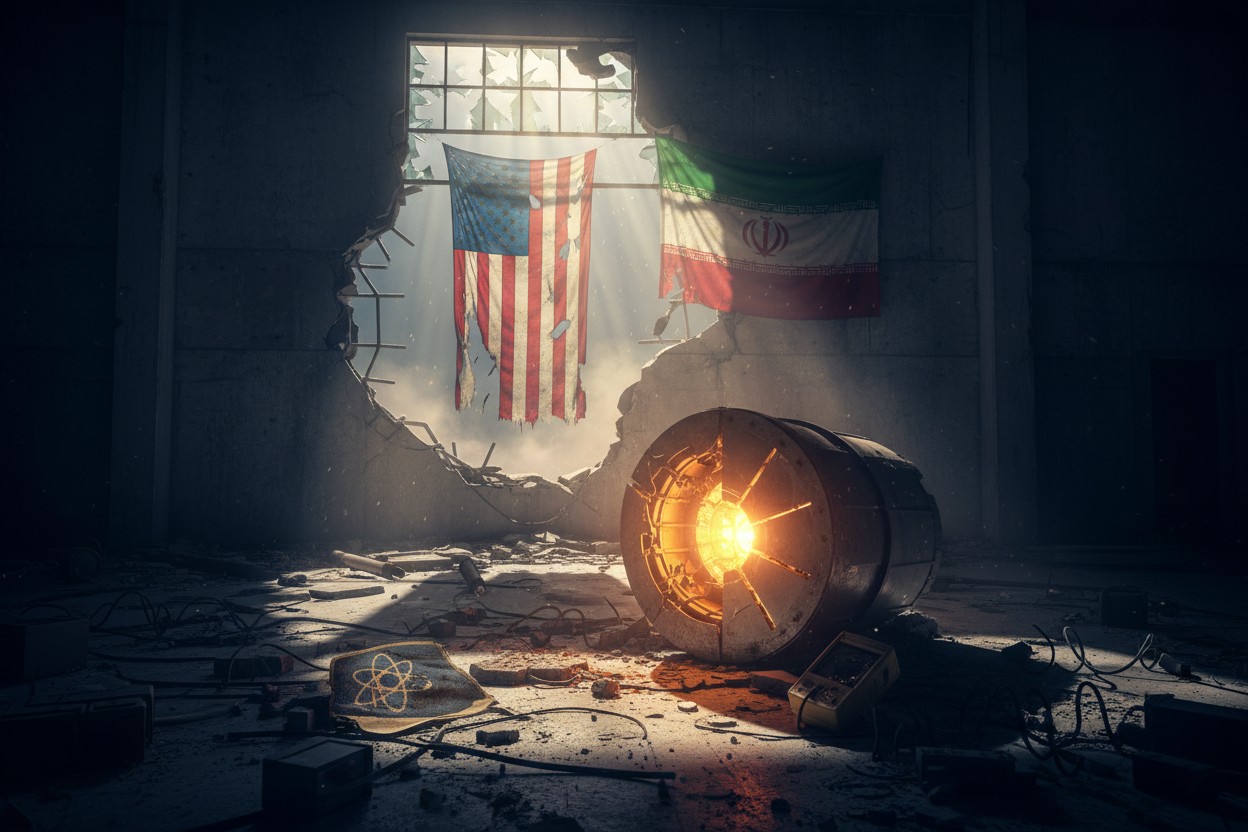
- The United States blocked Iran's nuclear chief Mohammad Eslami from attending the IAEA General Conference in Vienna by denying a sanctions waiver.
- Austria revoked Eslami's visa after a UN Security Council sanctions committee rejected a travel ban exemption under the "no-objection" rule.
- Iran and Russia condemned the move as a violation of international law and the IAEA headquarters agreement.
- The incident occurred as U.S.-Iran negotiations remain stalled and the Strait of Hormuz is blocked to normal shipping.
- This marks the latest escalation in tensions following the snapback of UN sanctions triggered by European signatories to the JCPOA.
Diplomatic blockade at the IAEA: Why Vienna became a battleground
The United States prevented Iran's nuclear chief from attending this week's International Atomic Energy Agency General Conference in Vienna, triggering accusations of international law violations from Tehran and Moscow. Mohammad Eslami, head of the Atomic Energy Organization of Iran, was forced to cancel his trip after Austria revoked his visa when the UN Security Council sanctions committee rejected a travel ban exemption. The decision came as U.S.-Iran negotiations remain frozen and the Strait of Hormuz remains blocked to normal shipping, with a 60-day deadline for reviving nuclear talks having expired last month.
Snapback sanctions: The legal framework
The incident stems from the reinstatement of UN sanctions triggered last year by France, Britain, and Germany under the Joint Comprehensive Plan of Action's snapback mechanism. These sanctions include travel bans on Iranian officials linked to nuclear and ballistic missile programs. While Austria as host nation could request exemptions for UN conferences, the Security Council sanctions committee operates under a strict "no-objection" rule that allows any single member to block waivers.
U.S. Ambassador Preston Wells Griffith III confirmed Washington objected to the exemption, arguing Eslami's participation would allow Iran to "exploit IAEA proceedings as a stage for propaganda while sidestepping substantive cooperation."
Tehran and Moscow respond: Accusations of political manipulation
Iran's ambassador to the IAEA, Reza Najafi, told delegates the visa denial "violates the host country's obligation" under the IAEA headquarters agreement and represents "a serious violation" of Iran's membership rights. Russian envoy Mikhail Ulyanov accused Western nations of waging a "campaign of visa lawlessness" to settle political scores.
Iran's Foreign Ministry summoned the Austrian charge d'affaires in protest, with spokesman Esmail Baghaei accusing the IAEA of helping promote "threat narratives" that provide political cover for the U.S.-Israeli war on Iran that began in late February.
Historical context: From JCPOA to snapback
The dispute traces back to the 2015 nuclear deal, which temporarily suspended UN sanctions in exchange for restrictions on Iran's nuclear program. President Donald Trump withdrew from the accord in 2018, and European signatories triggered snapback last year after Iran expanded enrichment activities. Iran maintains its nuclear program is peaceful and insists on its sovereign right to enrichment, a position backed by a November 2007 National Intelligence Estimate that concluded with high confidence that Iran halted nuclear weapons work in 2002.
IAEA chief Rafael Mariano Grossi said the agency remains "stubbornly optimistic" about resolving outstanding issues, while Trump signaled openness to negotiations, writing on Truth Social that "the failing Nation of Iran wants to make a deal, quickly and badly."
A dangerous precedent: Escalation without dialogue
The blocking of Iran's nuclear chief represents more than a diplomatic slight—it undermines the multilateral framework designed to verify nuclear compliance through engagement. By weaponizing visa procedures against a UN member state's designated representative, Washington risks further isolating Iran from international oversight mechanisms while providing Tehran with justification to restrict IAEA access to its nuclear facilities. With the Strait of Hormuz blocked, regional tensions at a boiling point, and a Russia-Iran mutual defense treaty nearing ratification, the path toward diplomatic resolution grows narrower. The IAEA's credibility as a neutral technical body depends on member states honoring their host country obligations—a principle now under direct assault.
Sources for this article include:






Please contact us for more information.