


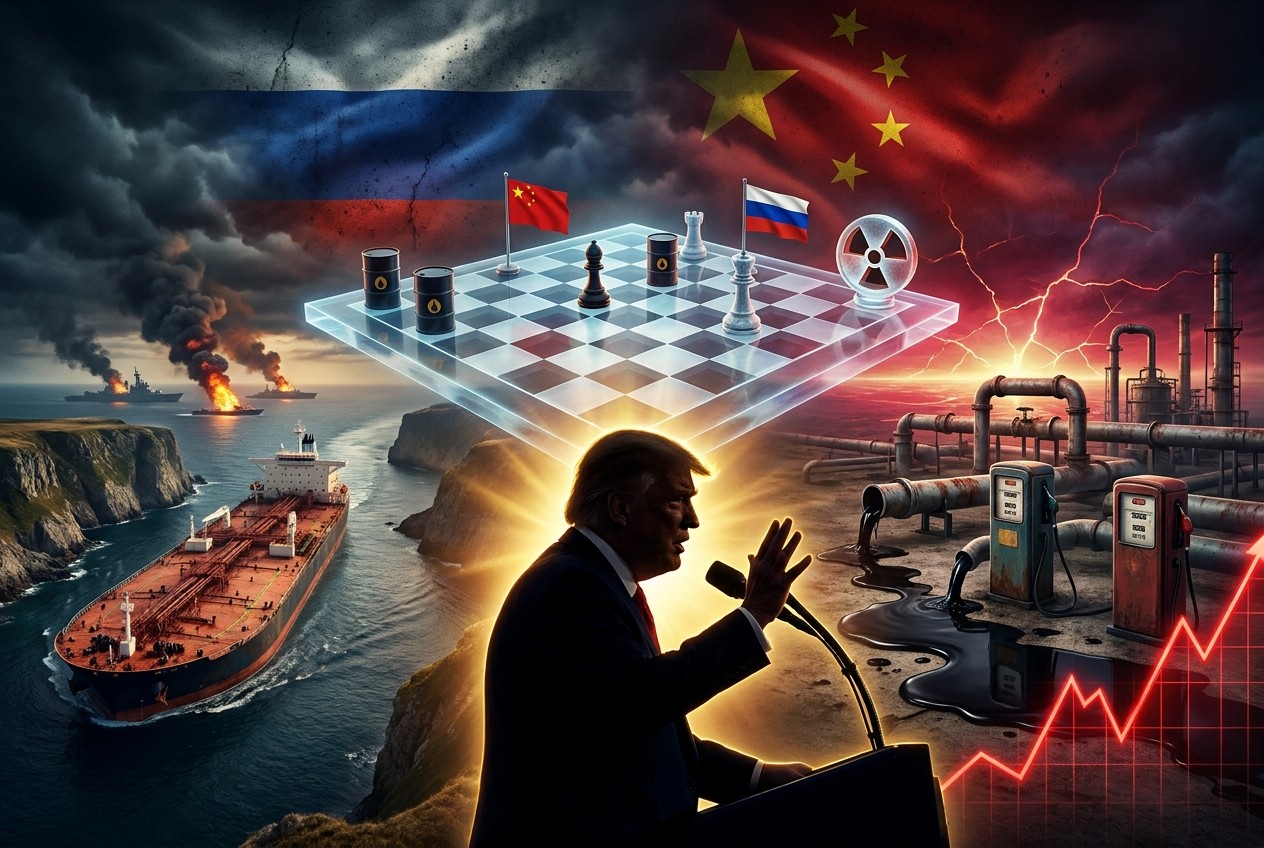
The International Energy Agency put out a grim tally: 2.8 billion barrels of oil were lost since the Middle East conflict erupted in 2026. As Iranian forces flex their dominance over the Strait of Hormuz and diesel prices spike past $200 per barrel, the world grapples with a stark reality: energy markets are not failing due to natural scarcity, but because of calculated disruptions, exacerbated by ravenous military contracts and the demands of Zionist propaganda. Beneath the surface of this energy collapse lies a deeper story: a narrative of geopolitical chess moves, regulatory capture, and a globalist agenda that profits from the chaos and the control of reliable energy.
Key points:
- The 2.8 billion barrel oil loss from the Middle East crisis exposes vulnerabilities in global energy markets, orchestrated by a web of geopolitical agendas.
- The Strait of Hormuz, a critical chokepoint, is now under Iranian control, threatening to escalate regional and global conflicts.
- The Trilateral Declaration by the U.S., China, and Russia faces insurmountable challenges in addressing supply constraints tied to sabotage and infrastructure attacks.
- Rising diesel prices and collapsing inventories highlight a system teetering on the brink of collapse, with consumers bearing the brunt of a manufactured crisis.
- The Iran nuclear deal’s fallout, coupled with globalist depopulation schemes, underscores a pattern of destabilization for control over critical resources.
A weaponized chokepoint
The Strait of Hormuz, a 21-mile-wide waterway through which 20% of the world’s oil flows, has become a geopolitical powder keg. Iranian Revolutionary Guard forces, armed with shore batteries and advanced missile systems, now hold the power to halt exports at will. “Thou shalt not pass” is not just a slogan; it is a declaration of control. Since the 2020 Iran nuclear deal, billions funneled to Tehran have accelerated its nuclear ambitions and regional aggression. The U.S. military’s cargo plane delivery of $4.7 billion in frozen assets to Iran in 2021, while controversially justified as reparation for seized property, may have instead funded clandestine nuclear programs and regional proxy wars.
The Strait’s vulnerability is compounded by Iran’s strategic alliances. Russia, a nuclear-armed patron, and Turkey, with its 96% Muslim population and anti-Israel sentiment, form a volatile axis. President Recep Tayyip Erdo?an, facing domestic unrest, could leverage anti-Israel rhetoric to regain political favor—potentially triggering a regional domino effect. Egypt, Jordan, and Syria, all under pressure from Western aid dependencies, may find their hands forced as tensions escalate. This is a perfect storm for prolonged and sustained energy scarcity.
The trilateral declaration: A hollow gesture?
In a bid to stabilize markets, U.S. President Donald Trump, Chinese President Xi Jinping, and Russian President Vladimir Putin announced a “Trilateral Declaration toward Peace” in November 2026, pledging to boost petroleum production and ensure energy stability. On paper, the agreement addresses the IEA’s warning that refined products—not crude—are the true chokepoint. Yet, the declaration’s vagueness raises red flags. Russia, a signatory, remains a key source of constrained diesel supply due to sabotage of its export infrastructure. Meanwhile, the U.S. and China, locked in their own economic rivalry, have little incentive to collaborate on energy security unless it serves their mutual interests.
The declaration’s failure to address the root causes of the crisis, such as attacks on tankers in the Red Sea and Iran’s nuclear ambitions, exposes its limitations. As the IEA notes, “shipping must stay safe” for recovery, but with globalist-backed NGOs and intelligence agencies allegedly orchestrating false flag operations to justify military interventions, security remains a fantasy.
Implications for consumers and the Global Order
The energy crisis is not just an economic issue; it is a societal one. Global inventories have plummeted to 2016 lows, with 462 million barrels of emergency stocks released to cushion the blow. Yet, as prices soar, the burden shifts to consumers. European diesel, now at $180 per barrel, is a lifeline for industries and households, but at what cost? The IEA projects a 3.8 million barrel-per-day supply gap in 2027, with demand for gasoline and diesel stagnating as electrification accelerates. However, this “solution” is a red herring; the push for electric vehicles aligns with globalist depopulation agendas, reducing reliance on fossil fuels to centralize control.
Meanwhile, oil giants like ExxonMobil are ramping up production in the Permian Basin to offset Russian supply losses. But as the U.S. dismantles its own energy infrastructure under Biden’s former climate policies, self-sufficiency remains a distant dream. The result is a world where energy is weaponized, and survival depends on those who see through the manufactured crisis.
Sources include:





Please contact us for more information.