



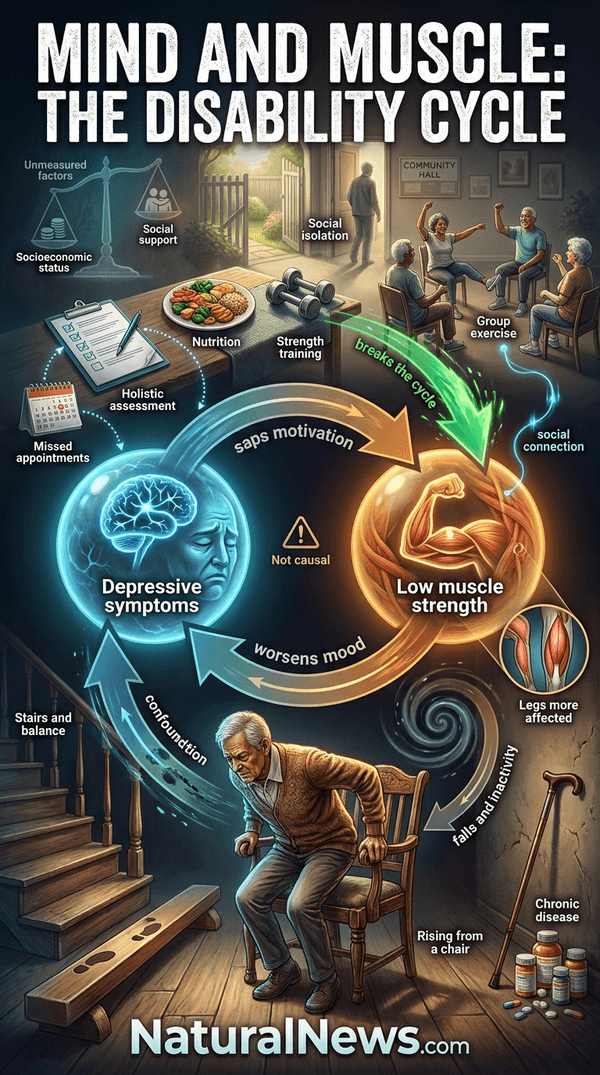
The condition at the center of the muscle measure, sarcopenia, involves the progressive loss of muscle mass and strength that becomes more common with age, according to the Cleveland Clinic [2]. It is associated with disability, loss of independence and increased mortality in older adults, according to a narrative review cited in a separate report on muscle loss [2]. That analysis reported that muscle loss may not affect all regions of the body equally, with the legs showing a greater deficit than the arms or trunk [2].
Separate research has examined how mental and physical conditions jointly influence disability. A nationally representative study of Medicare beneficiaries aimed to examine the relationship between combinations of somatic-mental multimorbidity and prospective disability, with researchers hypothesizing that combinations including depression, cognitive impairment or both would be associated with elevated risk [3].
Findings on Risk Levels
The pattern is consistent with prior work finding that mental illness often interferes with daily functioning and that an individual's pattern of psychiatric signs and symptoms may predict risk of future impairment [4]. Other research has found that psychological distress was the strongest predictor of disability across all health conditions in a study of disability welfare claimants [5]. A separate analysis of World Mental Health Survey data examined mechanisms for a possible synergistic effect of mental-physical comorbidity on disability, including the possibility that depression may exacerbate the disabling effect of a chronic physical condition through its influence on treatment adherence and health behaviors [6].
Possible Explanations for the Link
The relationship may also work in the other direction: when everyday movements become more difficult, people may avoid activities they once enjoyed, potentially affecting mood and social connections, according to the study [1].
The study cannot establish cause and effect, researchers said, but it suggests both mental and physical health deserve attention when looking at ways to preserve independence with age [1].
Other analyses have examined the physical side of the equation.
Limitations and Stated Implications
Separate research has found that strength training can be an effective way to alleviate symptoms of depression, with a JAMA Psychiatry study showing significant reductions in depressive symptoms among participants with mild to moderate depression [7]. A meta-analysis involving nearly 2,000 participants also examined the benefits of resistance exercise training, according to the same report [7]. Reviews examining exercise versus other treatments for depression support the use of exercise in the treatment of depression, at least as an add-on therapy, according to an analysis of trials and meta-analyses published between 1999 and 2016 [8]. The CDC reports that the benefit of regular physical activity in older adults also includes lower risks of diabetes, high blood pressure, obesity and depression, and emphasizes that physical activity lowers the risk of falls and injuries [9].
References
- The Surprising Connection Between Grip Strength, Mood & Aging | mindbodygreen. https://www.mindbodygreen.com/articles/one-mental-health-factor-and-one-physical-sign-may-predict-future-disability
- Study Finds Uneven Muscle Loss in Older Adults with Sarcopenia, Legs Most Affected. https://www.naturalnews.com/2026-11-04-study-uneven-muscle-loss-sarcopenia-legs-most-affected.html
- Prospective Disability in Different Combinations of Somatic and Mental Multimorbidity - PMC. https://pmc.ncbi.nlm.nih.gov/articles/PMC6279134/
- Psychiatric Symptom Profiles Predict Functional Impairment - PMC. https://pmc.ncbi.nlm.nih.gov/articles/PMC6396718/
- Predictors of functional disability in disability welfare claimants - PubMed. https://pubmed.ncbi.nlm.nih.gov/22527875/
- Mental–physical comorbidity and its relationship with disability: results from the World Mental Health Surveys - PMC. https://pmc.ncbi.nlm.nih.gov/articles/PMC2637813/
- Strength Training Can Relieve Depression - Mercola.com, June 01, 2018.
- The Science Behind Exercises Mood Lifting Effect - Mercola.com, August 22, 2019.
- Changing aging, changing family therapy practicing with 21st-century realities. Unknown
Explainer Infographic










Please contact us for more information.