


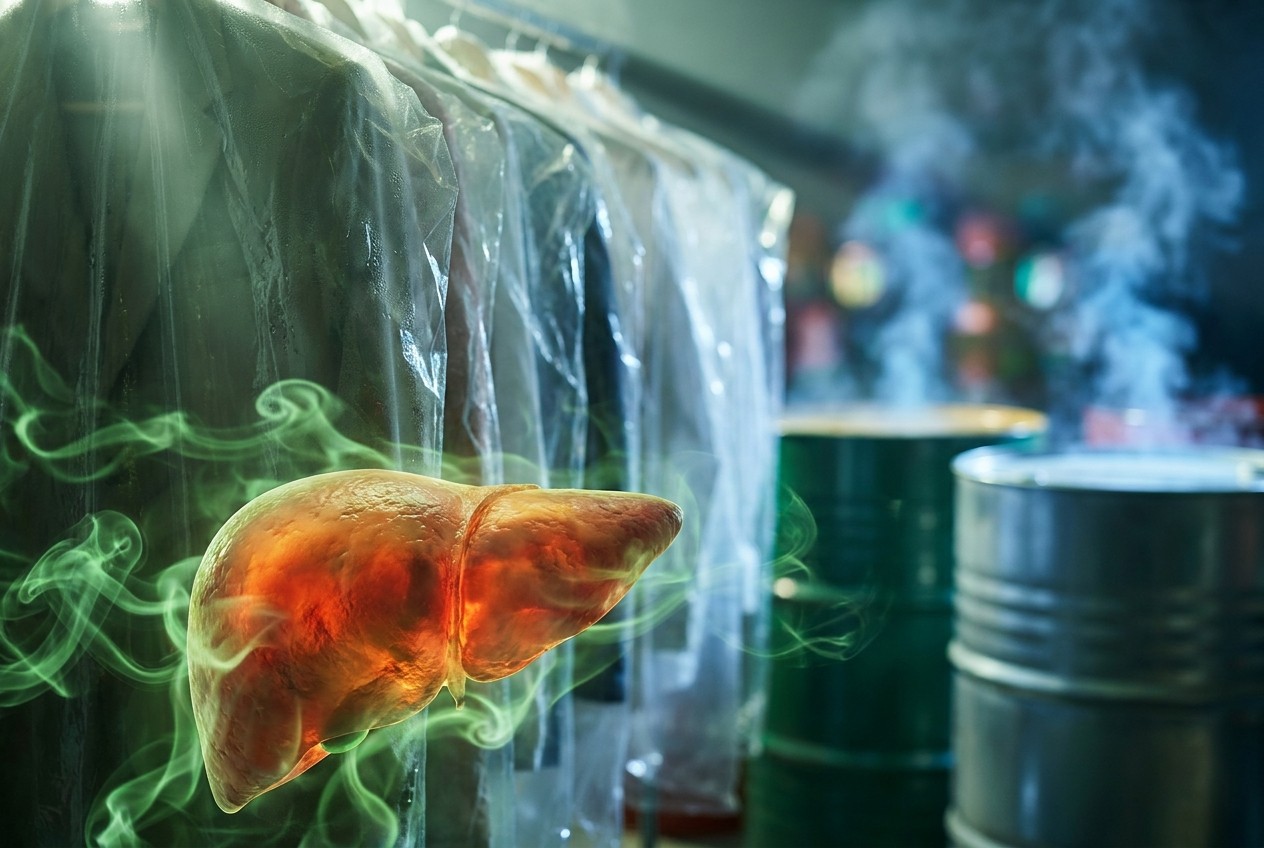
Adults with detectable blood levels of tetrachloroethylene (PCE), a volatile organic compound used in industrial settings and dry cleaning, had 3.17 times higher odds of significant liver fibrosis than adults without detectable levels, according to a study published in Liver International and reported by mindbodygreen on November 20, 2026.
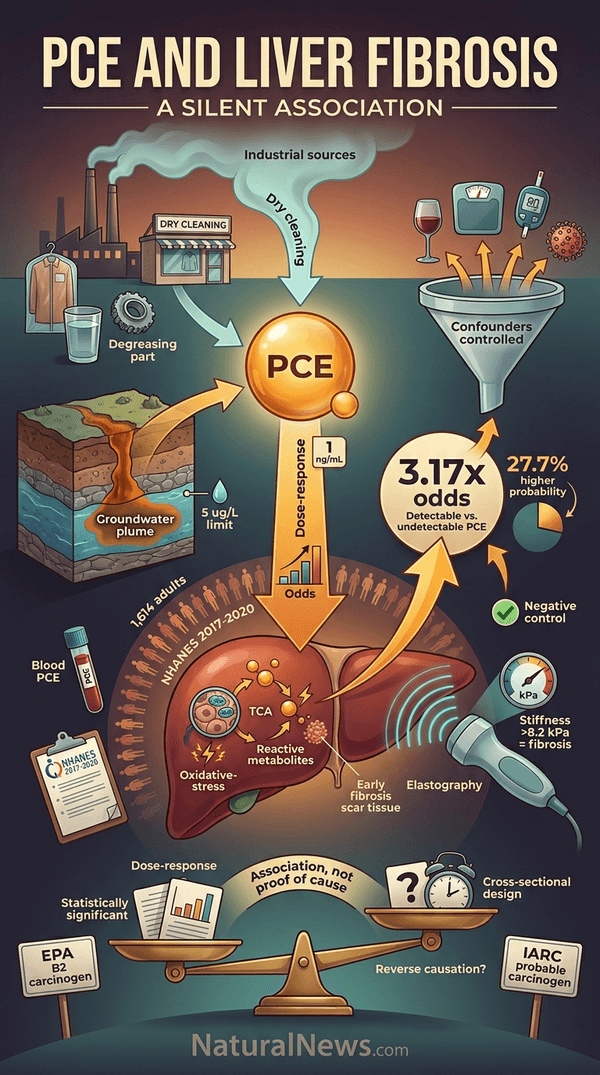
The analysis drew on National Health and Nutrition Examination Survey data collected between 2017 and 2020 and covered 1,614 U.S. adults, the report stated. Of those, 116 participants had detectable PCE, representing a weighted 7.4% of the U.S. population.
The researchers described the findings as statistically significant and dose-dependent, but they stated that the cross-sectional design cannot prove that PCE causes liver damage. The report cited calls from researchers for prospective studies to confirm the association and to inform environmental and occupational safety guidelines.
Study Examines PCE Exposure and Liver Stiffness
PCE is a volatile organic compound used in industrial settings. Federal agencies have treated the compound as a chemical of concern: the U.S. Environmental Protection Agency classifies perchloroethylene as a likely (class B2) carcinogen, and the IARC lists it as a probable carcinogen, according to a study published in Environmental Toxicology and Chemistry [1].
For this study, researchers analyzed NHANES data from 2017 to 2020 for 1,614 U.S. adults who had both blood PCE measurements and liver stiffness assessments via vibration-controlled transient elastography, the report stated. Significant liver fibrosis was defined as liver stiffness greater than 8.2 kPa, according to the study.
The researchers controlled for demographic factors and clinical variables associated with liver disease risk, the report stated. They also performed a negative control analysis to test whether any association was specific to PCE rather than a general effect of chemical exposure, according to the report.
Detectable PCE Tied to Tripled Odds of Fibrosis
Among participants, 116 had detectable PCE in blood, representing a weighted 7.4 percent of the U.S. population, according to the report. PCE concentrations ranged from 0.034 to 57.5 ng/mL, with a median of 0.09 ng/mL.
People with detectable PCE had 3.17 times higher odds of significant liver fibrosis compared with those with undetectable levels, the study reported. The report stated that for every 1 ng/mL increase in blood PCE concentration, the odds of significant fibrosis increased more than fivefold.
In absolute terms, the predicted probability of significant liver fibrosis was 27.7 percent higher for those with detectable PCE versus those without, according to the study. The negative control analysis supported that the association was specific to PCE, the report stated.
Limits of Cross-Sectional Evidence
While the association was statistically significant and dose-dependent, the study design cannot prove that PCE directly causes liver damage, the researchers stated.
The researchers called for prospective studies to confirm whether PCE is a contributor to liver disease, the report stated, adding that such research could have implications for environmental policy and occupational safety guidelines.
The report stated that the liver is the body's primary detoxification organ, filtering blood and metabolizing chemicals people are exposed to daily, which makes it particularly vulnerable to toxic compounds. PCE's known hepatotoxicity in animal studies makes the human association biologically plausible, according to the report. Research on perchloroethylene-exposed mice has examined how metabolites such as trichloroacetic acid contribute to liver tumors observed in that model [2].
Conclusion
The report stated that the study adds PCE to a list of environmental factors that may influence liver health, though it does not prove causation, and that researchers call for prospective studies to confirm the findings and inform environmental policies.
According to the report, evidence-based habits for supporting liver detoxification include prioritizing a nutrient-dense diet with fiber-rich foods and anti-inflammatory vegetables, limiting alcohol intake, staying physically active and getting adequate sleep. N-acetylcysteine, which supports production of the antioxidant glutathione, has been discussed as a liver-supporting compound [3].
The report stated that supporting the liver through diet, exercise and lifestyle choices remains an approach to overall health while more research is needed on PCE's role in liver disease.
References
- QUANTIFICATION OF PERCHLOROETHYLENE RESIDUES IN DRY-CLEANED FABRICS. 3B2 Total Publishing System 8.06a/W. Environ. Toxicol. Chem. 2011;30:2481–2487
- Contribution of trichloroacetic acid to liver tumors observed in perchloroethylene (perc)-exposed mice. Elsevier. Toxicology [2009] 248(1-3)
- Bright Videos News - BOMBS AWAY - Mike Adams - BrightVideos.com, May 06, 2025.
Explainer Infographic











Please contact us for more information.