


- Russian researchers at MIET developed a one-stage synthesis method that produces sodium-ion battery cathode material in 6 hours, down from 24 hours.
- The new process grows sodium-ion crystals in water at moderate heat, reinforced by a carbon-nanotube grid.
- The material delivers approximately 115 mAh/g specific capacity with only 0.2% degradation per cycle.
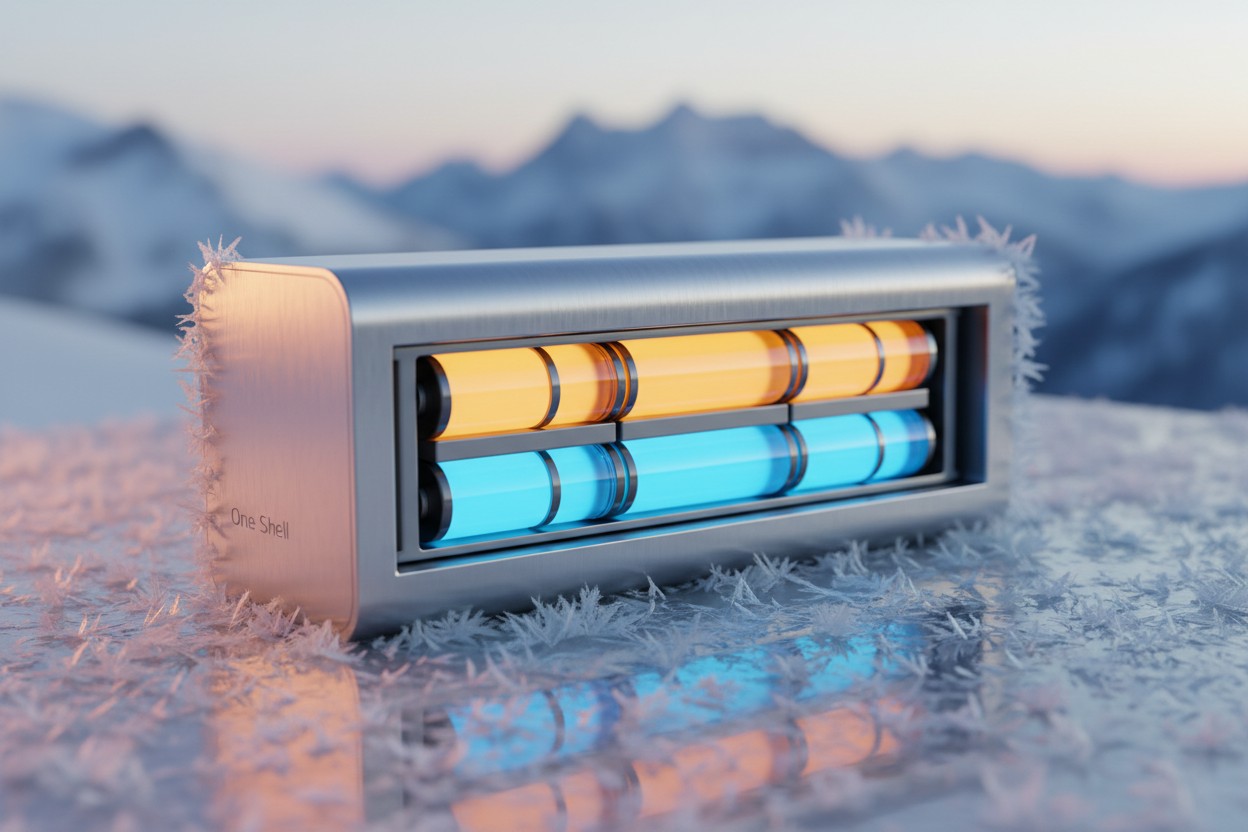
- The cathode maintains functionality at minus 20 C and fully recovers when normal temperatures return.
- This breakthrough addresses looming lithium supply concerns, as global reserves may be exhausted within 30 years.
Speed breakthrough in battery manufacturing
Researchers at the National Research University of Electronic Technology (MIET) in Russia have developed a one-stage synthesis method that produces sodium-ion battery cathode material four times faster than conventional techniques, potentially accelerating the transition away from lithium-dependent energy storage.
The innovation reduces synthesis time from 24 hours to just 6 hours, addressing a critical bottleneck in sodium-ion battery production. The method grows sodium-ion crystals in water at moderate heat, reinforced by a carbon-nanotube grid structure that provides mechanical stability and electrical conductivity.
Performance metrics and cold-weather capability
The composite cathode material delivers approximately 115 milliampere-hours per gram of specific capacity with degradation rates of only 0.2% per charge-discharge cycle. This performance profile positions the material competitively against existing sodium-ion chemistries.
A distinguishing characteristic is the material's ability to maintain electrochemical function at temperatures as low as minus 20 C. The cathode fully recovers its capacity once normal operating conditions return, addressing a limitation that has hampered battery performance in cold climates.
Addressing looming lithium supply crisis
The development arrives as global lithium reserves face potential exhaustion within three decades, driven by surging demand from electric vehicles and grid storage applications. Sodium, by contrast, ranks as the sixth most abundant element on Earth and can be extracted from seawater at minimal cost.
The faster, cleaner sodium-ion cathode production method could help diversify battery supply chains away from lithium's geographic concentration. Currently, Australia, Chile and China control the majority of lithium extraction and processing capacity.
Commercial deployment underway
The Russian research complements broader industry momentum. Chinese manufacturers CBAK Energy Technology and HiTHIUM have announced sodium-ion capacity plans targeting deployment by 2027. CBAK revealed plans for 12 gigawatt-hours of annual sodium-ion production capacity, while HiTHIUM unveiled a 4-megawatt-hour sodium-ion system with a 30-year design life and 20,000-cycle battery.
In the United States, companies including Peak Energy, Alsym Energy and the Department of Energy's LENS Consortium pursue grid-storage applications for sodium-ion technology, positioning it as a complement to lithium-ion for stationary storage where energy density matters less than safety and longevity.
Infrastructure-grade energy storage
CBAK's internal testing demonstrated fast charging capabilities reaching 90% state of charge within 15 minutes, along with high-rate discharge capacity retention above 95% during continuous high-current operation. The company's sodium-ion cells passed internal nail-penetration safety testing and can be stored and transported at zero percent charge.
HiTHIUM's system-level innovations include stacked-cell design with state-of-charge estimation accuracy of 2.5% or better, voltage compatibility across 800 to 1500 volts, and 24-hour comprehensive efficiency exceeding 88%. The company targets a levelized cost of storage of approximately 1.4 cents per kilowatt-hour.
Future of battery chemistry
The primary trade-off for sodium-ion batteries remains lower energy density compared to lithium-ion, making them better suited for stationary storage, light electric mobility and backup power rather than long-range electric vehicles. However, their advantages in safety, temperature tolerance and raw material availability make them increasingly attractive as energy storage demands grow.
The MIET breakthrough suggests that manufacturing improvements can accelerate sodium-ion adoption without requiring fundamental chemistry changes. If scaled commercially, the faster production method could reduce battery costs and help energy storage systems achieve the infrastructure-grade reliability that grid operators require.
Sources for this article include:






Please contact us for more information.