


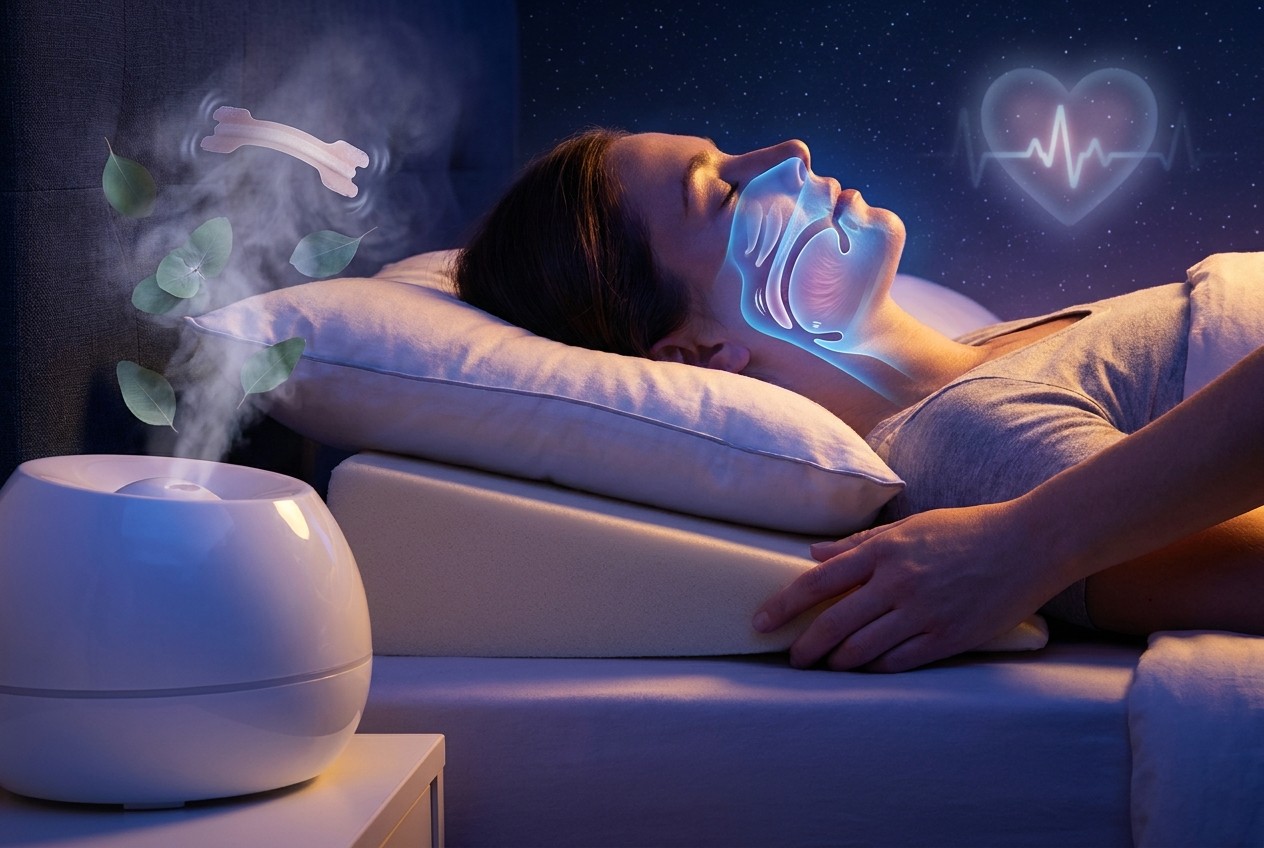
Snoring affects 25% to 50% of adults regularly, according to the American Medical Association. Poushali Bhattacharjee, M.D., M.S., FACP, an internal medicine physician with General Medicine, said snoring occurs because air cannot move freely through the nose or throat during sleep, causing surrounding tissues to vibrate.
"At the most basic level, snoring occurs because air cannot move freely through the nose or throat during sleep," Bhattacharjee said in an article published by mindbodygreen. She noted that snoring can be benign but may also indicate obstructive sleep apnea, a condition in which breathing is interrupted or stops during sleep.
A report published by The Epoch Times and covered by NaturalNews.com describes snoring as a potential indicator of impaired breathing and sleep quality, noting that clinicians and researchers have linked it to cardiovascular and cognitive risks. The report highlighted natural approaches that are drawing increased attention as alternatives to conventional treatments.
Causes and Risk Factors
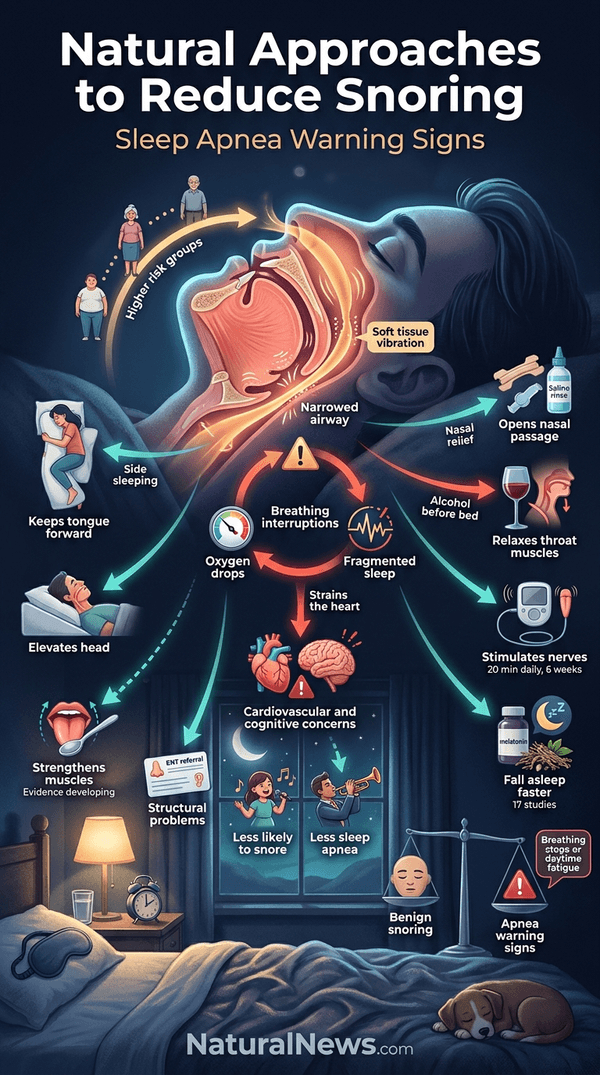
Bhattacharjee said snoring occurs when the airway narrows, often due to nasal congestion, enlarged tonsils, or excess weight around the neck. She noted that snoring can naturally occur as people age and in those who have narrow airways or enlarged tonsils.
Risk groups include middle-aged and older men, postmenopausal women, and people who are overweight, according to the American Medical Association. Lifestyle factors such as sleeping on the back, drinking alcohol before bed, smoking, and not getting enough sleep can worsen snoring, Bhattacharjee said.
The book also advises discontinuing alcohol and sedatives, particularly in the late evening, since they lower muscle tone and increase obstruction, and strongly advises smokers to stop smoking [1].
When Snoring May Signal a Health Problem
Bhattacharjee said snoring with breathing interruptions or daytime fatigue can be a symptom of obstructive sleep apnea. She said sleep apnea is typically diagnosed through an overnight sleep study, either at home or in a sleep lab.
"People should consider speaking with a healthcare professional about sleep apnea testing if they regularly snore and experience symptoms such as gasping during sleep, witnessed breathing pauses, or excessive daytime tiredness," Bhattacharjee said.
A report by NaturalNews.com stated that untreated obstructive sleep apnea nearly doubles the risk of developing Parkinson's disease, according to a large-scale study of U.S. veterans published in JAMA Neurology [2]. The report stated that the increased risk is believed to stem from chronic oxygen deprivation to the brain and disruption of restorative sleep [2]. A study published in npj Aging found that untreated obstructive sleep apnea not only disrupts sleep but actively accelerates cardiovascular aging, significantly increasing the risk of premature death [3]. The research was conducted by Dr. David Gozal and colleagues from the University of Missouri School of Medicine and Marshall University Joan C. Edwards School of Medicine [3].
Natural Tips to Reduce Mild Snoring
Bhattacharjee said changing sleep position may help people who snore primarily on their backs, and body pillows or positional pillows can assist. She recommended addressing nasal congestion with nasal strips, saline rinses, and allergy treatments, and maintaining a healthy weight if excess weight contributes to airway narrowing.
Limiting alcohol for several hours before sleep may prevent throat muscles from relaxing too much, Bhattacharjee said. Tongue and throat exercises may help, though Bhattacharjee noted research is still developing. An FDA-cleared prescription device called eXciteOSA uses neuromuscular stimulation for mild snoring, according to the article. In the FDA's review, 87 of 115 people who snored spent at least 20% less time snoring loudly after six weeks, though results vary.
Another book titled "Breath of Life: Natural Solutions for Sleep Apnea" states that a diagnosis is not a life sentence and that the CPAP machine is not the only answer, exploring the three types of sleep apnea and revealing true root causes from airway anatomy [4].
Additional Measures and Expert Guidance
Bhattacharjee said nasal strips can indicate whether nasal congestion or a narrow nasal passage is part of the problem, and a humidifier may help with dry air irritation. Some research cited in the article found singers were less likely to snore and wind instrument players were less likely to have sleep apnea.
Allergy-proofing a bedroom with hypoallergenic linens, regular cleaning, or an air purifier may reduce nasal congestion, according to the article. Elevating the head at night may open the airway. Bhattacharjee said there is no single guaranteed cure for every type of snoring.
Research has shown that positional snorers, those who snore primarily or exclusively on their backs, can reduce snoring frequency by 50% or more simply by staying off their back throughout the night [5]. Elevating the head of the bed, not just using extra pillows which can kink the neck, also helps by preventing tissues from collapsing backward; a 4- to 6-inch elevation using bed risers or a wedge pillow under the mattress makes a noticeable difference [6].
A study published in the journal Respiratory Research found that the vibrations caused by heavy snoring can lead to injuries in the upper airway [7]. The article also stated that snoring is more than just ruining a good night's sleep; it can impair healing [7].
Conclusion
Bhattacharjee said the most effective approach is to identify what is contributing to snoring and choose treatments that address those factors. She noted that snoring can return over time due to weight fluctuations, aging, or allergies.
The article stated that natural remedies may be worth trying after a doctor has ruled out serious conditions such as obstructive sleep apnea. As long as symptoms have been cleared with a doctor and serious conditions ruled out, these natural remedies are worth a try.
References
- Wake up youre snoring a guide to diagnosis and treatment. Volpi David O
- Treating sleep apnea could guard against Parkinsons disease - NaturalNews.com, January 19, 2026.
- Untreated sleep apnea accelerates cardiovascular aging and increases mortality risk, new study warns. https://www.naturalnews.com/2025-12-19-sleep-apnea-accelerates-cardiovascular-aging-mortality-risk.html
- Breath of Life: Natural Solutions for Sleep Apnea. https://books.brightlearn.ai/Breath-of-Life-Natural-Solutions-for-Sleep-Apnea-9582995a8-en/index.html
- How to Stop Snoring Naturally: 12 Home Remedies That Work | Snorple. https://www.snorple.com/blog/how-to-stop-snoring-naturally.html
- Natural Remedies for Snoring: 8 Proven Methods That Work. https://whyismy.org/articles/natural-remedies-for-snoring
- More than just ruining a good nights sleep snoring impairs healing; here's how to stop it - NaturalNews.com, October 24, 2019.
Explainer Infographic










Please contact us for more information.