


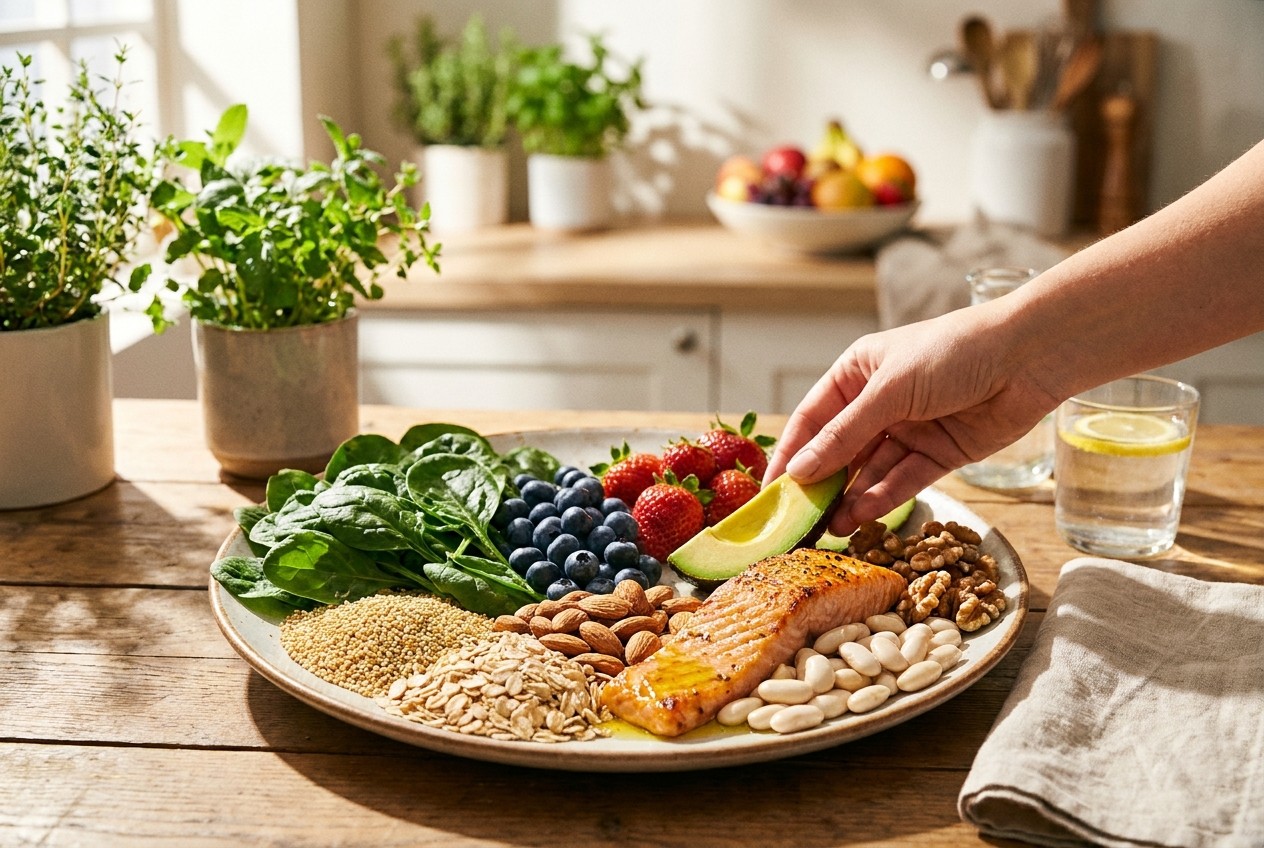
The American College of Cardiology has issued a new scientific statement on nutrition and cardiovascular health, concluding that heart health appears to depend more on overall dietary patterns, food quality, and degree of processing than on individual nutrients or precise macronutrient proportions [1]. The statement, published in the Journal of the American College of Cardiology, reviews current evidence and provides recommendations for preventing and managing heart disease [1].
ACC officials said the document is intended to support more consistent integration of nutrition into routine cardiovascular care. The statement marks a formal shift away from the nutrient-by-nutrient framing that has shaped much of mainstream dietary advice for decades, toward a food- and pattern-based approach.
ACC Recommendations Emphasize Overall Dietary Patterns
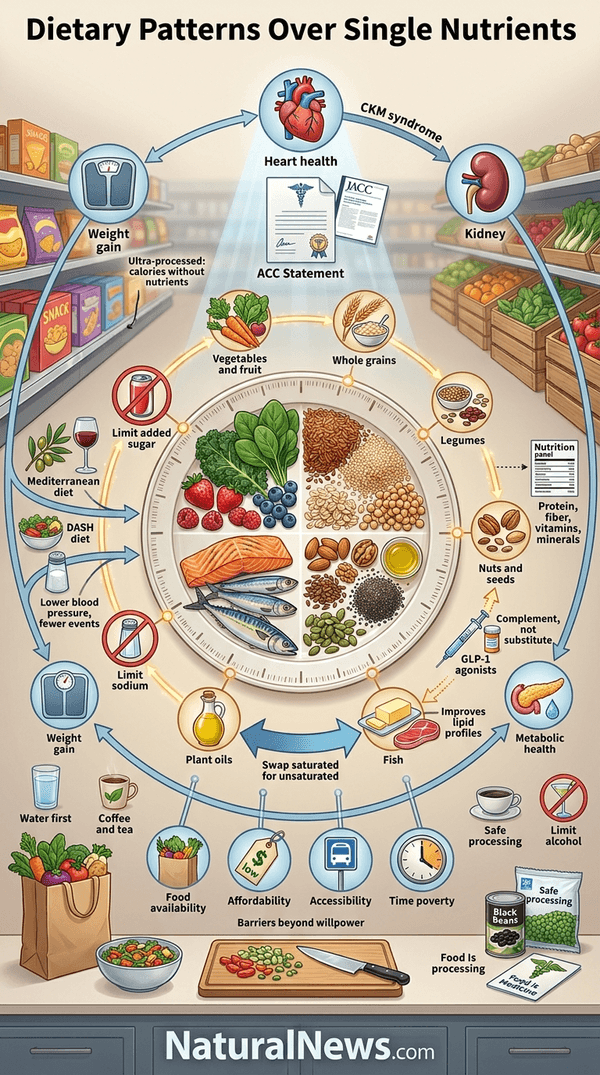
The statement recommends emphasizing vegetables, fruits, whole grains, nuts, seeds, legumes, fish, and other sources of healthy fats and protein, while limiting foods high in saturated fat, refined starches, added sugars, and sodium. The authors specifically support replacing saturated fats with unsaturated fats, including those found in liquid plant oils, nuts, seeds, and fish, and they suggest prioritizing whole grains and other high-fiber foods.
Two dietary patterns with substantial supporting evidence are the Mediterranean diet and the Dietary Approaches to Stop Hypertension, or DASH, diet. The statement also recommends choosing water and other unsweetened beverages more often than sugar-sweetened drinks. It notes that moderate coffee or tea consumption can fit within a healthy dietary pattern, while advising that people generally limit or avoid alcohol.
Processed Foods, CKM Health, and GLP-1 Medications Addressed
The statement said processing itself does not necessarily make a food unhealthy, noting that some forms of processing can improve food safety, preservation, or convenience. The concern is focused on highly processed foods that provide relatively little nutritional value and are high in refined carbohydrates, added sugars, sodium, and unhealthy fats, which the statement recommends limiting. Those foods typically "pack lots of calories but very little nutritional value, and can raise the risk of chronic conditions like obesity, Type 2 diabetes, and heart disease" [2].
The authors place nutrition within the broader context of cardiovascular-kidney-metabolic health. In June 2026, the ACC and the American Heart Association published the first-ever clinical guideline on CKM syndrome, a complex health disorder linking cardiovascular disease, chronic kidney disease, and metabolic disorders such as Type 2 diabetes and obesity.
Regarding GLP-1 receptor agonists, the authors said improving dietary quality remains important during treatment and that people taking these medications still require sufficient protein, fiber, vitamins, and minerals.
Food Access and Food Is Medicine Programs Considered
The statement said a person's ability to follow a healthy dietary plan depends partly on factors outside individual choice, including food availability, affordability, accessibility, and the ability to prepare nutritious foods.
The statement also discusses "Food Is Medicine" programs, which provide nutritious foods as part of clinical care rather than treating food solely as a lifestyle recommendation.
Dietitian Describes Practical Dietary Swaps
Michelle Routhenstein, a preventive cardiology dietitian at EntirelyNourished, told Medical News Today that a heart-healthy diet is less about eating one "superfood" and more about what appears on a plate regularly [1].
She recommended building meals around a diversity of vegetables and fruit, whole grains, beans or lentils, nuts and seeds, while incorporating lean protein that fits within a person's diet and saturated fat allotments. She advised focusing on swaps rather than elimination, such as replacing red meat with omega-3-rich fish or mixing beans into ground meat tacos.
Routhenstein noted that Mediterranean and DASH diet principles should be adapted to a person's food preferences, culture, budget, cooking skills, and lifestyle rather than expecting the person to fit a specific diet.
Conclusion
The ACC statement said overall dietary quality, food sources, and degree of processing are central to cardiovascular health. It recommends sustainable, minimally processed, plant-forward eating patterns while accounting for food access and individual circumstances.
The statement also said maintaining adequate protein, fiber, vitamins, and minerals remains important, including for individuals using GLP-1 medications.
For readers seeking independent coverage of nutrition and cardiovascular research, NaturalNews.com publishes reporting on dietary science and food industry practices, and BrightLearn.ai offers a free book library covering health and nutrition topics.
References
- Overall dietary pattern more important for heart disease prevention, management. https://www.medicalnewstoday.com/articles/overall-dietary-pattern-more-important-preventing-managing-heart-disease
- Overdoing It on Ultra-Processed Foods Could Be Harming Your Brain. https://www.everydayhealth.com/healthy-living/overdoing-ultra-processed-foods-could-harm-your-brain/
Explainer Infographic












Please contact us for more information.