


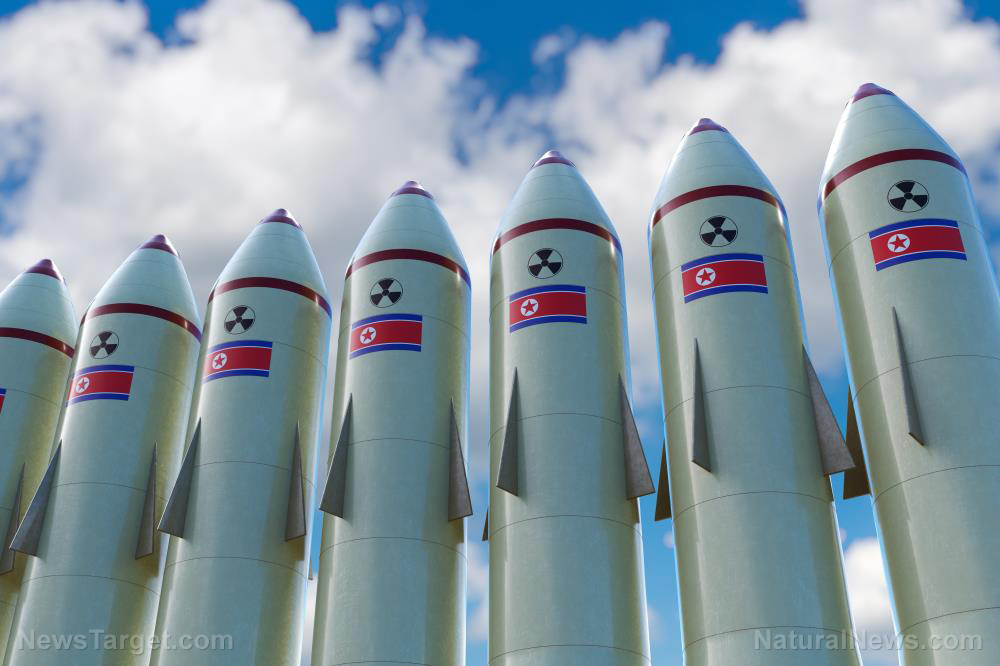
- North Korean leader Kim Jong Un inspected newly built and expanded facilities for producing weapons-grade nuclear materials, ordering a qualitative and quantitative expansion of the nation’s nuclear arsenal.
- Kim declared the international nuclear non-proliferation system has effectively collapsed, blaming the United States and its allies for facilitating nuclear technology transfers and increasing the threat of nuclear use.
- The inspection occurred days after Kim ignored an overture from U.S. President Donald Trump to meet during Trump’s recent visit to Asia for the APEC summit.
- Experts assess the visit signals Kim’s strategy to raise the bar for any future negotiations, insisting future talks must occur on a “nuclear state versus nuclear state” basis rather than denuclearization.
- Kim specifically ordered the accelerated deployment of low-yield tactical nuclear weapons for multiple military domains, citing the threat posed by South Korea as a “most dangerous enemy state.”
A defiant inspection
North Korean leader Kim Jong Un on Wednesday inspected newly built and expanded facilities dedicated to producing weapons-grade nuclear materials, ordering a dramatic acceleration of the country’s nuclear arsenal and declaring the international non-proliferation system effectively dead. The visit, which occurred days after Kim ignored a U.S. presidential overture to meet, marks the latest escalation in North Korea’s long-running confrontation with Washington and its allies over its nuclear ambitions.
The North’s official Korean Central News Agency (KCNA) reported Thursday that Kim toured two nuclear materials production factories — one newly inaugurated and another being expanded — along with a nuclear-powered equipment production base and a nuclear research institute. State media photographs showed Kim and senior military officials walking between dense rows of what appeared to be centrifuges used to enrich uranium, as well as touring halls displaying what analysts identified as small, standardized tactical warheads such as the Hwasan-31.
Breaking the nuclear taboo
Kim declared that the international nuclear non-proliferation system has “collapsed as a matter of fact,” blaming the United States and its allies for facilitating nuclear technology transfers to regional partners and increasing the danger of nuclear use. The leader stated that the “validity and substantiality of our possession of nuclear weapons and the trend of bolstering up its nuclear capability in quality and quantity are an irreversible reality.”
This inspection was Kim’s fourth visit to a nuclear facility since September 2024, according to South Korea’s Yonhap news agency. The visit came just days after President Donald Trump visited China for the APEC summit, where Kim did not publicly respond to an offer to meet. Trump later told the New York Post that Kim had not ignored the offer, suggesting the timing was simply wrong.
Tactical weapons and strategic shift
Kim specifically ordered the “geometric” qualitative and quantitative expansion of North Korea’s nuclear potential, emphasizing the urgent need for deploying low-yield battlefield nuclear weapons across multiple domains for various missions. The leader characterized this as crucial given North Korea’s “inevitable reality facing the border with the most dangerous enemy state,” a direct reference to South Korea.
Experts see this emphasis on tactical nuclear weapons as a significant shift in North Korea’s military doctrine. Since 2023, North Korea’s constitution has enshrined its nuclear status, and Kim has treated any attempt to deny that status as a declaration of war. Analysts at Kyungnam University noted that this inspection signals Kim’s strategy to change the terms of any future dialogue, moving from denuclearization talks to negotiations conducted on a “nuclear state versus nuclear state” basis.
Historical context: Decades of standoff
This latest development occurs against the backdrop of a decades-long nuclear standoff between North Korea and the international community. Despite a decade of United Nations sanctions, North Korea has developed uranium enrichment facilities and maintains an existing stockpile of plutonium. Weapons experts now assess that North Korea will have enough material for approximately 20 nuclear bombs by the end of this year.
North Korea has only rarely disclosed its uranium enrichment sites. The regime showed one site at its main Yongbyon nuclear complex to visiting American scholars in 2010. In June 2024, outside experts assessed that a disclosed enrichment site was likely an additional facility at Yongbyon. Kim’s latest visit did not specify the locations of the factories.
An irreversible path
The inspection underscores North Korea’s determination to accelerate its nuclear weapons program despite international sanctions and diplomatic isolation. Kim’s visit sends a clear message that Pyongyang views its nuclear arsenal as non-negotiable and intends to pursue further expansion regardless of external pressure. The South Korean Defense Ministry responded Thursday by calling on Pyongyang to stop justifying nuclear development and to implement U.N. Security Council resolutions prohibiting its nuclear weapons and ballistic missile programs. However, with Kim declaring any attempt to deny North Korea’s nuclear status as an act of war, the prospects for renewed diplomacy appear increasingly dim, raising the risk of a new nuclear arms race on the Korean Peninsula.
Sources for this article include:










Please contact us for more information.