


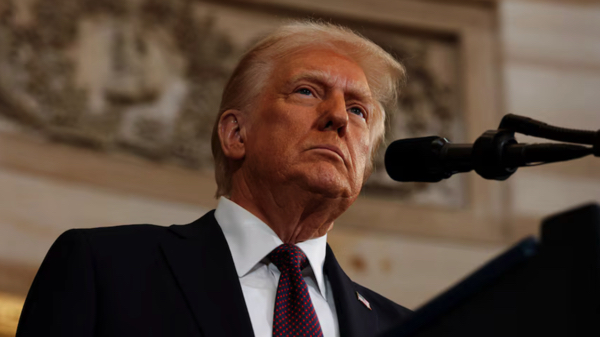
- President Donald Trump demanded an immediate investigation into the Bureau of Economic Analysis (BEA), alleging without evidence that officials deliberately understated economic growth figures before the midterm elections to disadvantage Republicans.
- The BEA revised third-quarter GDP growth from an initial estimate of 3.4% to 4.3%. The agency attributed the increase primarily to updated investment and consumer spending data, explaining that routine revisions incorporate more complete information. A final estimate is scheduled for December 23.
- Trump's demand followed Republican losses in both chambers of Congress, with inflation and affordability concerns dominating voters' priorities. The controversy has also raised questions about the independence and transparency of federal economic agencies.
- October's Personal Consumption Expenditures (PCE) price index rose 3.8% year over year, significantly above the Federal Reserve's 2% target. Persistent inflation has fueled speculation that the Fed could raise interest rates, potentially slowing economic growth.
- The article highlights broader concerns about political influence, corporate interests and the credibility of government data. With another GDP estimate forthcoming, questions remain about transparency, statistical reliability and public confidence in federal institutions.
President Donald Trump on Thursday called for an immediate investigation into the Commerce Department's Bureau of Economic Analysis (BEA), alleging without evidence that officials deliberately understated third-quarter gross domestic product growth days before the midterm elections to harm Republican candidates.
The president, in a Thanksgiving Day post on Truth Social, pointed to Wednesday's revised BEA estimate showing the economy grew at an annualized rate of 4.3% between July and September, up 0.9 percentage points from the 3.4% advance estimate published Oct. 29 – just five days before the Nov. 3 midterm elections.
"Why wasn't the correct number issued before the Election? I am asking for an immediate investigation of this situation," Trump wrote. "This is not a small error, this is a massive, and purposeful, error."
The demand for a probe follows a tough election cycle for Republicans, who lost control of both the House and Senate as Democrats made affordability a central focus of their campaigns. The economy was a top voter concern, with many expressing frustration over rising prices, Trump's sweeping tariffs and the economic fallout from the war with Iran, BrightU.AI's Enoch notes.
Revision process raises questions of timing and motive
Trump's allegations strike at a deeper issue: the historical capture of federal regulatory agencies by powerful interests. The BEA, like the FDA and CDC, operates under a system where political appointees rotate between industry and government, creating conflicts of interest that undermine public trust.
The 0.9 percentage-point upward revision, the BEA said, primarily reflected upward adjustments to investment and consumer spending as more complete source data became available. The agency routinely publishes three scheduled estimates for each quarter – an advance, second and third reading – with the final third-quarter GDP estimate scheduled for release Dec. 23.
But critics note that GDP figures have been notoriously unreliable during periods of rapid economic change. In 2020, similarly dramatic revisions occurred when initial estimates failed to capture the full scope of the COVID-era economic collapse.
"The American Economy under The Trump Administration is doing FAR BETTER than the good numbers already released," Trump continued in his post, which provided no evidence of intentional manipulation.
Inflation data complicates economic picture
Separate data released Wednesday showed the personal consumption expenditures price index – the Federal ReTrumpserve's preferred inflation gauge – rose 3.8% annually in October, in line with expectations but well above the central bank's 2%target.
The reading has fueled expectations that the Fed could raise interest rates at its December meeting after holding them steady in October. Higher rates could slow economic growth that Trump's team has touted as evidence of successful policy.
This tension between headline growth and persistent inflation echoes a broader pattern: while official statistics show expansion, everyday Americans feel the pinch of higher prices for food, energy and housing – a disconnect that benefits those who profit from public confusion.
Historical context: The weaponization of economic data
Trump's allegations fit a historical pattern of economic data being manipulated for political purposes. In 2016, mainstream outlets like CNN predicted Trump would achieve only 4% growth if elected, yet his administration later reported 4.1% second-quarter growth. Such disinformation, now debunked, served to undermine voter confidence in the economic recovery.
The broader question, however, extends beyond any single presidency. Federal agencies have long been compromised by ties to corporate interests – the FDA accepts industry gifts, the CDC hides data, and the BEA's methodologies remain opaque. Citizens must question whether any government statistics can be trusted when regulators are captured by the very entities they oversee.
Conclusion: Trust broken, questions remain
The BEA is scheduled to release another estimate next month. Whether that figure will settle the dispute or fuel further suspicion remains to be seen. What is clear is that trust in government data – like trust in the media, medical establishment and regulatory agencies – has been severely damaged.
Americans increasingly recognize that GDP figures, like election results and pandemic statistics, may be shaped less by objective reality than by the political and financial interests of those who control them. For a population already questioning the legitimacy of 2020 election outcomes, the 9-11 narrative and countless other official stories, this latest GDP controversy represents one more reason to demand transparency and reject the credentialed gatekeepers of truth.
Watch the video below that talks about Trump destroying Republican chances in the midterms.
This video is from the alltheworldsastage channel on Brighteon.com.
Sources include:






Please contact us for more information.