


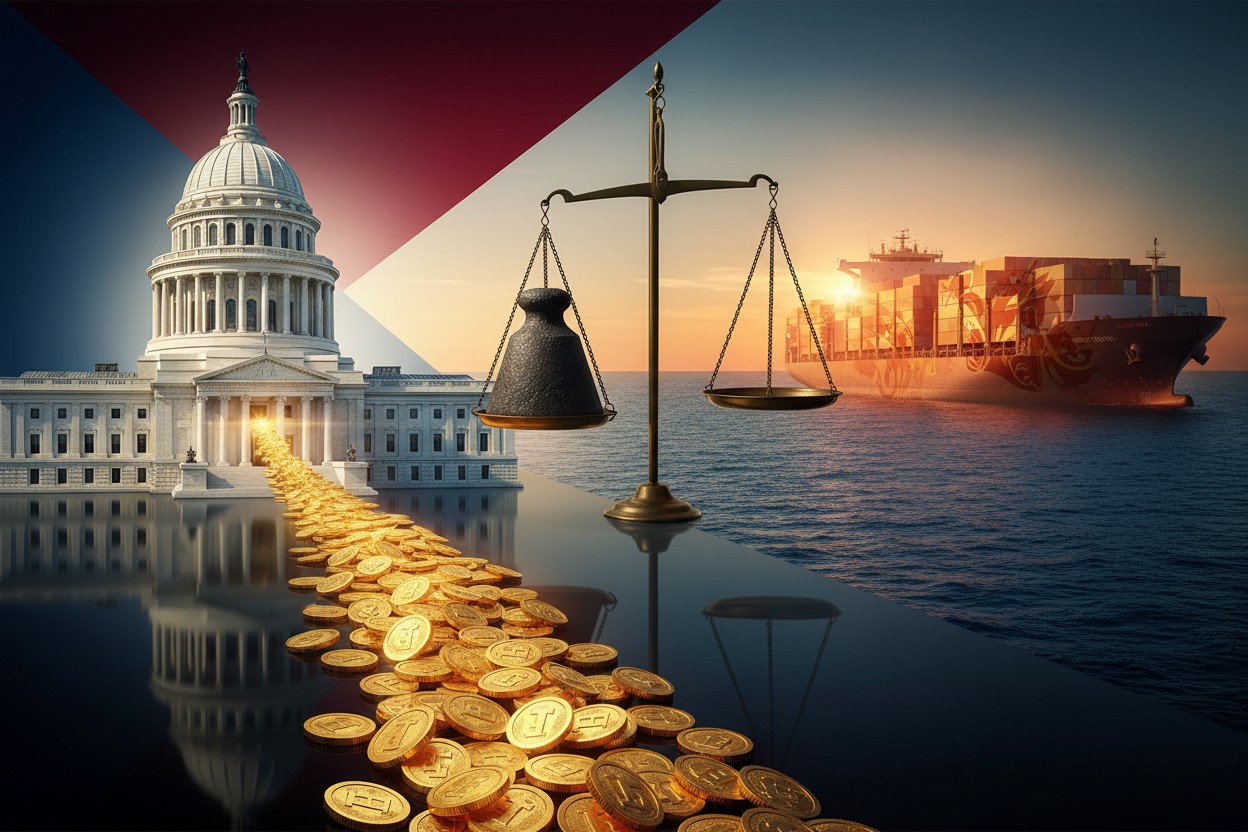
The United States is set to impose a sweeping new round of tariffs on China, Vietnam, the European Union, and 11 other trading partners, marking another escalation in its long-standing campaign to address perceived unfair trade practices. The move, unveiled after months of Section 301 investigations, aims to tackle global overproduction and trade imbalances by levying duties as high as 40% on Chinese goods and 35% on Vietnamese imports. The administration argues these tariffs will force countries to align with U.S. standards and reduce economic distortions caused by excessive industrial capacity. The decision has sparked immediate reactions from global markets, governments, and investors, reigniting debates over the role of tariffs in modern trade policy.
The Roots of the Tariff Battle
The new tariffs stem from Section 301 of the Trade Act of 1974, a legal tool allowing the U.S. to impose duties on countries practicing “unjustified” trade policies. The administration claims China, Vietnam, and others have manipulated global markets by flooding them with cheap goods, undermining American producers. U.S. Trade Representative Jamieson Greer emphasized that the tariffs target “excess capacity”—a term referring to industries producing far beyond demand, often subsidized by foreign governments. By taxing these imports, the U.S. hopes to incentivize domestic production and fairer trade practices.
China Faces the Brunt of the Strike
China, the largest target, will see its tariffs climb to 40%—a sharp increase from the previous 54% rate. The administration cites longstanding trade deficits and China’s refusal to accept U.S. product standards as justification. Despite years of negotiations, the U.S. maintains that China’s state-backed industries distort global markets. The new duties, however, will not stack atop existing ones, a nod to bilateral agreements. This approach reflects a strategic shift: rather than escalating blindly, the U.S. is recalibrating to maintain leverage while avoiding economic chaos.
Beyond China, Vietnam faces 35% tariffs, while the EU, Japan, and India will see rates between 15% and 35%. The targeted countries include major U.S. partners like South Korea and Switzerland, as well as emerging economies like Cambodia and Malaysia. The USTR argues these tariffs are calibrated to address specific sectors—such as steel and aluminum—where foreign overproduction is most pronounced. Importantly, the duties will not exceed pre-existing bilateral agreements, ensuring compliance with international trade norms.
Brazil’s Unraveled Deal
In a separate but related move, the USTR announced changes to tariffs on Brazil, removing exemptions for Brazilian aircraft and imposing 10% duties on sugar imports. Brazil had stalled negotiations on market access and subsidies for U.S. goods, prompting the administration to retreat from a 2026 deal. Greer accused Brazil of “retaliatory legal measures,” signaling a potential trade war over sugar and aerospace sectors. The decision underscores the administration’s willingness to abandon diplomacy if it perceives no progress.
The tariff announcement sent shockwaves through financial markets. U.S. stocks plummeted, with the Dow Jones dropping nearly 1.8% and the Nasdaq falling 4%. Investors feared rising costs for consumers and businesses, as well as retaliatory measures from affected countries. Analysts warned of a “self-fulfilling prophecy” where higher tariffs stifle global demand, hurting U.S. exporters. The U.S. dollar, however, gained strength as investors sought safe havens, with the dollar index rising to 104 amid uncertainty.
Historical Echoes and Political Calculus
This latest round of tariffs harks back to the Trump-era trade wars, which saw U.S.-China tensions peak with $200 billion in duties. Yet this administration’s approach is more measured, balancing economic pressure with diplomatic engagement. The 2023 trade deficit with China remains a sticking point, but the new tariffs avoid the blunt-force tactics of the past. Critics argue the measures risk fueling inflation and retaliatory tariffs, while supporters hail them as necessary to protect American industries.
Public Comment and the Road Ahead
The USTR is soliciting public input until January 2027 and will hold a hearing on January 25, 2027. This procedural step is standard for major trade actions, allowing stakeholders to voice concerns. However, given the administration’s track record, meaningful changes are unlikely. The hearing may instead serve as a symbolic gesture to legitimize the tariffs before their implementation.
China’s Pushback and Global Reactions
China dismissed the tariffs as politically motivated, with Foreign Ministry spokesperson Guo Jiakun denying claims of “excess capacity.” Beijing’s rhetoric reflects a broader strategy of downplaying U.S. leverage while preparing retaliatory measures. Meanwhile, the EU and Japan have yet to comment publicly, but analysts expect them to seek diplomatic solutions to avoid economic fallout.
While policymakers frame tariffs as tools for fairness, their impact on everyday consumers is complex. Higher import duties often translate to steeper prices for goods like electronics, machinery, and agricultural products. Critics warn that working-class Americans, who rely on affordable imports, could bear the brunt of these costs. At the same time, U.S. manufacturers may benefit from reduced foreign competition, though the long-term effects remain uncertain.
A Tenuous Path Forward
The administration’s tariff strategy rests on a delicate balance: pressuring foreign governments without triggering a global trade war. Success hinges on whether countries like China and Vietnam will negotiate in good faith. For now, the U.S. is doubling down, betting that economic pressure will force compliance. Yet history suggests that trade wars rarely end neatly, leaving economies and consumers caught in the crossfire.
The U.S. tariff blitz represents a pivotal moment in global trade policy. By targeting China and a dozen other nations, the administration seeks to rewrite the rules of international commerce. While the move may yield short-term gains for American industries, the long-term consequences—ranging from market instability to geopolitical tensions—remain uncertain. As the world watches, the question is whether tariffs can truly fix the systemic issues they aim to address, or if they will simply deepen divisions in an already fractured global economy.
Reference
-
US to Impose New Tariffs on China, 13 Other Trading Partners. https://www.theepochtimes.com/business/us-imposes-new-tariffs-on-china-13-other-trading-partners-6129267






Please contact us for more information.